

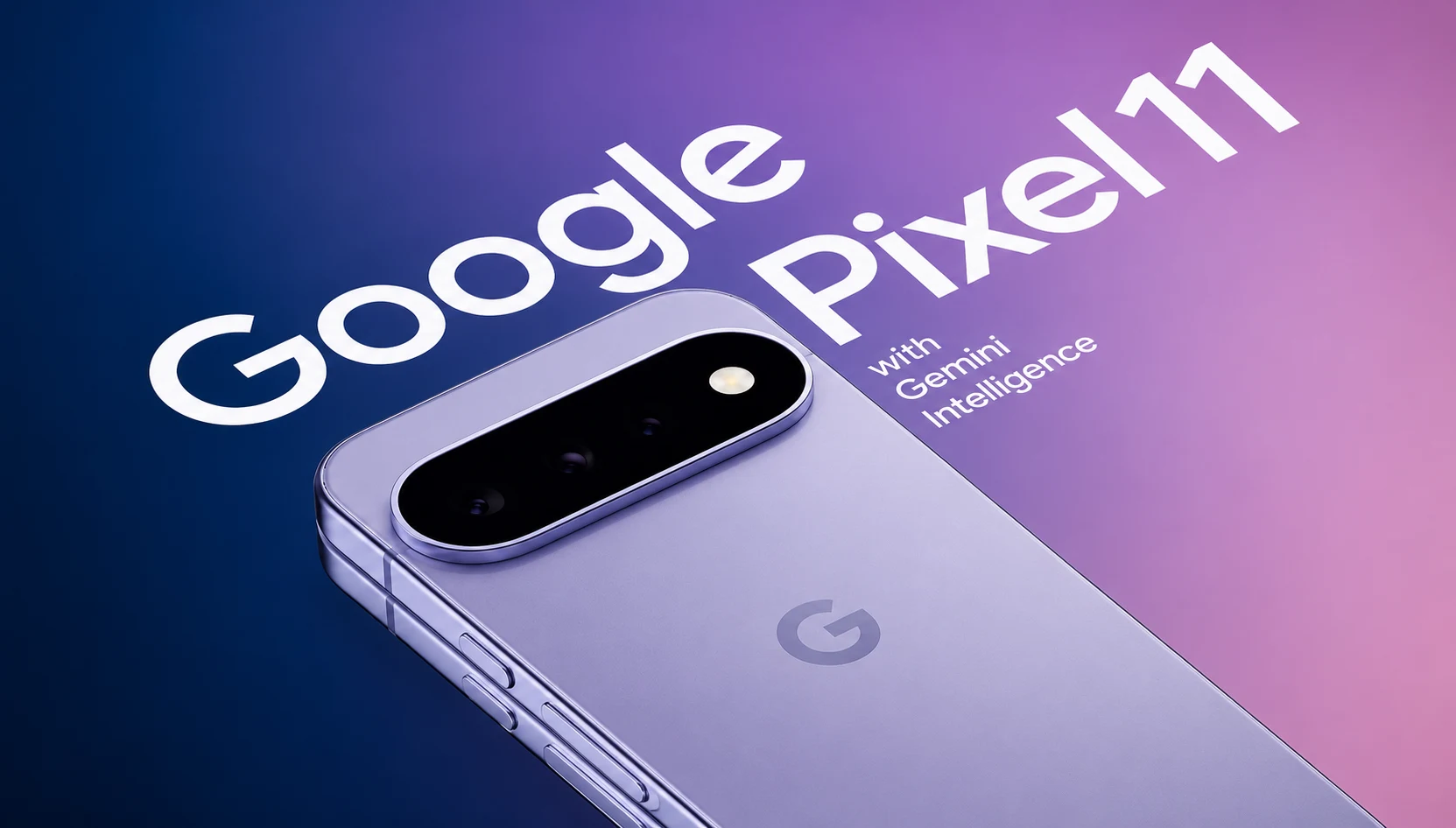
If you skipped the Pixel 10 last year because it felt like a rerun, Google is betting the Pixel 11 changes your mind. The lineup was officially announced at the Made by Google event on August 12, 2026, and released on August 20. Four phones were released at once: the standard Pixel 11, the Pixel 11 Pro, the bigger Pixel 11 Pro XL, and the Pixel 11 Pro Fold arriving later in October.
Two things come to mind immediately. Prices jumped $100 across the board, and the cheap 128GB tier disappeared completely. So the real question for most buyers is not whether the Pixel 11 is good. It’s whether a new Tensor G6 chip, the camera upgrades, and a wall of Gemini AI features justify paying more for less base storage flexibility than before. This guide breaks down the price, the specs, the camera changes, and how it stacks up against the Pixel 10 and the iPhone 17, so you know exactly where your money goes.
Google Pixel 11 price in the USA
Google put the standard Pixel 11 at $899 for the 256GB model. And that’s where the entry point is now, since it has discontinued the 128GB versions which opened the line at a lower sticker.
Here’s how the full family shakes out in the US:

- Pixel 11 (256GB): $899
- Pixel 11 Pro (256GB): $1,099.
- Pixel 11 Pro XL (256GB): $1,299.
- Pixel 11 Pro Fold (256GB): around $1,899.
Every model rose by $100 over its Pixel 10 equivalent. Google isn’t hiding the reason, and neither is the rest of the industry: a global memory shortage pushed RAM and storage costs up through 2026, and phone makers passed the bill along. The pressure with the iPhone 17 was just as great.
The upside is that $899 now buys you 256GB instead of 128GB, so the per-gigabyte math looks less brutal than the headline number suggests. If you were the type who always upgraded to the 256GB tier anyway, your actual out-of-pocket change is smaller than $100.
Carrier deals soften the sting even further. Verizon, AT&T, and T-Mobile all rolled out aggressive trade-in offers at launch, with the Pro models getting the biggest discounts when you hand over an older Pixel or flagship. If you’re financing through a carrier, the real price you pay looks very different from the MSRP.
Release date and availability
Google announced the Pixel 11 series on August 12, 2026, and opened early sales on August 20. Preorders were notched in the gap between those dates. The Pixel 11 Pro Fold cuts out of the group and will arrive in October, matching the delayed foldable pattern Google used with the Pixel 10 Pro Fold.
The August timing is deliberate. Google is launching before Apple’s September iPhone event to capture attention while the flagship conversation is still open. For US buyers, that means the Pixel 11 gets a few weeks of clear air before the iPhone 17 gossip takes over.
Design and the new HiLight LED
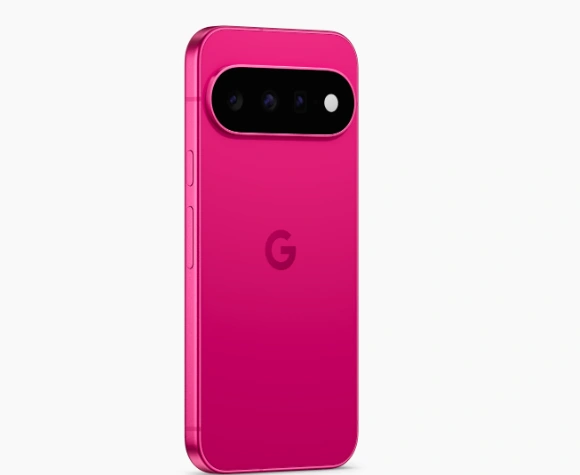
This year’s Pixels look more like siblings than ever. Google moved to an edge-to-edge glass camera bar across the range so the back reads cleaner and more unified. The standard Pixel 11 uses a camera bar that’s 40% thinner than the Pro models, which helps it feel a touch sleeker in the hand.
The headline design change lives on the Pro phones, and it’s called HiLight. Google dropped the rear temperature sensor that sat on the Pixel 9 and 10 and replaced it with a circular cluster of LEDs. HiLight glows when you talk to Gemini, when a notification arrives, and in a few other situations. You can customize the colors and patterns.
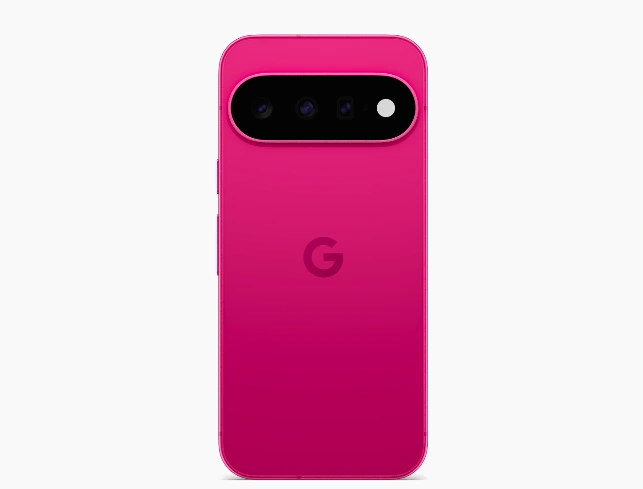
The pitch is that HiLight keeps you off the screen. A quick look at the back tells you if something needs attention, without lighting up the entire display and pulling you into a doomscroll. Whether that actually changes your habits is a personal thing, but as a physical feature it’s the most distinctive Pixel design touch in years.
Google also went hard into sustainability. The Pixel 11 uses more recycled material than any Pixel before it, with 100% recycled aluminum in the housing, recycled cobalt and lithium in the battery cell, and plastic-free packaging. If you care about that footprint, it’s a genuine point in the phone’s favor rather than marketing filler.
Display: what you actually see
All three slab models are AMOLED panels and refresh at 120Hz, so scrolling and animation would feel smooth in any one of them. The difference lies in size and finesse.
Pixel 11: 6.3-inch 120Hz AMOLED.
Pixel 11 Pro: 6.3-inch 120Hz LTPO AMOLED.
Pixel 11 Pro XL: 6.8-inch LTPO AMOLED.
The LTPO panels on the Pro phones can lower their refresh rate to save power and so can do so effectively, which the standard model cannot do. Google has also raised Pro peak brightness to 3,600 nits, which is important if you are using your phone outdoors in harsh sunlight. Both Pro models use Gorilla Glass Victus 2 and claim roughly double the scratch resistance of the previous generation.
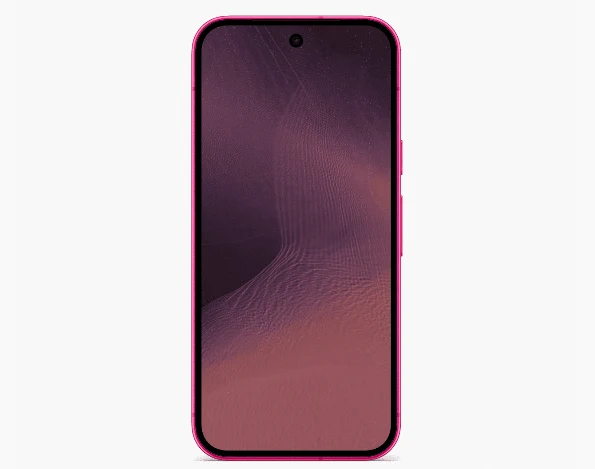
For the average buyer, the base Pixel 11’s screen is more than sharp and bright enough. You’re paying for the Pro display if you spend a lot of time outside or you want the extra size of the 6.8-inch XL.
Tensor G6: the processor story
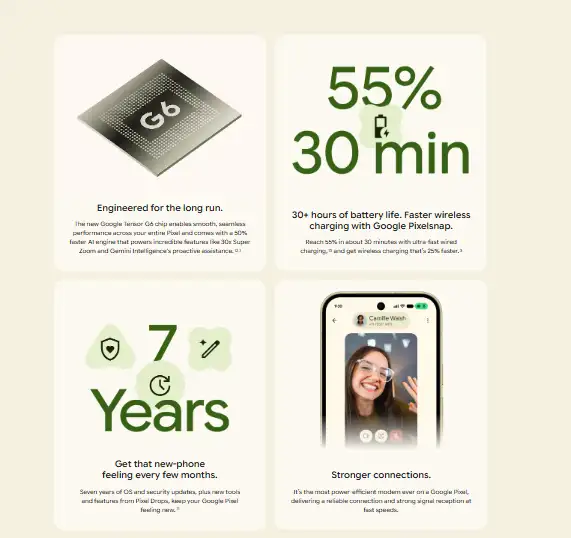
Every Pixel 11 runs Google’s Tensor G6 chip. On paper, it’s around 20% faster and 20% more power efficient than the previous Tensor, with a TPU processing Gemini approximately 50% faster. It also folds in the Titan M3 security chip, which Google calls its most secure Pixel platform yet, complete with quantum-safe secure boot.
An important note for US buyers who cross-shop: Tensor chips have never won raw benchmark wars against Apple’s A-series or Qualcomm’s top Snapdragons. Google doesn’t develop Tensor to rank in a spec chart. It does so in order to run AI on its devices, and that is where the G6 goes about spending its transistor budget. The 50% faster Gemini processing is the one Google really cares about.
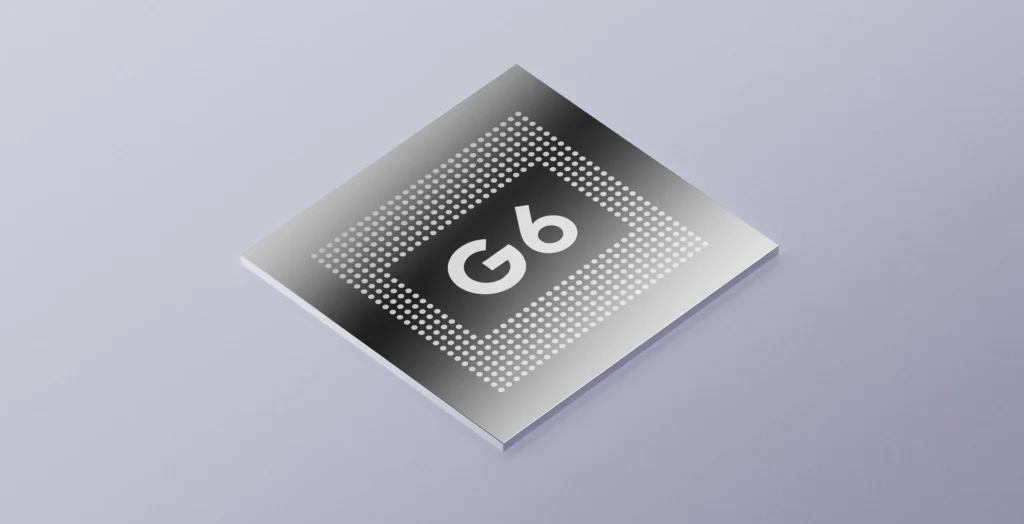
In other words, if you are the type of person who judges phones by frame rates in gaming and Geekbench scores, the Pixel 11 will look like a step behind the iPhone 17 Pro. That’s the flip when you test it by how fast it transcribes a voice note, translates a video, or edits a photo without touching the cloud.
Here’s what most spec roundups skip: the Pixel 11 has 12GB of RAM, while both Pro models have 16GB. On a phone that relies on AI models locally, that memory gap is more important than the chip name. More RAM keeps more of Gemini’s on-device work alive instead of reloading it, and the speed of those AI features is less and less on your mind. If AI is your reason for buying a Pixel, the Pro’s extra 4GB is quietly one of its best arguments.
Camera upgrades worth caring about
Cameras are the reason people buy a Pixel, and the Pixel 11 divides its upgrades greatly between the base and Pro tiers of the range.
The standard Pixel 11 is now equipped with upgraded sensors and 30x max digital zoom. The Pro and Pro XL have new main and telephoto sensors, 120x max zoom, and a 42MP selfie camera. That zoom gap is the most obvious hardware line between the two tiers this year.
The software side is where Google usually wins, and the Pixel 11 is working very hard here:
- NightSight is now instant. Google says that it captures at 4.5 times the speed of previous Pixels, so low-light images don’t make you sit still while a progress bar crawls.
- Magic Capture uses Gemini to automatically fire off the best moments. It looks for smiling faces and movement and captures the shot without tapping. For parents and pet owners, this could become a feature that is at once indispensable.
- A teleprompter mode overlays your script on a viewfinder as you record and scrolls the text as you talk. Anyone working on video content will notice this one first.
- Pro Stable Video is now available on all Pro models for steadier footage, and Google claims the highest Pixel video quality to date.
Circle to Search is finally available in the camera app too, which longtime Pixel owners had been hoping to get. The camera verdict depends on how you shoot. If you shoot a lot of long-range pictures, portraits, or video, the Pro has a real difference with the 120x zoom and 42MP selfie on the Pro. If you are used to taking everyday photos in decent light and you shoot in close proximity with the camera, the base Pixel 11’s sensors and Google’s processing will get you 90% of the way there for $400 less than the Pro.
Battery and charging
Battery capacity actually went up this year, which is a pleasant surprise given how thin these phones are getting.
- Pixel 11: 4,985mAh
- Pixel 11 Pro: 4,850mAh
- Pixel 11 Pro XL: 5,115 mAh
Google rates all three for 30+ hours of typical use. The charging speed is split by tier: the base Pixel 11 hits 50% in 30 minutes, and the Pro models hit 75% in the same time. The Pro phones also charge up to 29% faster wirelessly than before, and the base Pixel 11 now supports 25W wireless charging.
Every model has Pixelsnap magnets built in so MagSafe accessories snap right on without a special case. If you have a collection of magnetic chargers, stands, or wallets, they carry over.
Gemini and the software pitch
Google is selling the Pixel 11 as a transition from Android being an operating system to being an “intelligence system.” It’s marketing language, but the features are concrete. The phones come with Android 17 and a stack of Pixel-only tools built on Gemini.
The standouts:
- On-the-fly video translation. Gemini can translate a video, including the spoken audio, into your chosen language as you watch.
- Rambler, a smarter voice-to-text engine that strips out the “ums” and “uhs” and lets you talk naturally instead of dictating in careful sentences.
- Circle to search in the camera, closing a long gap for Pixel users.
Google also promises years of OS and security updates over time, and all of them are one of the key reasons to buy a Pixel over cheaper Android phones. A phone that stays current for the better part of a decade changes the value math on that $899 price, and it’s a promise that Apple has matched but most Android makers still don’t.
Pixel 11 vs Pixel 10
If you have a Pixel 10, the upgrade question is a real one. The design upgrade, Tensor G6, HiLight on the Pro models, and the camera improvements are all right, but they’re evolution rather than reinvention. The $100 price increase and loss of the 128GB tier are also in the same-year range.
| Feature | Pixel 11 (base) | Pixel 10 (base) |
| Starting price (US) | $899 (256GB) | $799 (128GB) |
| Chip | Tensor G6 | Tensor G5 |
| RAM | 12GB | 12GB |
| Base storage | 256GB | 128GB |
| Rear camera bar | Edge-to-edge glass, 40% thinner | Previous-gen bar |
| HiLight LED | Pro models only | Not available |
| Wireless charging | 25W (base) | Slower |
| Software | Android 17 + Gemini Intelligence | Android 16 |
It’s the honest answer: if you’re on a Pixel 10, skip this one unless HiLight or the camera upgrades are the most important. For those on a Pixel 9 or older, the Pixel 11 is a huge step up in almost every category. Coming from a two- or three-year-old phone is the best time to buy this generation of phone.
Pixel 11 vs iPhone 17
If you’re a US buyer looking to buy the two big flagships, then this is the comparison that is the basis for most of your purchases. The iPhone 17 starts at $799, costing $100 less than the $899 Pixel 11.
| Feature | Pixel 11 | iPhone 17 |
| Starting price | $899 | $799 |
| Display | 6.3-inch OLED, 120Hz | 6.3-inch Super Retina XDR, 120Hz |
| Chip | Tensor G6 | Apple A19 |
| Battery | 4,985mAh | 3,692mAh |
| Selfie camera | 10.5MP | 18MP |
| Peak brightness | ~3,000 nits | ~3,000 nits |
| Standout strength | Gemini AI, zoom range, battery | Raw speed, resale value, ecosystem |
The iPhone 17 wins on price, raw processing speed, and a sharper front camera. The Pixel 11 has a much larger battery, deeper zoom, and Google’s AI toolkit. Then, the Pro tier and the Pixel 11 Pro and iPhone 17 Pro start at $1,099, so the decision there is platform over dollars.
The choice generally reflects which ecosystem you already live in. And the iPhone’s pull on your family runs on iMessage and FaceTime, which is hard to resist. If you want the most powerful on-device AI and the longest camera reach for the money, the Pixel 11 has to be the one.
Which Pixel 11 model should you buy?
Four phones is a lot of choice, so here’s how to sort them for a US buyer:
If I want the Pixel 11 ($899), I can get the core Pixel experience without the flagship-Pro money. Tensor G6, 12GB of RAM, 120Hz screen, big battery, and most of the AI features. You give up HiLight, 120x zoom, 16GB of RAM, and the ability to add a lot of speed up in the process. This is a safe choice for most people.
Buy the Pixel 11 Pro ($1,099) if you want the best camera in a compact body, the extra 16GB of RAM for AI, HiLight, and a brighter LTPO display, and a bigger display. It’s the enthusiast’s Pixel that is still small enough to fit comfortably in one hand.
If screen size and battery life are the top criteria of all, Pixel 11 Pro XL ($1,299) is a good buy. The 6.8-inch display and 5,115 mAh cell make it the endurance and media champion of the lineup.
In short, wait for the Pixel 11 Pro Fold (October, ~$1,899) only if a foldable is really how you want to use a phone. It is a niche, premium choice, and it isn’t for everyone.
The Bottom Line
The Pixel 11 is the most confident Pixel Google has shipped in a while, and it needed to be after a quiet Pixel 10 generation. Tensor G6, camera upgrades, design refresh, and the HiLight LED on the Pro models add up to a phone that finally feels like it moved forward. The catch is the $100 price bump and the retired 128GB tier, which land at an awkward moment for anyone watching their budget.
For most US buyers, the standard $899 Pixel 11 is the right buy. It has the AI features, the battery life, and the high-quality photography that make Pixels worth owning, but it doesn’t push you into Pro pricing. Only if you want the 120x zoom and HiLight or a bigger screen.
If you’re upgrading from a Pixel 9 or older, or you’re leaving iPhone to try Google’s AI-first approach, put the Pixel 11 at the top of your list. Check carrier trade-in deals before you buy, because they can knock hundreds off the Pro models and close the gap with the iPhone 17 fast.
Prices, availability, and carrier promotions change quickly. You need to make sure that you confirm current pricing and deals directly with Google or your carrier before purchasing.
Frequently Asked Questions (FAQs)
Q. How much is the Google Pixel 11 in the USA?
A. The Pixel 11 starts at $899 with 256GB. The Pixel 11 Pro starts at $1,099, the Pixel 11 Pro XL is $1,299, and the Pixel 11 Pro Fold is about $1,899. All of them went up about $100 over the Pixel 10, and the 128GB tier is gone.
Q. When was the Google Pixel 11 released?
A. Google announced the Pixel 11 on August 12, 2026, and it went on sale August 20. Pixel 11 Pro Fold ships later, in October 2026.
Q. What chip does the Pixel 11 use?
A. All four models run Google’s Tensor G6, which is roughly 20% faster and 20% more power efficient than the previous Tensor, with a TPU that handles Gemini AI tasks about 50% quicker. It includes the Titan M3 security chip.
Q. Which is better: Pixel 11 or iPhone 17?
A. It is what you want. The Pixel 11 has a bigger battery, longer zoom, and stronger AI on-device, while the iPhone 17 is $100 cheaper, faster in raw benchmarks, and has a sharper selfie camera. Your existing ecosystem usually settles it.
Q. Does the Pixel 11 support wireless charging and MagSafe accessories?
A. Yes. The base Pixel 11 supports 25W wireless charging, and every model contains built-in Pixelsnap magnets, so standard MagSafe accessories attach without a special case.