

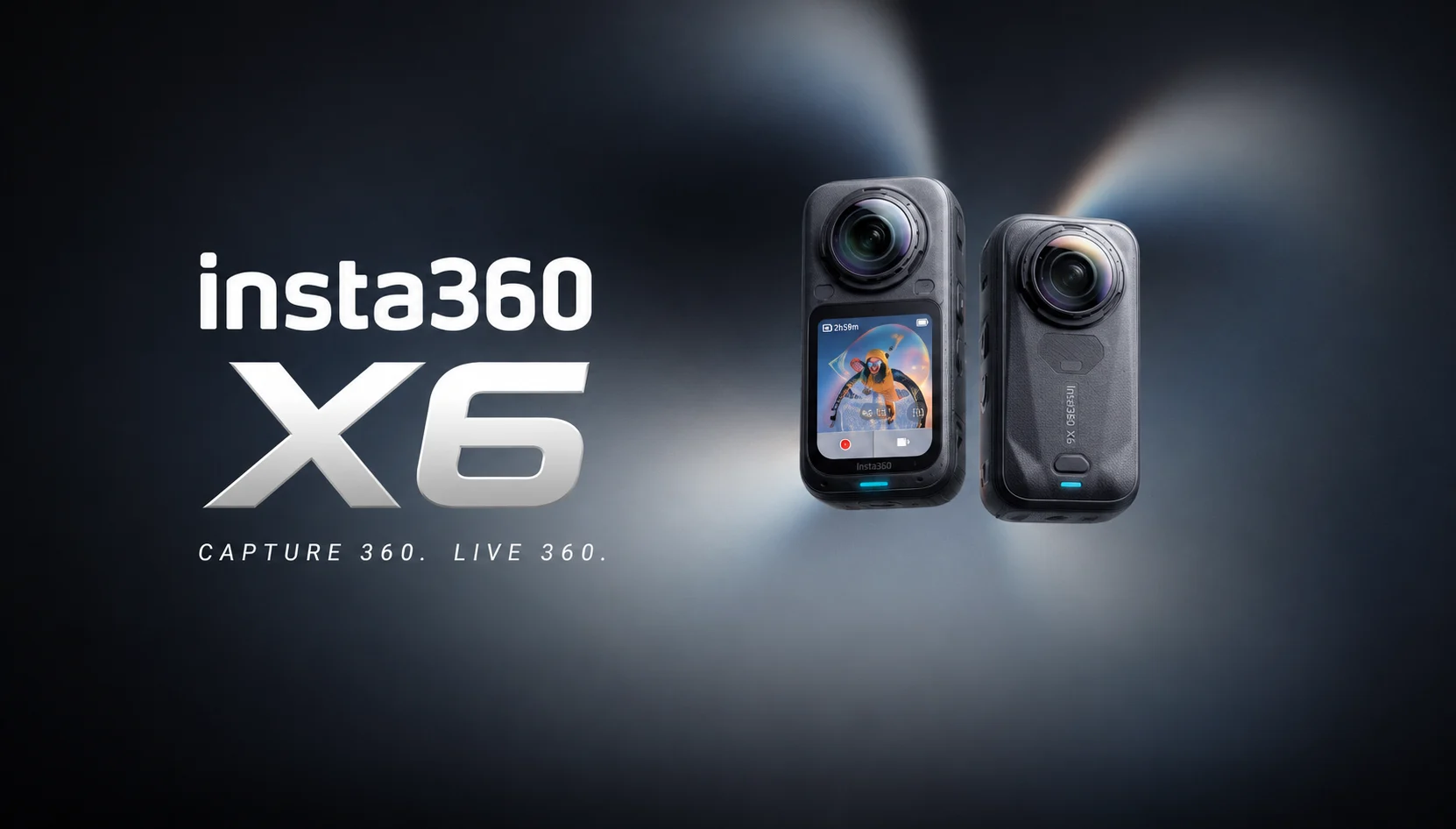
For three years, I used 360 cameras as a vacation toy. Fun for a ski trip but useless for anything I would actually bill a client for. The Insta360 X6 broke that habit in about a week. It launched on August 12, 2026, and after living with it, the pitch is simple: this is the first spherical camera I’d hand to a paying client without a caveat attached.
That’s a big claim, so this review justifies it. You’ll get to see what the Insta360 X6 does well and where it stumbles (the app issue merits a warning label), how it stacks up against GoPro Max 2 and DJI Osmo 360, and who should skip it. By the end you’ll know whether the $699.99 asking price makes sense for the way you shoot, not the way a spec sheet says you should.
Insta360 X6 at a Glance
The Insta360 X6 is Insta360’s tenth-anniversary launch, and the company wanted a statement piece. The headline number is 8K 360 video at 50 frames per second, up from the X5, which has 30. But the spec that makes the camera feel different isn’t a resolution figure at all. It’s the sensor.
The Insta360 X6 has two ultra-wide lenses with 180 degrees of field of view at the same time, pointing in two opposite directions. They take in everything above, below, and around you one at a time. You point the camera roughly in the right direction, hit record, and decide the framing later on your computer or phone. Shoot first, aim second.

The body has changed shape too. Older X-series cameras kept getting taller until they barely fit a jeans pocket. The Insta360 X6 is shorter, wider, and comes in at just 2 by 3 inches and around 6.9 ounces. It’s still a stick and not the squat cube GoPro and DJI favor, and that matters a lot more than it sounds like it should.
What’s new: the sensor is the whole story
Insta360 teamed with Sony on a pair of custom 1/1.1-inch square sensors, up from the 1/1.28-inch sensors in last year’s X5. On paper that’s roughly a 33% increase in sensor area. In practice, the camera gets much more light per frame, the single largest lever you can pull for image quality on a device this small.
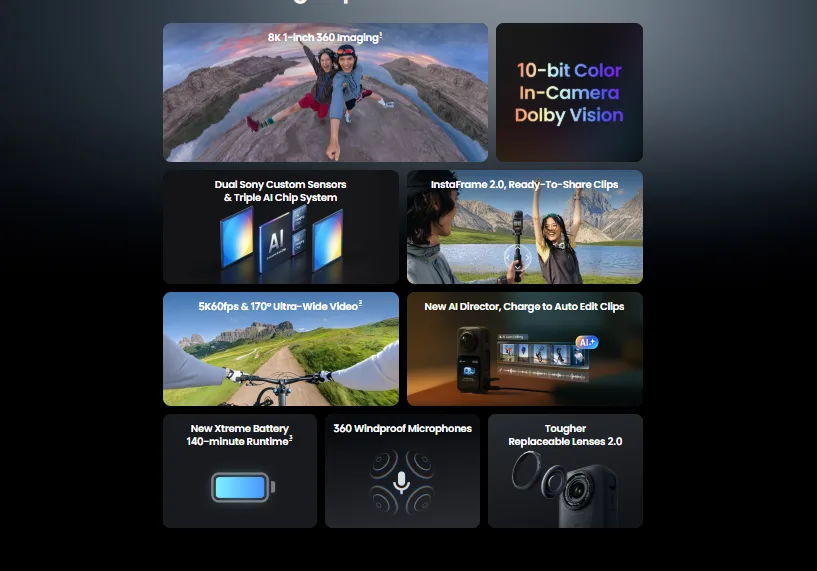
Behind the sensors is a triple-chip setup: two imaging processors as well as an updated Qualcomm 4nm chip that is doing the heavy lifting. Insta360 also added 10-bit color, native in-camera Dolby Vision (a first for any 360 camera) and I-Log capture for people who grade their footage. That last cluster is the tell that Insta360 is chasing filmmakers now, not just skiers.
Here’s what most reviews gloss over when it comes to that sensor jump. The square shape is not a marketing flourish. A 360 camera projects a circular image on each sensor. A rectangular sensor simply wastes the bits of silicon on the left and right of the circle that never touch the circle. A square sensor wraps the circle much more effectively, and so more of the light-gathering surface is actually used. DJI figured this out first with the Osmo 360.
Insta360 has now come up with square sensors of its own, and the result is a camera that doesn’t force you to choose a “daytime rig” and a “nighttime rig.” That single-camera flexibility is the real upgrade, and no resolution number on the box captures it.
Insta360 X6 Image Quality, Day and Night
Daylight footage is excellent, but honestly the X5 was already good in daylight. The gap opens up when the sun goes down.
I shot a night market scene: string lights, neon signage, moving people, and the works. The X5 would have smeared the shadows into mush and let the highlights bloom. The Insta360 X6 held detail in the dark corners and kept the neon from blowing out, thanks to two additional features. First, two dedicated ambient-light sensors cut the flicker you normally get under artificial lighting. Second, a tone-mapping system Insta360 calls AdaptiveTone 2.0 (adaptiveTone 2.0) measures each lens independently and captures two exposures per frame in order to broaden the dynamic range.
And there is a dedicated PureVideo low-light mode with AI noise reduction. The trouble is it is 30fps at all resolutions, so you lose motion smoothness for cleanliness. Fair trade at night, in my opinion.
For stills, the Insta360 X6 takes 120 MP 360 photos, and portrait shots get automatic skin-tone correction so faces don’t appear sickly in mixed light. I wouldn’t retire a real camera over it, but for grab-and-go 360 stills, it’s the best I’ve ever used.
Insta360 X6 Video modes and what they’re actually for
The mode list is long enough to be confusing, so here’s the plain-English version of what each one is for:
- 360 mode (8K50 / 6K60 / 4K100): Your default. Capture everything, and reframe later. The 50 fps at 8K is the star since it gives you smooth motion and room for half-speed slow-mo while keeping enough resolution to crop hard.
- PureVideo (30p cap): Night and low light. Turn it on when the sun’s gone.
- InstaFrame 2.0: The one I used most. It tracks a subject and spits out a clean, already-framed flat video while quietly keeping the full 360 file as backup. You get a share-ready clip and the raw sphere to mine when it’s time to B-roll later on.
- Single-lens mode (up to 5K60, 4K120 slow-mo at 5K30) puts the Insta360 X6 right in line for a regular action cam when you don’t need 360.
- Bullet Time (8K100 / 6K120 / 4K240): The spin-around-you effect, now at absurd frame rates.
- Timelapse (up to 16K): Niche, but the resolution ceiling is genuinely wild.
Stabilization takes place through Insta360’s FlowState system with 360 Horizon Lock, and it still leads the class. Footage of a bumpy gravel descent came back looking like it was shot on a gimbal.
The InstaFrame 2.0 workflow is the quiet productivity story here. A normal 360 workflow shows you shoot and then keyframe the camera angle for every clip in the evening. InstaFrame does the framing at capture time. My export nights became significantly shorter, and that is the difference between a fun toy and a tool that I need to use on a work day.
Battery Life, Heat, and Durability
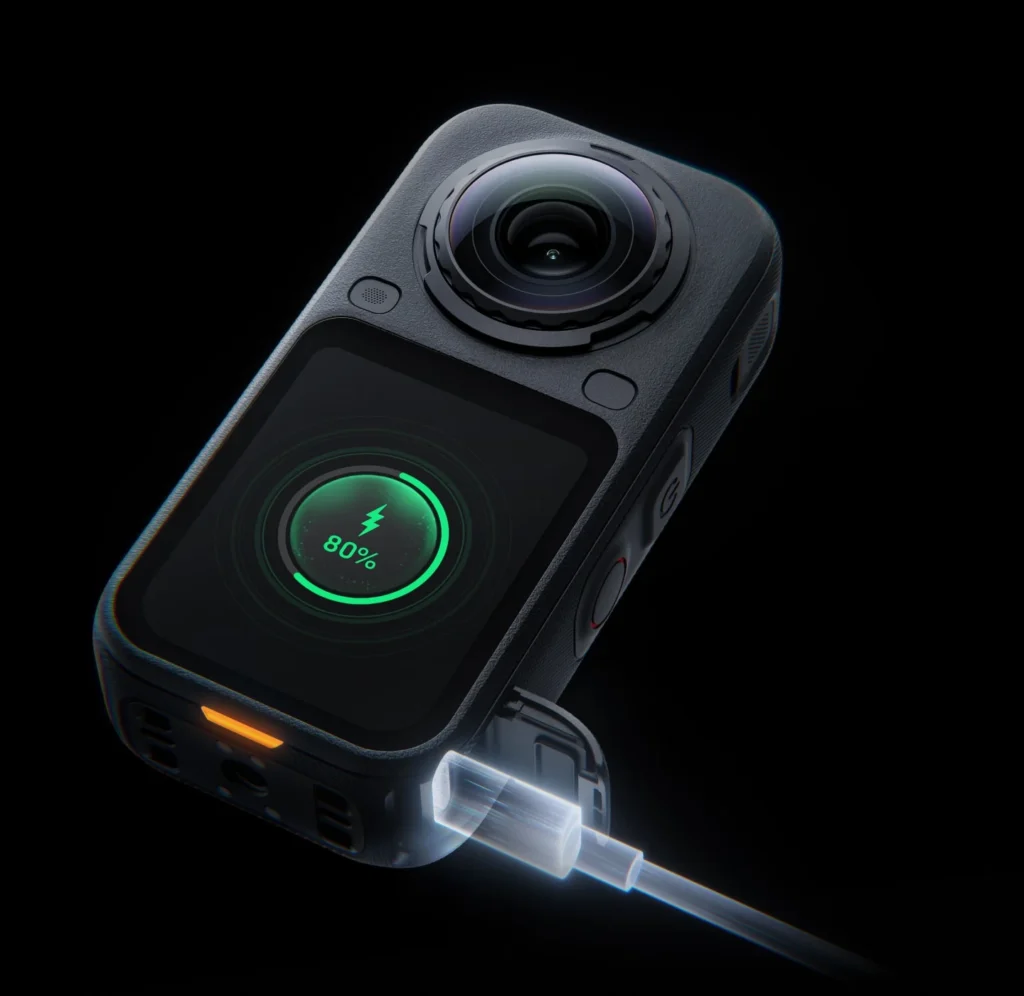
The Insta360 X6 supports a 2,600 mAh Xtreme Battery rated for 140 minutes of 8K30 recording. Insta360 rates that to be 51% longer than the X5, and my real-world time landed close to that when I mixed 8K30 and InstaFrame. I never found the spare cell during a day of shooting. It charges up to 80% in 15 minutes and continues to -20°C; winter sports shooters will appreciate it.
But heat has long been the Achilles’ heel of these cameras in the past. The X5 and GoPro Max 2 both throttled or shut down during long-time 8K recordings at room temperature, sometimes in the shorter term. The Insta360 X6 has a cooling system. Insta360 calls Star-Ridge, and long 8K takes are held up much better than my previous experience with the X5. It’s not immune to heat, but it’s the most composed 360 camera I’ve ever run on a hot day.
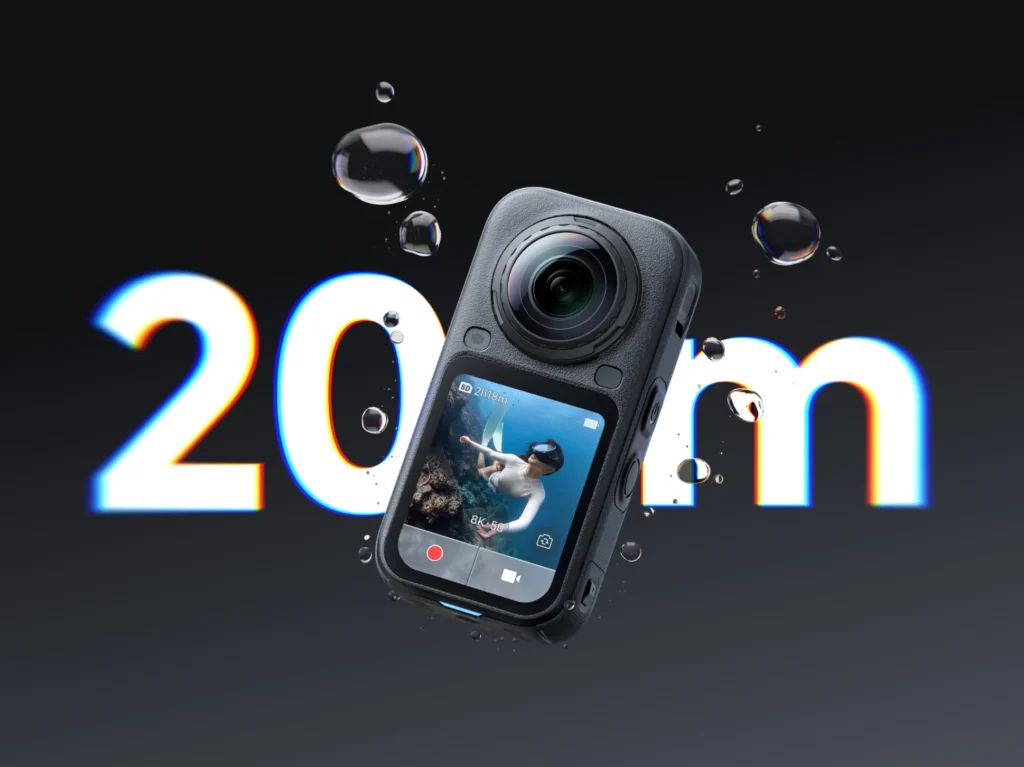
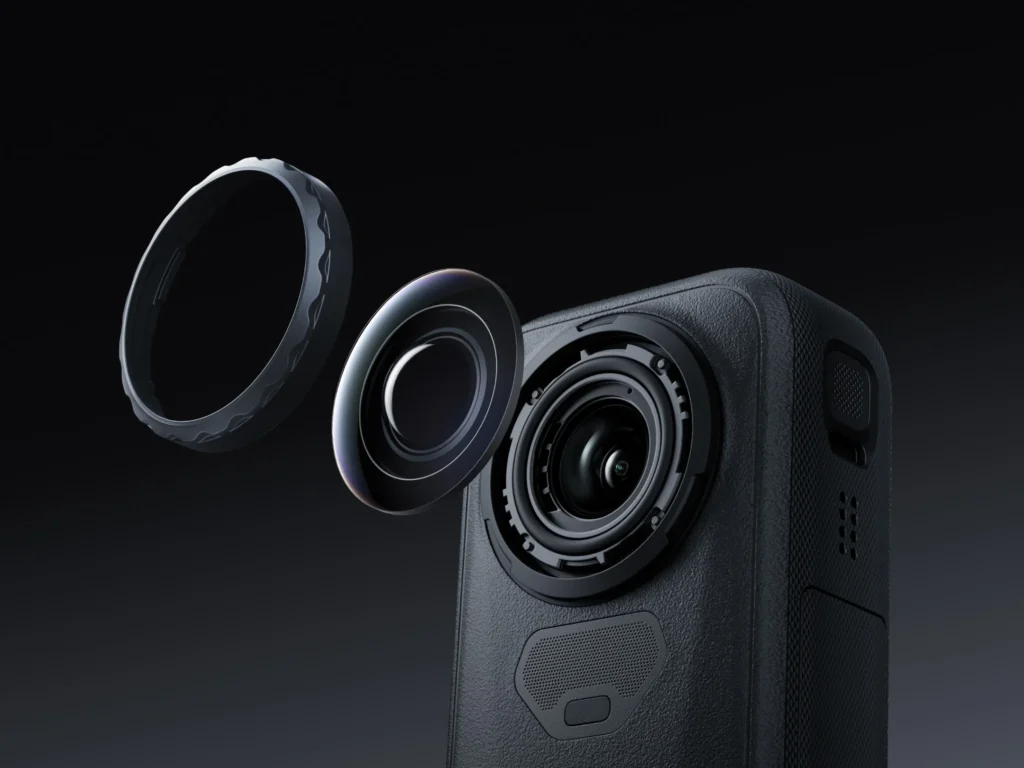
And on durability, the Insta360 X6 is IP68-rated and waterproof to 20 meters (about 65 feet) with no case at all. Add the Invisible Dive Case Pro, and you are good to 60 meters. The best thing about it is that Replaceable Lens 2.0 is five times more scratch-resistant than the old one and 60 percent cheaper to replace. As a camera destined to be dropped on trails and scraped on rocks, that lowers your long-term cost of ownership in a way the spec sheet does not quite call attention to it loud enough.
There is also a smart audio touch: a 360-degree windproof mic array and a hidden mic tuned for motorcyclists to cut wind roar while keeping engine sound. Niche, but if that’s you, it’s thoughtful. Coupled with the Mic Pro, you can get real clean audio in the wind.
The app problem nobody’s warning you about
Time for the warning label. The Insta360 X6’s hardware is nearly flawless. Its software, at launch, is not.
Several users reported the companion app crashing repeatedly during editing and export, in particular on older mobile phones. Insta360’s own advice is that the iPhone 15 or newer is the oldest model that could run the app reliably [insert source: TechRadar / TechTimes launch reviews]. Which is a big caveat, as the AI-based editing features justify a substantial portion of the price premium of the Insta360 X6. If your phone is a few years old, you may be paying for tools you can’t run smoothly yet.
I read: these are teething issues, not fundamental flaws. Insta360 has a long history of patching launch-week app issues, and the desktop editing path (including DaVinci Resolve support) is solid (no matter your phone). But you should be notified before you buy, especially if you were going to edit on the phone in your pocket right now.
The upside of that AI push is real when it works. PanoMind, Insta360’s in-house 360 AI, and AI Director, which scans your video and drafts edits while the camera charges, both signal a future in which the laborious part of 360 gets automated away. But don’t buy the X6 today expecting that experience on a 2022 handset.
Insta360 X6 vs X5 vs GoPro Max 2 vs DJI Osmo 360
The 360 market became crowded fast. The current flagships are in line here.
| Feature | Insta360 X6 | Insta360 X5 | GoPro Max 2 | DJI Osmo 360 |
| Launch Price | ~$699.99 | ~$549–$599 | ~$499.99 | ~$549 |
| Max 360 Video | 8K at 50fps | 8K at 30fps | 8K at 30fps (“true 8K”) | 8K at 30fps |
| Sensors | Dual 1/1.1″ square | Dual 1/1.28″ | Dual 1/2.3″ | Dual 1/1.1″ square |
| Battery Capacity | 2,600 mAh | 2,400 mAh | 1,960 mAh | 1,950 mAh |
| 8K30 Record Time | ~140 min | ~90 min | ~60 min | ~100 min |
| Waterproofing (No Case) | 20 m | 15 m | 5 m | 10 m |
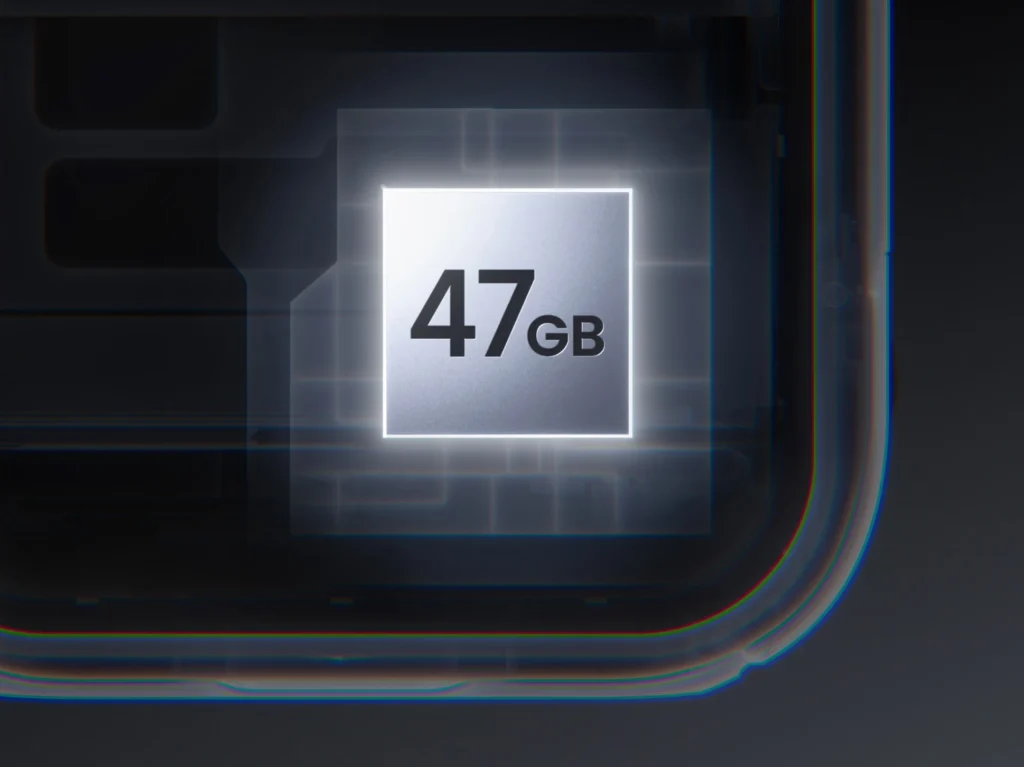
| Standout Extra | Dolby Vision, InstaFrame 2.0, 10-bit i-Log, 47 GB internal storage | Mature software ecosystem, AI PureVideo | Built-in GPS, 6-mic array, tool-free lens swap | Compatible with Osmo Action battery ecosystem |
On that grid, a few honest takeaways:
To compare the X5 with the X6, one has to think that it’s not just a spec bump. It’s bigger sensors, 50 fps Dolby Vision, 51% more battery, built-in storage, and cheaper replacement lenses. If you own an X5 and shoot in good light all day long, you don’t need to upgrade. If you shoot all night or for work, then the jump is worth it.
With the GoPro Max 2, the story is price vs polish. GoPro undercut the X6 by $200, offers genuine “true 8K” with no upscaling, and adds built-in GPS and six microphones. But its smaller 1/2.3-inch sensors don’t perform as well in low light, the battery life is shorter, and its Quik app doesn’t have a desktop editor. The Max 2’s squat shape sits lower on a helmet, which cyclists and motorcyclists do like most. Different philosophies and GoPro wins on value and helmet mounting.
But the DJI Osmo 360 is the closest fight, because DJI also uses 1/1.1-inch square sensors and pioneered the efficient-sensor idea. The Osmo undercuts the X6 on price, and its batteries are part of the more holistic Osmo Action line. Insta360 has a more advanced editing infrastructure, Dolby Vision, longer stated battery life, and InstaFrame 2.0.
The one-line summary: the X6 wins on all-round image quality and workflow; the Max 2 wins on price and helmet ergonomics; the Osmo 360 wins on value and battery flexibility.
Insta360 X6 price and which bundle to buy
The X6 launched at $699.99 / £619 / AU$1,049.99 for the Standard bundle: the camera, a USB-C cable, a pouch, lens cloth, and a quick-start guide. Nothing else.
The Essentials bundle is $799.99 / £709 / AU$1,159.99 with a second Xtreme Battery, a fast-charge case, an invisible selfie stick, and a lens cap.
My advice: skip the Essentials battery upgrade if you’re a casual shooter because the single cell lasted me a full day. But the invisible selfie stick is close to mandatory for 360, since it disappears from the footage and gives you those floating drone-like shots. If you don’t buy the bundle, buy the stick separately. Insta360 also backed early buyers with a 90-day free replacement policy during the launch window [insert source: Insta360 launch page], which is worth confirming is still active before you order.
It is available in Midnight Black or Arctic White if that sways you.
Who should buy the Insta360 X6 (and who shouldn’t)?
Buy it if you’re a traveler who wants to record the whole location without fussing over composition, a creator who has to spin one recording into a dozen social formats, a cyclist or skier who wants to shoot themselves and the scene at the same time, or a filmmaker who needs Dolby Vision and a real color pipeline out of a pocket device.
Think twice if you’re on a tight budget (the Max 2 saves you $200), if you mostly helmet-mount for action sports (the Max 2’s low profile fits better), or if you’re on your phone before the iPhone 15 and you were counting on phone-based AI editing at launch.
The Verdict
It comes down to one question: do you shoot for fun or do you shoot to deliver something?
If it’s only for fun and you’re keeping your budget in mind, the GoPro Max 2 or DJI Osmo 360 will bring you joy for less money. But if you want the best, most capable small 360 camera on the market right now, which finally handles daylight and darkness without making it impossible to compromise, the Insta360 X6 is it. The hardware is almost perfect. The launch-week app is not, and older-phone owners should take it into account.
For me the Insta360 X6 crossed a line no previous 360 camera had ever crossed. It stopped being the thing I packed for vacation and became the thing I pack for work. That’s the highest compliment you can give a camera this size.
Your next step is to determine your phone situation first. If you’re on an iPhone 15 or newer (or you edit on desktop), you would order the Essentials bundle for the selfie stick and shoot with confidence. If your phone is older, you’d either budget for upgrading or plan a desktop workflow before you commit. That one thing that’s really important will ensure that the Insta360 X6will not disappoint.
Frequently Asked Questions (FAQs)
Q. Is the Insta360 X6 waterproof?
A. Yes. It is IP68-rated and waterproof to 20 meters (about 65 feet) with no case. With the optional Invisible Dive Case Pro, you can take it down to 60 meters.
Q. What’s the difference between the Insta360 X6 and X5?
A. The X6 has larger 1/1.1-inch sensors, shoots 8K 360 video at 50fps instead of 30, adds native Dolby Vision and 10-bit color, lasts about 51% longer per charge, has 47GB of built-in storage, and uses cheaper, tougher replacement lenses. It is a full generational upgrade rather than a minor refresh.
Q. Is the Insta360 X6 better than the GoPro Max 2?
A. For image quality (especially low light), battery life, and editing software, yes. The Max 2 is $200 cheaper, adds built-in GPS, and sits lower on a helmet for action sports. Choose the X6 for all-around quality and workflow and the Max 2 for value and helmet mounting.
Q. Do I need a new phone to use the Insta360 X6?
A. Not to shoot, but the AI-editing app works only on an iPhone 15 or newer according to Insta360’s own guidelines, and it was unstable on older phones at launch. If you want to edit on your phone, first check your model and/or edit on desktop instead.