

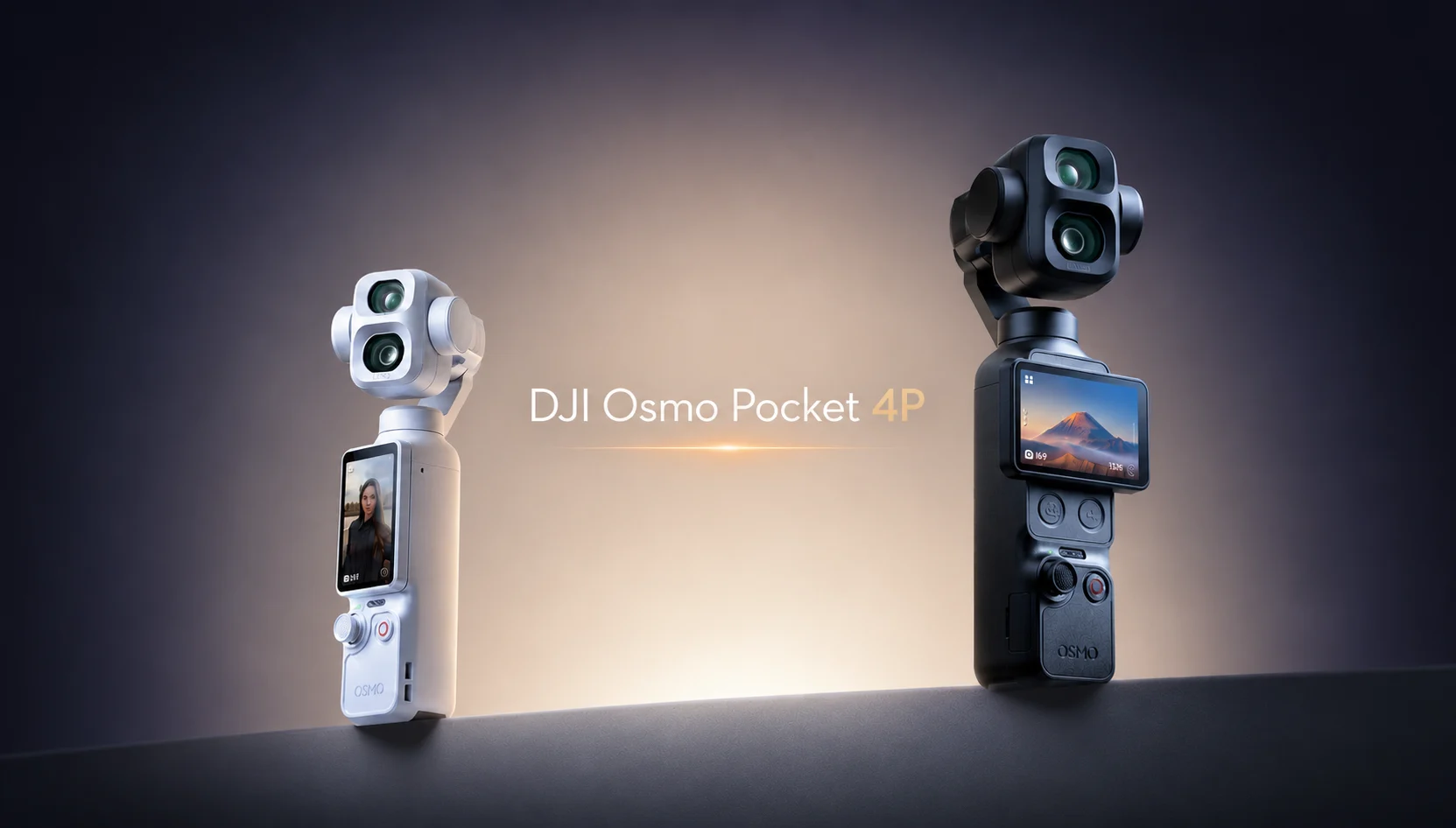
For years, the knock against DJI’s pocket cameras was simple: one lens, one look. Great stabilization, wonderful for a walk-and-talk vlog, but you were stuck at a single wide focal length. The DJI Osmo Pocket 4P finally breaks that ceiling. It bolts a second camera onto the gimbal, a proper 60mm telephoto, and pairs the main sensor with dynamic range numbers that read like a cinema camera’s spec sheet.
Here’s what you’ll come away with: how much the DJI Osmo Pocket 4P actually costs, whether those headline specs work in the real world, how it competes with the Pocket 3 and the Insta360 Luna Ultra, and the awkward regulatory reason you can’t just add it to your Amazon cart if you live in the States. Let’s get into it.
What the DJI Osmo Pocket 4P Really Is
The DJI Osmo Pocket 4P is considered the “Pro” version of the standard Osmo Pocket 4, which is why tons of people already call it the Pocket 4 Pro. The only thing that changes is the dual lens setup on a three-axis mechanical gimbal.
The primary camera uses a 20mm-equivalent, f/2.0 wide-angle lens in front of a new CMOS sensor. That’s your everyday vlogging and travel lens: wide enough to hold at arm’s length but still a good fit for your face and the scene behind you.

The second lens is the real story. It is a 60mm-equivalent f/1.8 medium telephoto with its own 1/1.28-inch sensor. That focal length is the classic portrait length, and since it’s a real optical lens and not a digital crop, it provides real subject separation and softer, more natural background blur. No previous Pocket has carried anything like it.
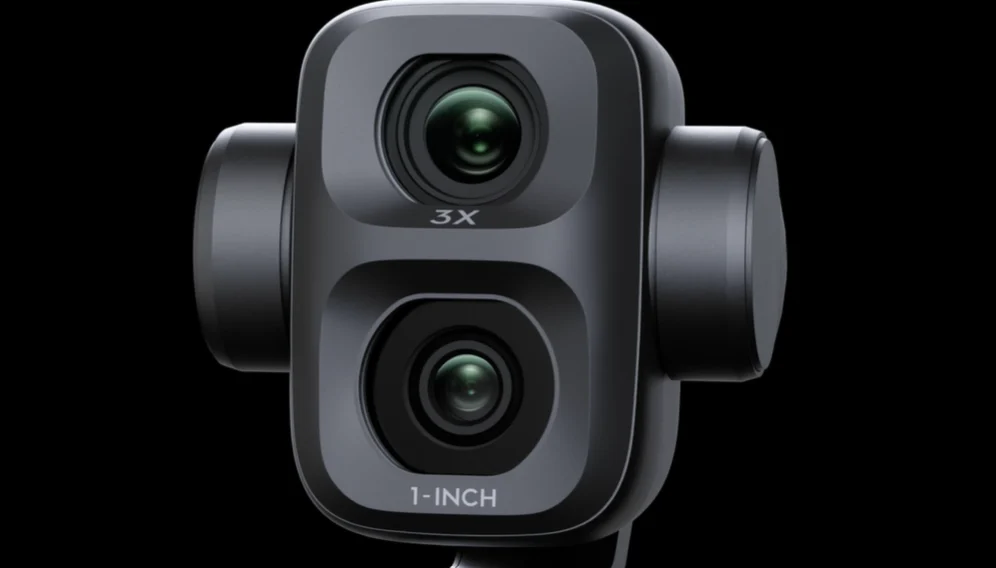
Only one lens runs at a time. The camera switches between them automatically based on your zoom level, so in practice it is really like a single camera with a much longer reach.
DJI Osmo Pocket 4P Release Date and the Strangest Rollout in Camera History
If you felt like you were hearing about this camera for a long time before you could buy it, you didn’t think you were. The launch was a mess.
DJI first teased the dual-camera concept in the spring of 2026, just after the standard single-lens Osmo Pocket 4 shipped. Then a low-key reveal was made at the Cannes Film Festival in May. Then the camera actually went on sale in China on June 29, 2026, while reviewers everywhere else sat under embargo watching Chinese buyers post footage.
The global launch date was on July 30, 2026 in Europe, the UK, Canada, and Australia. Influencers and creators were even allowed to publish sample clips before traditional press could run full reviews, which is unusual and tells you how tightly DJI was managing the story.
One region was conspicuously missing from that worldwide rollout. More on that in a second.
DJI Osmo Pocket 4P Price (and the US Availability Problem)
Let us talk money, then the catch.
At launch, DJI set the DJI Osmo Pocket 4P price like this in the two headline markets:
| Combo | UK Price | Europe Price | USD (approx.) |
| Standard Combo | £529 | €599 | ~$619 |
| Vlog Combo | £605 | €689 | ~$710 |
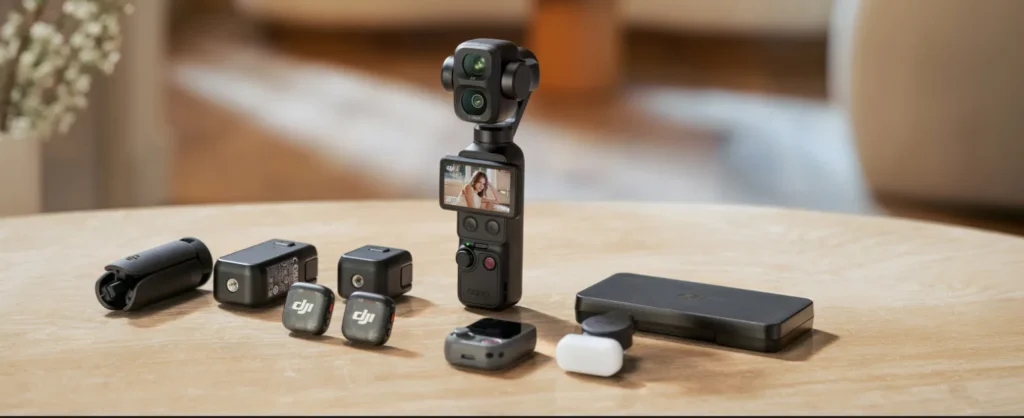
The Standard Combo is the camera, magnetic fill light, carrying pouch, and a handle with a quarter-inch tripod thread. That is enough to start shooting if you have a small tripod or wireless mic.
The Vlog Combo is the better buy for anyone serious about it. It includes the Osmo FrameTap remote controller with its own little touchscreen, a DJI Mic Mini 2 transmitter, a mini tripod, and a bigger case. For around £80 more, that bundle is aggressively priced.
The DJI Osmo Pocket 4P price in the USA is a trick question
Here’s where most buying guides get vague and unhelpful. There is no official DJI Osmo Pocket 4P price in the USA, because the camera is not officially sold in the United States at all.
DJI was on the FCC’s Covered List in late December 2025. That’s very much to hold new DJI hardware from getting the FCC authorization that it needs to be legal in the US. The standard Pocket 4 had already made it that far; the DJI Osmo Pocket 4P did not. When DJI announced the worldwide launch, it explicitly left the US out.
You will find units on eBay and gray-market importers shipping from China, often between $620 and $960 depending on the combo and the seller’s markup. Those aren’t backed by a US warranty, DJI Care Refresh is harder to claim, and you’re trusting a third-party seller. That’s the honest picture, and it’s the single most important thing an American reader needs to know before falling in love with the spec sheet.
Before you publish, verify the accuracy of regional pricing, combo contents, and US regulatory status. Check current figures on store.dji.com for your region before this goes live.
Full DJI Osmo Pocket 4P Specs
Here is the DJI Osmo Pocket 4P specs sheet at a glance, pulled from DJI’s official listing and hands-on coverage:
| Feature | DJI Osmo Pocket 4 / 4P |
| Main Sensor | 1-inch CMOS, LOFIC design |
| Main Lens | 20mm equiv., f/2.0 |
| Second Sensor | 1/1.28-inch CMOS |
| Second Lens | 60mm equiv., f/1.8 |
| Max Video | 4K at 240fps (wide); 4K at 200fps (tele) |
| Dynamic Range | Up to 17 stops (main camera, D-Log 2 only) |
| Color Profile | 10-bit D-Log 2 (main camera) |
| Stills | 37MP high-res photos |
| Zoom | 3x optical, up to 12x digital (video) |
| Stabilization | 3-axis mechanical gimbal (Ronin-derived) |
| Tracking | ActiveTrack 8.0 |
| Display | 2-inch rotating OLED touchscreen, 1000 nits |
| Storage | 103GB built-in + microSD slot |
| Battery | 1545 mAh, up to ~210 min (1080p/24 fps) |
| Weight | 230g |
| Colors | Classic black, pearl white |
| Shutter | Electronic, up to 1/16000s |
Verify before you publish: The ActiveTrack version is listed as 8.0 in DJI’s press materials, but a few retail listings still reference 7.0. Confirm the shipping firmware version. Battery runtime varies greatly with resolution and frame rate.
DJI Osmo Pocket 4P Camera and Video Quality: The 17-Stop Question
The number DJI wants you to remember is 17. As in 17 stops of dynamic range, a number it says rivals high-end cinema cameras that cost more than a used car.
That claim relies on a new sensor technology called LOFIC (lateral overflow integration capacitor) that helps the sensor hold onto detail in bright highlights that a normal sensor would blow out. Plus the new 10-bit D-Log 2 color profile, the main camera really can retain an unusual amount of highlight and shadow information.
Is it real? And this is the part worth easing up for.
Here’s what most reviews gloss over
Independent lab tests supported a truly startling result. One well-respected testing outlet measured around 16 clean stops above the noise floor, with a small 17th stop buried in the noise, calling it the best dynamic range result they’d ever recorded and much higher than cameras at many times the cost.
But real-world reviewers were more measured, telling us that the camera doesn’t achieve the full 17 stops once you shoot outside a controlled lab. So both things are true: the sensor is great for its size and price, and the marketing number is a best-case ceiling, not a guarantee.
In addition, there are two caveats that matter more than the headline:
- The full dynamic range and D-Log 2 only apply to the main 20mm camera. The 60mm telephoto doesn’t get D-Log 2 across the board, which is a real annoyance if you want consistent grading between your two lenses.
- To use the good stuff, you need to shoot in a flat log profile and color grade afterward. If you just want punchy footage straight out of the camera, you won’t see the benefit, and you’re paying for headroom you’re not using.
On the video side, both lenses can handle 4K, with the wide camera reaching 240fps for slow motion and the telephoto reaching 200fps. Stills are 37 megapixels, which is more than enough for social posts and web use. There’s also a Slow Shutter Video mode for light trails and motion blur, which used to be done with a tripod and a mirrorless camera.
Design, Display, Battery, and Storage
Physically, the DJI Osmo Pocket 4P body is very close to the standard Pocket 4. It weighs 230 grams and drops into a jacket pocket, which is the whole point of the series.
The only real ergonomic issue with this is the dual-camera-plus-gimbal setup; the head is a little top-heavy compared to older single-lens models. When you first pick it up, it is quite heavy at first but settles into a normal grip very quickly.
The screen is a 2-inch rotating OLED touchscreen rated at 1000 nits, bright enough to frame shots in daylight. You can rotate it from portrait to landscape, which is also how a gimbal is powered on, a little touch that’s intuitive after a day of use.
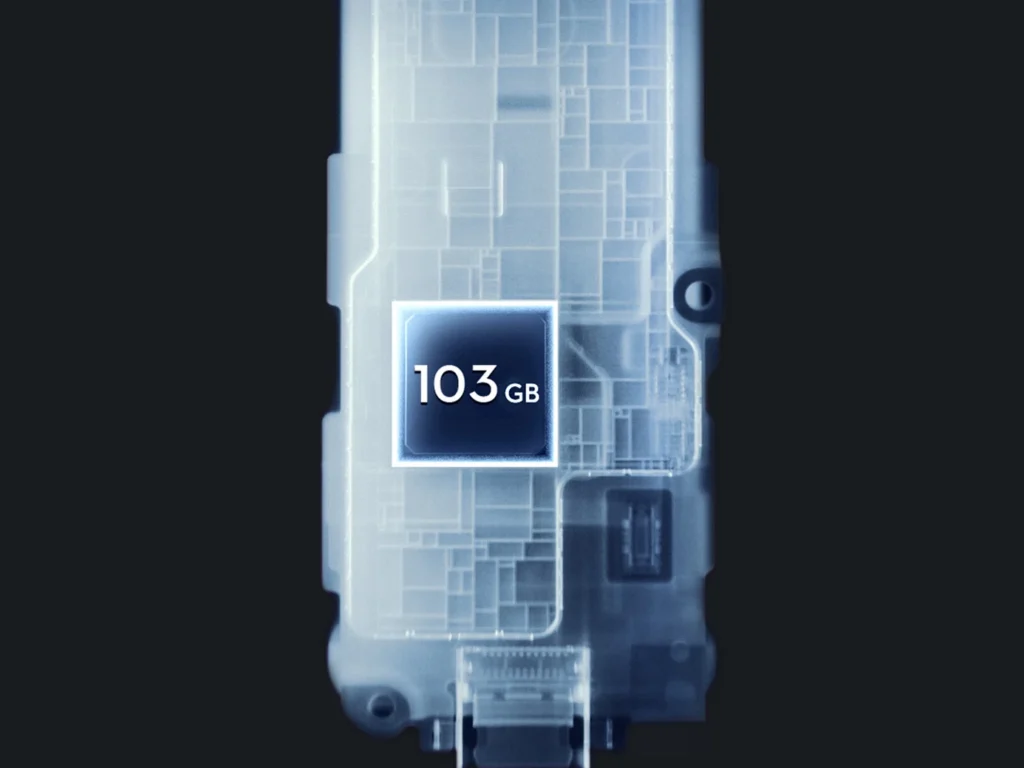
Storage is generous. There’s 103GB built in, which DJI rates at roughly 210 minutes of 4K/60fps footage or 570 minutes of 1080p/24fps. There is a microSD slot as well for expansion, something most compact cameras don’t have these days.
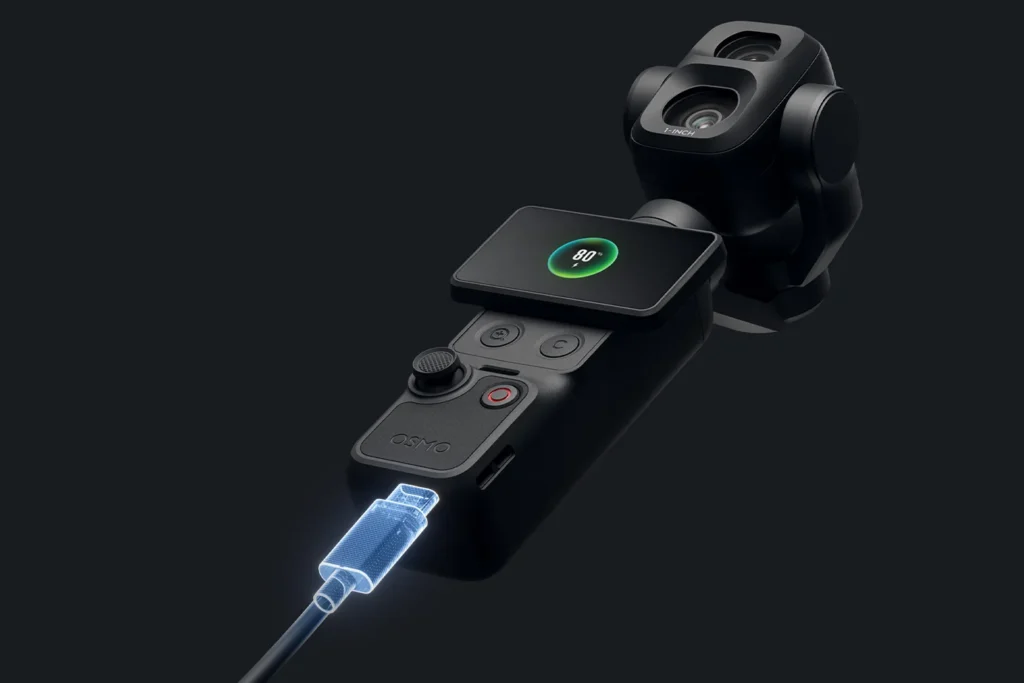
Battery life is about 210 minutes for light 1080p recording, going down with resolution and frame rate. If you shoot all day, the optional Battery Handle lasts about 150 minutes and supports hot-swapping, so you can keep going without a full power-down.
AI Features, Stabilization, and Tracking
Stabilization is the reason anyone buys a Pocket over a phone, and this is where the DJI Osmo Pocket 4P quietly earns its keep. The three-axis mechanical gimbal draws from DJI’s Ronin cinema systems, and the footage comes out smooth in a way electronic stabilization on a phone still can’t match. Walk, jog, and spin around, and the horizon stays level.
ActiveTrack, a tracking system, keeps a subject in the frame. Double-tap a person, a pet, a vehicle, or a moving object, and the gimbal follows it, even out toward the 12x digital zoom range. For a solo creator with no one behind the camera, that’s the feature that makes hands-free shooting possible.
Layered on top are DJI’s software features: on-device film tones, real-time skin smoothing, and deeper color grading with the DJI Mimo app. None of these is revolutionary on their own, but combined they let you move from recording to a shareable clip without opening a desktop editor.
DJI Osmo Pocket 4P vs Pocket 3 vs Pocket 4
Most people reading this already own an older Pocket, so the real question is whether to upgrade. Here’s the honest comparison.
| Spec | Pocket 3 | Pocket 4 | DJI Osmo Pocket 4P |
| Lenses | 1 (wide) | 1 (wide) | 2 (wide + 60mm) |
| Main Sensor | 1-inch | 1-inch | 1-inch (LOFIC) |
| Max Video | 4K/120 fps | 4K/240 fps | 4K/240 fps |
| Dynamic Range | n/a | ~14 stops | Up to 17 stops |
| Color Profile | 10-bit D-Log | 10-bit D-Log | 10-bit D-Log 2 |
| Tracking | ActiveTrack | ActiveTrack 7.0 | ActiveTrack 8.0 |
| Colors | Black | Black | Black, pearl white |
If you own a Pocket 3, the jump to the DJI Osmo Pocket 4P is significant. You get a second lens, much better dynamic range, and faster slow motion. That’s a genuine upgrade, not a spec bump.
If you have a Pocket 4, it is a lot closer. The DJI Osmo Pocket 4P mostly buys you that 60mm telephoto, a wider dynamic range, D-Log 2, and better tracking. Whether that’s worth the price gap depends completely on how much you’d use a second focal length. A Pocket 4 reviewer who loves the Pocket 4 still said she’d use the 4P purely for the 60mm lens, calling that particularly useful for interviews and small details you can’t get close to.
DJI Osmo Pocket 4P vs Insta360 Luna Ultra vs GoPro
The DJI Osmo Pocket 4P didn’t launch into an empty room. Its closest rival showed up first and stole some of DJI’s thunder.
Insta360 Luna Ultra is the direct competitor: another 1-inch pocket gimbal camera in black and white with dual Leica-branded lenses and 8K capability. It’s the more feature-heavy option with the best hardware, but it costs more at every level. The Luna Ultra’s standard bundle is around $769.99/£649/€799, meaningfully above the DJI Osmo Pocket 4P’s Standard Combo. DJI aggressively priced the 4P to undercut it. Insta360’s own co-founder said the company wouldn’t compete on price, which tells you where each brand is aiming.
GoPro plays a different game. The GoPro Hero is a rugged, waterproof action camera for bikes, boards, and helmets. It has electronic stabilization, no mechanical gimbal, and no long telephoto. GoPro still wins if your footage is mostly extreme sports in the rain. If your footage is vlogging, travel, interviews, and B-roll, though, and smoothness and image quality matter more than waterproofing, the DJI Osmo Pocket 4P is the better tool. They are not actually the same category, even though they always end up on the same comparison lists.
Who Should Actually Buy the DJI Osmo Pocket 4P
Cut through the specs and it comes down to this.
Buy it if you’re a solo creator, traveler, or vlogger looking for near-cinema quality in something that fits a pocket and you’ll actually use two focal lengths. The 60mm lens is transformative for portraits, interviews, and detail shots, and the stabilization is better than anything you’ll get on a phone.
Think twice if you already own a Pocket 4 and don’t find that you can’t seem to have the same wide lens and don’t want to buy gray-market hardware without a warranty, or if you live in the US and aren’t comfortable buying gray-market hardware without a warranty. And if you never plan to color grade, you’re paying for dynamic range headroom you don’t want to touch, and that’s dollars of dynamic range headroom you will never touch if you’re not going for color grade.
The Bottom Line
The DJI Osmo Pocket 4P is the most ambitious pocket camera DJI has built, and the dual-lens design is the upgrade the series has needed for years. The 60mm telephoto changes what you can shoot, the main sensor’s dynamic range is legitimately class-leading for the size, and the price undercuts its only real rival.
But it isn’t so much about specs as it is about where you live. It’s about whether you will use a second focal length enough to justify the step up from a Pocket 4, and where you live. Outside the US, it’s an easy camera to recommend and easy to buy. In the US, you’re stuck with imports and no warranty until the regulatory situation changes, which may take a while.
If you’re outside the States and you’ve been waiting for a Pocket that shoots like a real two-lens camera, this is it. Check recent pricing and stock on DJI’s official regional store, decide between the Standard and Vlog Combo based on whether you need the remote and mic, and buy with confidence.
Frequently Asked Questions (FAQs)
Q. Is the DJI Osmo Pocket 4P available in the USA?
A. Not officially. DJI is on the FCC-covered list, which would prevent them from being legal to sell in the U.S. through third-party sellers. You can find imported units through third-party sellers, but they lack a US warranty and limited support.
Q. How much does the DJI Osmo Pocket 4P cost?
A. The Standard Combo launched at £529 / €599 (roughly $619) and the Vlog Combo at £605 / €689 (roughly $710). Prices vary by region and retailer, so check DJI’s site for your country.
Q. Does the DJI Osmo Pocket 4P really shoot 17 stops of dynamic range?
A. Around 16-17 stops, but with conditions. Lab testing measured about 16-17 stops, but only on the main 20mm camera and only on the D-Log 2 profile. The real-world results sometimes fall a bit well under the full claim.
Q. What’s the difference between the Osmo Pocket 4 and 4P?
A. The DJI Osmo Pocket 4P has a second 60mm telephoto lens, a new LOFIC sensor with higher dynamic range, the D-Log 2 color profile, and a new ActiveTrack. The standard Pocket 4 is a single-lens camera.
Q. Is the DJI Osmo Pocket 4P better than the Insta360 Luna Ultra?
A. For most vloggers, the DJI Osmo Pocket 4P is better than the Insta360 Luna Ultra. The Luna Ultra offers 8K and more features but at a higher price. The Pocket 4P undercuts it on price and is based on DJI’s gimbal and tracking reputation. For most vloggers, the 4P is the better value.