

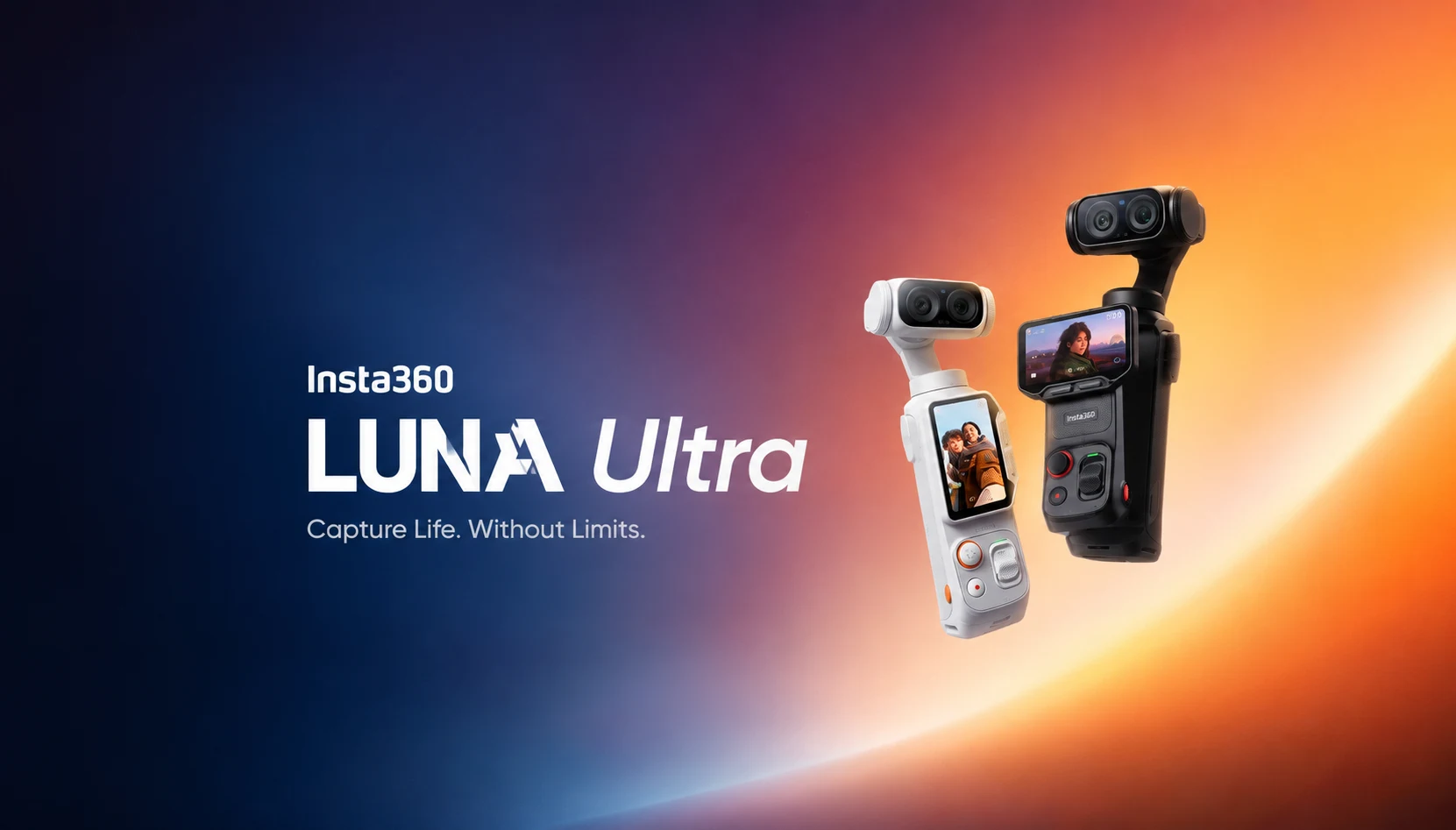
I picked up the Insta360 Luna Ultra on a whim and half expected a company famous for 360 cameras to fumble its first real pocket gimbal. Instead, I ended up leaving my mirrorless kit at home for most of a month. If you shoot video for a living, or you just want vlog footage that looks like you hired a crew, this little camera is worth paying attention to. This Insta360 Luna Ultra review is based on real shooting days, not a weekend of unboxing, and I want to tell you what actually held up and what still frustrated me.
Before we go any further, because it trips people up, the Insta360 Luna Ultrais a dual-lens gimbal camera, not one of Insta360’s spherical 360 cameras. Think DJI Osmo Pocket, not Insta360 X5. Get that straight, and everything else makes more sense.
Quick specs at a glance:
- Type: dual-lens 8K pocket gimbal camera (not a 360 camera).
- Launched June 10, 2026.
- Lenses: 20mm f/1.8 main (1-inch sensor) + 60mm f/2.0 telephoto (1/1.3-inch sensor), Leica-tuned.
- Video: 8K/30, Dolby Vision, 10-bit I-Log.
- Zoom: 6x lossless, 12x hybrid.
- Battery: 2 to 2h47m real-world, fast charge to ~80% in 23 min.
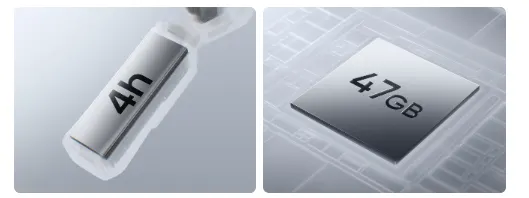
- Storage: 47 GB built-in, microSD up to 1 TB.
- Price: $769.99 Standard, $979.99 Creator (around £649 / €729).
What Is the Insta360 Luna Ultra, Really?
The Insta360 Luna Ultra is a high-end dual-lens gimbal camera co-engineered with Leica and released on June 10, 2026 and shipping right away. It features a three-axis stabilized gimbal, records up to 8K at 30fps and packs two separate Leica lenses instead of the single Leica lens that most pocket cameras use. That second lens is the headline. It provides you with a true telephoto reach that rivals can’t quite match.
Here is the part worth repeating. Insta360 built its name on 360 cameras, so many shoppers assume the Insta360 Luna Ultra shoots spherical footage. It does not. This is a point-and-shoot cinema tool squarely aimed at solo creators, vloggers and travel filmmakers who want one hand free and no operator behind them. The Insta360 Luna Ultra camera lands in the same category the DJI Osmo Pocket invented, then tries to leapfrog it.

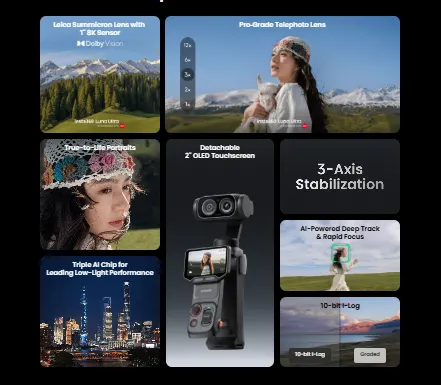
Pricing starts at $769.99 for the Standard bundle and $979.99 for the Creator bundle. In the UK that will be roughly £649 and in Europe around €729. It is premium money for a pocket camera, and I will come back to whether it earns it.
First Impressions and Design
The body fills your palm without cramping it. The weight is low in the handle, so it is planted instead of top-heavy, and I could reach any major control with my thumb without changing grip. After a full day of walking and filming, my hand never ached, which is more than I can say for holding up a phone gimbal.
It is available in Cosmic Black and Stellar White. I chose black because it hides fingerprints, and this thing collects them. The gimbal moves quietly, the joystick has a satisfying click, and the whole package slips into a jacket pocket. The Insta360 Luna Ultra specs are hidden in a body that seems almost too small for what it does for a camera that shoots 8K.
One design limitation is that the gimbal does not rotate 360 degrees. It’s a minor issue for most of the shots, but if you are into the endless spinning transitions on the camera, you will hit the wall.
The Dual Leica Lens System
This is where the Insta360 Luna Ultra distinguishes itself from the pack. You get two real lenses, not just one lens with digital cropping pretending to be two. Switching between them changes the entire feel of a shot, from casual and wide to tight and cinematic.
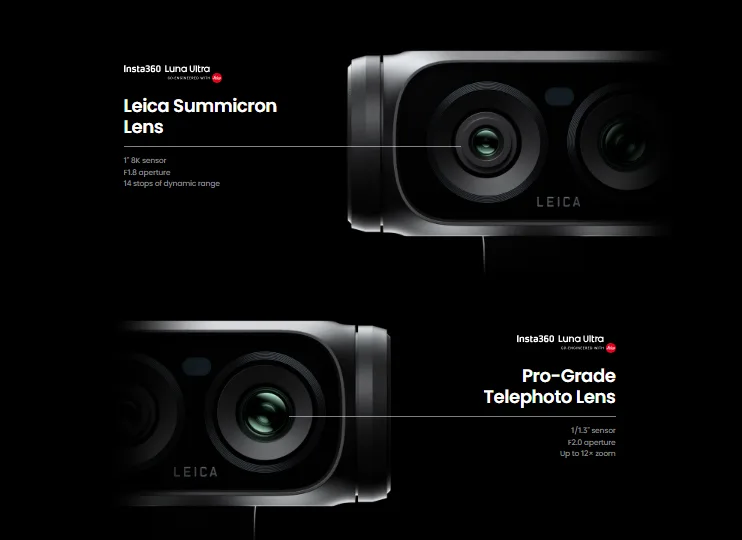
The lens setup in short:
- Main lens: 20mm equivalent, f/1.8, 1-inch sensor. Wide enough to hold you in frame at arm’s length without distorting your face. Ideal for vlogging.
- Telephoto lens: 60mm equivalent, f/2.0, 1/1.3-inch sensor. Adds cinematic compression and real background blur.
- Zoom: 6x lossless (keeping details cleanly) and up to 12x hybrid (softer, but still remarkable reach for a pocket camera).
- Color: Leica Natural, Vivid, and Chrome profiles plus I-Log and ACES for grading.
The lossless range really has detail. I stood across a plaza and captured a close-up of a street performer from the distance without moving, which is something no single-lens rival can do at this point in time. Leica tuned the color science as well, and it shows up in skin tones and shadow rolloff.
Insta360 Luna Ultra Video Quality in the Real World
Let me be honest about the 8K. It is there, it works, and most of the time I did not use it.
The Insta360 Luna Ultra video quality is excellent at 4K, and the move to 8K is only a marginal gain in detail. In addition, the 8K mode actually comes in a bit noisier in high-contrast scenes. If you want to crop it heavily in post or you want future-proof files, 8K is the best of the lot. For everything else, 4K at 30 or 60fps looks cleaner and runs cooler. That is the Insta360 Luna Ultra performance surprise most spec sheets bury.
Quick take on video:
- 4K is the perfect fit, cleaner, cooler, and less noisy than 8K.
- 8K is best kept for heavy cropping or future-proofing.
- Dolby Vision HDR is a real punch in outdoor footage and highlights that hold rather than clipping.
- PureVideo mode rescues low light up to 4K/60. The evening market faces looked readable where a phone would smear.
- Three-axis stabilization and software smoothing helped keep footage level even when jogging down stairs.
Deep Track 5.0 and AI Tracking
Tracking on the Insta360 Luna Ultra runs on a triple AI chip, and it is the best I have ever used. Insta360 calls the system Deep Track 5.0. You tap a subject on the touchscreen or flick the joystick, and the camera locks on like it has a grudge. A face, a dog, a passing cyclist, whatever you select, it follows.
What impressed me the most was re-acquisition. When my subject ducked behind a pillar and reappeared, the Luna Ultra grabbed the track again instead of giving up. Active Zoom tracking keeps the subject sized correctly even as they move closer or farther. Group tracking keeps several people in frame at once. This is the whole pitch for a solo creator. You’ve got a camera operator who never needs a coffee break.
Insta360 Luna Ultra Battery Life
Insta360 Luna Ultra battery life is a real strength, with an asterisk. The camera runs on a 1,550mAh internal battery, with a smaller 210mAh cell in the detachable screen module. Insta360 claims up to 4 hours, but that figure comes from a gentle 1080p/24 test with the screen and Wi-Fi turned off. Real shooting looks different.
Real-world runtimes:
- Continuous 8K/30: about 110 minutes before the low-battery warning.
- 4K/24: up to two hours and 47 minutes on a single charge.
- Heavy 8K plus slow motion: closer to two hours.
- Charging: nearly empty to about 80% in roughly 23 minutes.
On a body this small, two to three hours of real recording is excellent. I shot at night and travel filming without a top-up. When you do run low, the USB-C port provides the camera with power while you shoot, so a pocket power bank will keep you going as long as you like. Insta360 also offers an add-on battery for the base of the handle. Between the two, I never lost a shot to a dead cell.
One thing that you should remember is two batteries are two things to charge. If you forgot the screen module overnight, you would not be happy in the morning.
That Detachable Screen
The 2-inch OLED touchscreen pops off the camera and becomes a wireless remote, and this is something I didn’t know I wanted. Set the Insta360 Luna Ultra on its little tripod, walk up to 20 meters away, and frame yourself using the detached screen in your hand. For solo shooters, that range is enough to compose a full-body shot with the telephoto lens.
The screen is bright at 1,000 nits, so it works well in sunlight. It is also tiny at 564 by 318 pixels, so checking critical focus is tricky and getting into manual settings is quick. Like the DJI competition, changing detailed settings on that small panel tests your patience. For setup, I paired the camera to the phone app, which gives a larger, more responsive display. Use the little screen to frame and track, the phone for fine control, and the friction mostly goes away.
Photography and Macro Surprises
I bought this as a video tool and came away impressed by the stills. The Insta360 Luna Ultra photography side is far more capable than its category usually manages.
You get 37MP stills from the main sensor and a stitched panorama mode that goes up to a huge 200MP for landscapes. The real surprise was macro. Between roughly 6x and 7x zoom, the telephoto lens gets close enough to be able to hit nearly a 1:1 reproduction ratio, which is what you see it in macro shots of flowers, textures, and small objects. I did not expect a pocket vlogging camera to be a macro rig, but here we are.

Audio Without a Separate Mic
There’s a four-microphone array built into the camera and one in the handle, and the wind screen has been installed. Internal audio is actually very good for talking to the camera, and the wind screen is good for breezy days. If you want broadcast-clean sound, the Creator bundle comes with a Mic Pro transmitter, and the system pairs without fuss. But I used the built-in mics for days, and I never felt embarrassed by the results for casual vlogging.
The Insta360 Luna Ultra for Travel
This is where everything came together for me. The Insta360 Luna Ultra for travel makes a compelling case because it replaces three things at once: your gimbal, your action cam, and often your main video camera. It fits in a jacket pocket, survives a full morning on one charge, tracks you hands-free while you narrate, and reaches across a scene with that telephoto when you cannot get closer.
I shot a market walkthrough, a rooftop timelapse, a portrait of a vendor at 60mm, and a macro of spices in one afternoon, all on one small camera. There is also 47GB of built-in storage, expandable with a microSD card up to 1TB, so you are not swapping cards every hour. Packing light without giving up quality is the entire reason this camera exists.
Insta360 Luna Ultra Pros and Cons
After putting the main Insta360 Luna Ultra features through weeks of daily shooting, here is the honest ledger.
| Pros | Cons |
| Dual Leica lenses provide true optical telephoto reach that no rival currently offers. | 8K recording offers little real-world advantage over 4K and may introduce more noise in high-contrast scenes. |
| Excellent 4K video quality with Dolby Vision HDR and impressive low-light PureVideo performance. | Overheating limits long high-frame-rate recording (around 44 minutes at 4K/120fps and 49 minutes at 8K/24fps). |
| Deep Track 5.0 reliably locks onto and re-acquires moving subjects. | The small touchscreen makes manual settings and focus confirmation more difficult. |
| Delivers 2–3 hours of real-world battery life and supports USB-C pass-through charging. | Does not offer full 360-degree gimbal rotation. |
| Detachable touchscreen functions as a wireless remote up to 20 metres away. | Two separate batteries need to be charged and managed. |
| Capable of capturing high-quality still photos, including near 1:1 macro shots. | Costs significantly more than the entry-level Osmo Pocket 4. |
| Compact design can replace multiple cameras and accessories in a travel kit. | — |
How It Stacks Up Against the Osmo Pocket 4
The obvious rival is DJI’s pocket gimbal. Here is a clear look at how the Insta360 Luna Ultra compares to other pocket cameras in its class.
| Feature | Insta360 Luna Ultra | DJI Osmo Pocket 4 |
| Lenses | Dual Leica lenses (20mm f/1.8 + 60mm f/2.0 telephoto) | Single wide-angle lens |
| Maximum Video Resolution | Up to 8K at 30fps | Up to 4K at 120fps |
| Image Sensors | 1-inch main sensor + 1/1.3-inch telephoto sensor | 1-inch CMOS sensor |
| Zoom | 6× lossless optical-quality zoom, up to 12× hybrid zoom | Digital zoom only |
| Colour Profiles | Leica colour profiles, I-Log, and ACES workflow support | D-Log M colour profile |
| Display | 2-inch detachable OLED touchscreen that also works as a wireless remote | Rotatable built-in touchscreen |
| Subject Tracking | Deep Track 5.0 AI subject tracking | ActiveTrack AI tracking |
| Battery Life | Approximately 2–2 hours 47 minutes, depending on recording mode | Similar real-world battery life |
| Charging | USB-C pass-through charging supported | USB-C charging supported |
| Starting Price | $769.99 | Lower-priced than Insta360 Luna Ultra |
The short version: the Insta360 Luna Ultra wins on lenses, resolution, and color flexibility. The Osmo Pocket 4 wins on price and high-frame-rate slow motion, topping out at 4K/120. If you shoot mostly slow-mo and want to spend less, DJI still has an argument. If you want that second telephoto lens and 8K headroom, the Luna Ultra is the more capable tool. For US buyers, there is a practical wrinkle too since DJI’s pocket models have been hard to buy stateside, which makes the Insta360 Luna Ultra the easier one to actually get right now.
Insta360 Luna Ultra Tips and Tricks
A few Luna Ultra tips and tricks I wish I had known on day one.
- Shoot 4K, not 8K, for most work. It looks cleaner, runs cooler, and dodges the overheating limits at high frame rates.
- Pair the phone app for setup, and use the detached screen for framing. You skip the fiddly menu diving on the tiny panel.
- Charge both batteries the night before. The screen module is easy to forget, and it drains too.
- Lean on the 60mm lens for portraits. The telephoto gives you real background blur instead of fake bokeh.
- Use PureVideo for anything after sunset. It genuinely rescues low-light footage.
- Carry a small USB-C power bank. Pass-through charging turns two hours of runtime into an all-day shoot.
Who Should Buy It
Solo vloggers and travel creators get the most out of the Insta360 Luna Ultra camera. If you film yourself, move around a lot, and want one small tool that tracks you, reaches across a scene, and shoots stills when you need them, this is close to ideal. Real estate, event, and social media shooters who value the telephoto and 8K crop room will also find plenty to like.
If you mostly shoot high-frame-rate slow motion, or you are price sensitive, the cheaper single-lens competition still makes sense. And if you genuinely need spherical 360 footage, you want an Insta360 X-series camera instead, because the Insta360 Luna Ultra does not shoot that.
Final Verdict
After weeks of shooting, the Insta360 Luna Ultra earned a permanent spot in my bag. The dual Leica lenses are the real story, giving you optical telephoto reach and 8K headroom that the single-lens crowd simply cannot match yet. Battery life held up better than the spec sheet suggested, the tracking is excellent, and the whole thing hides in a pocket.
It is not flawless. The 8K mode is more of a bragging right than a daily driver; the tiny screen frustrates on manual settings, high frame rates run into heat limits, and the price sits well above the obvious competition. But for a first attempt at pocket gimbal cameras from a company known for 360 gear, the Insta360 Luna Ultra is a stunning debut. If you are a solo creator or a traveler who wants pro-looking video without a crew, this is the camera I would hand you first.
Frequently Asked Questions (FAQs)
Q. Is the Insta360 Luna Ultra a 360 camera?
A. No. Despite Insta360’s reputation for 360 cameras, the Insta360 Luna Ultra is a dual-lens pocket gimbal camera, similar in concept to the DJI Osmo Pocket 4. It records standard flat video up to 8K/30 with two Leica lenses, not spherical 360 footage. If you specifically need 360 video, look at Insta360’s X-series instead.
Q. How much does the Insta360 Luna Ultra cost?
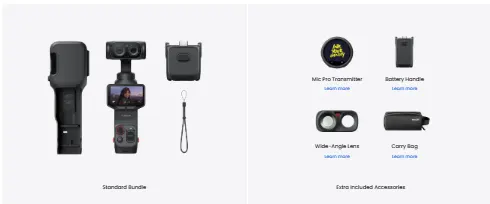
A. It starts at $769.99 for the Standard bundle and $979.99 for the Creator bundle, which adds a Mic Pro transmitter, a battery grip, a wide-angle lens, and a carrying case. UK pricing sits around £649 and European pricing around €729.
Q. What is the Insta360 Luna Ultra battery life like?
A. Insta360 claims up to four hours, measured at 1080p/24 with the screen and Wi-Fi off. In real use, expect roughly two hours with heavy 8K and slow motion, about 110 minutes of continuous 8K/30, and up to two hours and 47 minutes at 4K/24. Fast charging reaches around 80 percent in about 23 minutes, and USB-C pass-through lets you shoot while charging.
Q. Does the Insta360 Luna Ultra overheat?
A. Not during normal 4K/24 shooting. At demanding settings it does hit limits: testing saw a shutdown after about 44 minutes at 4K/120 and around 49 minutes at 8K/24. For long continuous takes, stick to 4K at standard frame rates.
Q. Is the Insta360 Luna Ultra good for travel?
A. Yes. It is one of the strongest travel cameras in its class. It replaces a gimbal, action cam, and small video camera in one pocket-sized body; tracks you hands-free; reaches distant subjects with its telephoto lens; and lasts a full morning of filming on one charge, with 47GB of storage expandable to 1TB via microSD.