
 Shikha Kumari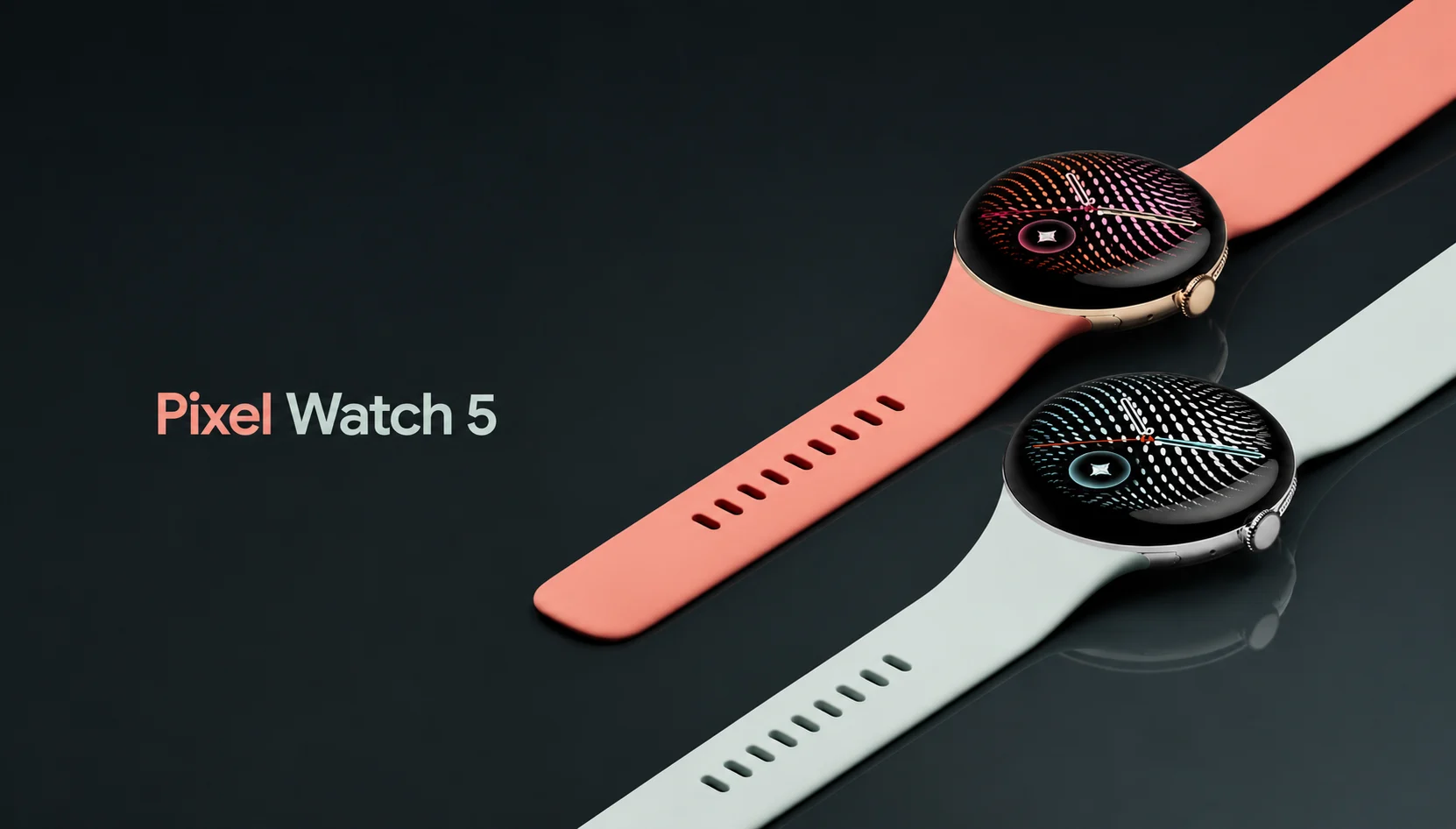
Google put a version of Gemini on the Pixel Watch 4 last year and then hid it behind your phone. Walk out the door for a run without your handset, and the assistant went quiet. That single limitation says more about the Pixel Watch 5 than any spec sheet, because fixing it is the clearest reason to care about this year’s model. The watch now runs Gemini on the device itself, and the difference shows up the moment you leave your phone at home.
This review covers what actually changed, what only looks new, and what Google is still holding back until September. You’ll get the real price across every model, how the battery holds up, whether the health tracking earns the upgrade, and a straight answer on who should buy it. By the end you’ll know if the Pixel Watch 5 belongs on your wrist or whether last year’s model does the same job for less.
Pixel Watch 5 at a Glance
Google announced the Pixel Watch 5 on August 12, 2026, at its Made by Google event in New York, sharing the stage with the Pixel 11 phones. It reached stores on August 20. That eight-day gap between reveal and sale broke Google’s own pattern. The Pixel Watch 4 landed in August 2025 but didn’t ship until October, so this year buyers waited days instead of weeks.
Here is the short version before the deep read.
Quick verdict: The Pixel Watch 5 is one of the best Android smartwatches you can buy in 2026, and on-device Gemini finally makes it feel independent from your phone. But the headline health features arrive in September, not at launch, and almost everything new is coming to the Pixel Watch 4 through a software update. If you already own last year’s model, keep your money.
The Pixel Watch 5 specs that matter:
| Spec | Pixel Watch 5 (41mm) | Pixel Watch 5 (45mm) |
| Display | Actua 360 OLED, up to 3,000 nits, 1–60Hz | Actua 360 OLED, up to 3,000 nits, 1–60Hz |
| Cover glass | Domed Gorilla Glass 5 | Domed Gorilla Glass 5 |
| Chip | Snapdragon W5 Gen 2 Accelerated | Snapdragon W5 Gen 2 Accelerated |
| Storage | 64GB | 64GB |
| Battery (rated) | Up to 30 hours | Up to 40 hours |
| Software | Wear OS 7 with Gemini | Wear OS 7 with Gemini |
| Durability | IP68, 5 ATM water resistance | IP68, 5 ATM water resistance |
| Starting price | $399 (Wi-Fi) | $429 (Wi-Fi) |
[Insert live spec-comparison link to Google Store; verify the RAM figure before publishing; Play Console listings are pointed to 3GB, and some retail listings still show 2GB.]
Pixel Watch 5 Price and Release Date
The Pixel Watch 5 release date was August 20, 2026, with pre-orders opening the day of the announcement. Here is the full pricing ladder, because the entry number hides a fair bit.
- 41mm, Wi-Fi + Bluetooth: $399
- 41mm, LTE: $499
- 45mm, Wi-Fi + Bluetooth: $429
- 45mm, LTE: $529
- Stephen Curry Special Edition (45mm only): $579, available September 3
That $399 start is a $50 jump over the Pixel Watch 4, which opened at $349.99 last year. Google spent the extra money on storage, memory, and software rather than a new look, so whether the increase feels fair depends on how much you value Gemini running on the watch itself.
The Stephen Curry edition is the one true design flourish this year. It comes in the 45mm size only, ships with a sweat-wicking performance loop co-designed with the NBA star, and adds a custom watch face. At $579 it costs a premium over the standard 45 mm, and it exists for fans more than for anyone shopping for features.
One number worth holding in your head as you read on: at $399, the Pixel Watch 5 matches the starting price of the Apple Watch Series 11 and sits above the Samsung Galaxy Watch 9, which opens at $379.99. Google is charging flagship money.
Design and Display: Familiar to a Fault
Set the Pixel Watch 5 next to a Pixel Watch 4 and you will struggle to tell them apart. Same domed circular case, same dimensions, same weight, same repairable build. Google swapped the color palette to line up with the Pixel 11 phones, so the fresh options this year are Fog, Canyon (a 41mm exclusive), and Olive paired with a new Pyrite housing, alongside the returning black. The bands moved to a hydrogenated nitrile rubber compound branded HNBR, which Google positions as more durable than the previous material.
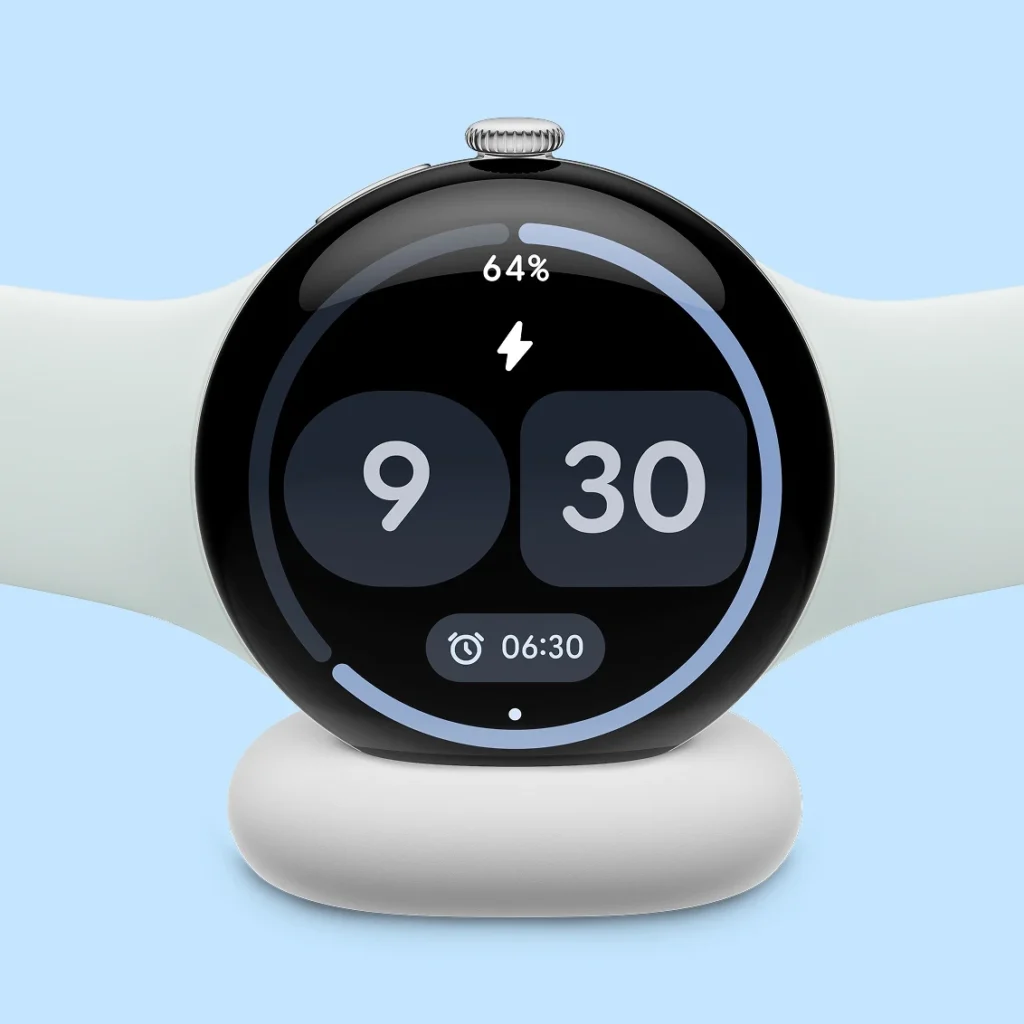
The display carries over almost untouched. You get the Actua 360 OLED panel, domed under Gorilla Glass 5, with a refresh range from 1Hz to 60Hz and peak brightness up to 3,000 nits. In daylight the screen reads clearly at that top setting. Drop into battery-saver mode and the dimmed panel gets hard to read, a small annoyance worth knowing before you rely on it mid-run.
That domed glass is the design’s blessing and its risk. It looks elegant, and it curves light beautifully, but it also sits more exposed than the flatter faces on rival watches, which makes it feel a touch more breakable. Google’s answer is the repairable architecture. The Pixel Watch 5 remains the only mainstream smartwatch with a replaceable screen and a replaceable battery, so a cracked panel is a repair rather than a write-off. For a device you wear against door frames and gym equipment every day, that matters more than a spec bump.
One real-world note from early testing: at least one reviewer spotted staining along the edge of a light-colored band within a week, possibly from dye transfer off a bag. Replacement bands run from $50 to $200, so a spare is easy but not cheap.
Wear OS 7 and Gemini AI: The Real Upgrade
If you buy the Pixel Watch 5 for one reason, make it this. The watch runs Wear OS 7 with Gemini processing tasks on the device, and that changes how the watch behaves when your phone isn’t around.
On the Pixel Watch 4, Gemini needed a connection to do much of anything. Leave your phone behind and ask the watch to start a workout or set a timer, and you were met with silence. The Pixel Watch 5 handles a set of common jobs locally: setting timers, starting workouts, controlling music, toggling settings like water lock or Wi-Fi, and opening specific apps. Cutting the phone out of the loop also makes the assistant respond faster, since it stops waiting on a round trip to your handset.
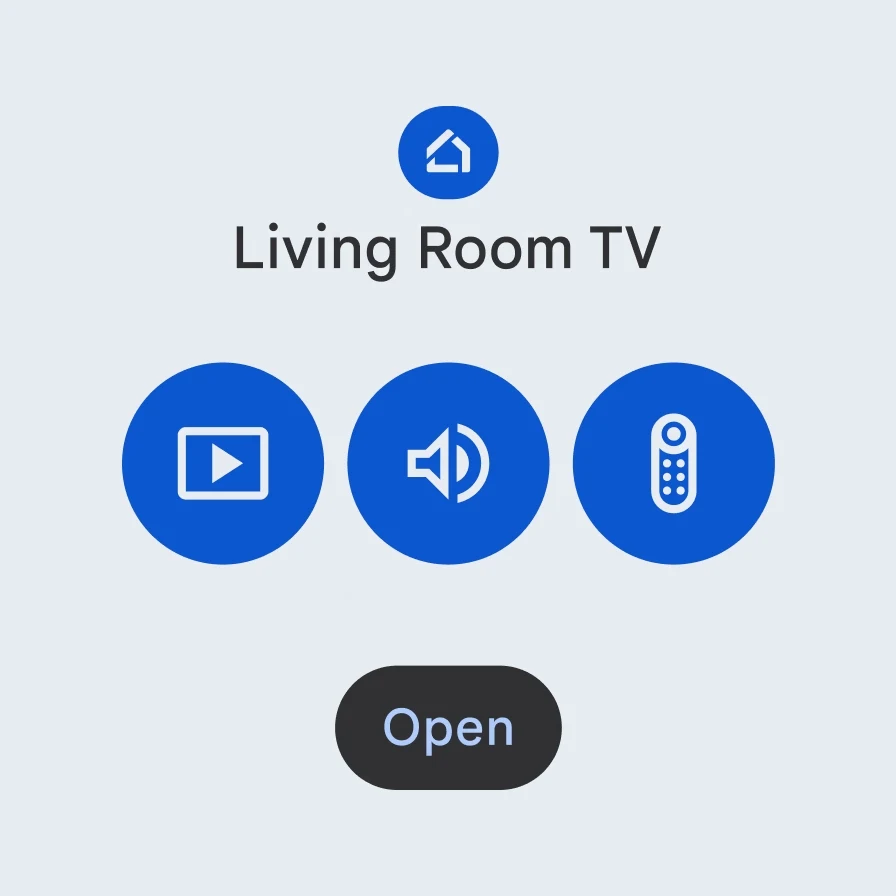
Gemini’s on-wrist look also got a refresh to match Google’s newer Neural Expressive interface. The bottom of the screen glows while you talk to it, and the layout makes your own words easier to read back. Below that same area you’ll find new At a Glance chips, Google’s take on Apple’s smart stack hints. A chip surfaces when the system thinks it has something timely for you, whether that’s an incoming ride, an active workout, or a boarding pass, and swiping up reveals more.
The gesture system is the quiet star. Previous Pixel Watches supported the double pinch and wrist turn, but Google made them do far more this year. A double pinch now opens At a Glance from the watch face, opens the notification center, scrolls through Gemini replies or workout metrics, toggles Maps views, and manages the Recorder. The wrist turn became a universal back gesture across the interface. Turning your watch away from you to dismiss a screen feels intuitive in a way that is hard to unlearn once you have it.
Google also leaned into AI for personalization with a generative watch face maker. You describe a vibe, and it builds a clock font to match. It’s just a toy rather than a real feature, because your prompt only shapes the numerals. Complication size and placement stay fixed, so a request for “woodland elves in a magical forest” changes the font and nothing else. Two nice new faces, Weave and Chronograph, plus a multicolor complication option make more of an impact on the look than the generator does. Google is still behind Apple in watch face polish, especially with the dynamic clock design.
Pixel Watch 5 Health Features: Ambitious, but Half of Them Are Missing
Google is selling the Pixel Watch 5 as a health guardian, and the pitch is genuinely broad: a system that watches your heart, tracks blood pressure trends, monitors insulin resistance trends, and reads sleep breathing quality in the background, then surfaces changes over time on the Google Health app. That is a serious set of claims for a mainstream smartwatch.
Read the fine print. The main things, blood pressure trends, insulin resistance trends, and the custom workout builder, are not available at launch. Google also said they would launch in September, so the watch you buy on day one will not do the things the box art says it will. Sleep breathing quality tracking is in the same bucket as early buyers.
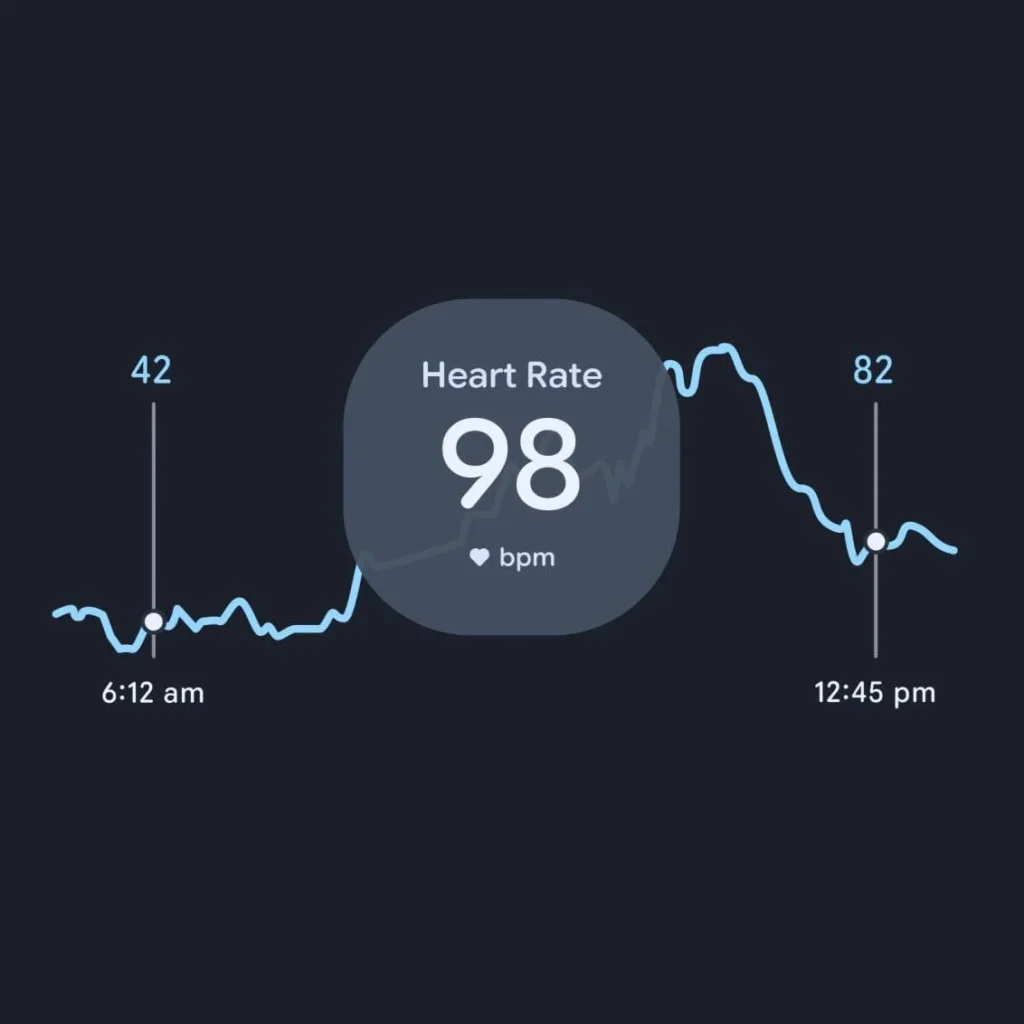
What does work now is the foundation you already know: heart rate monitoring, SpO2, ECG, skin temperature, EDA stress sensing, sleep tracking through Google Health, fall and crash detection, AFib detection, and Satellite SOS. Google says it improved sleep stage accuracy by around 15 percent through updated machine learning, though that kind of gain is close to impossible to verify on a single wrist over a few nights. Trends over weeks tell you more than any single night’s deep-sleep figure, and that is the honest way to read all of this data.
Google also expanded its loss-of-pulse alerts with a new breathing emergency detection feature, currently limited to some European countries. Safety features like these are the sort of thing you hope never to trigger and are glad to carry.
Fitness and GPS Tracking: Google’s Accuracy Bet
The most interesting fitness change isn’t a new sensor, but software. Google redesigned how the Pixel Watch 5 maps your route through data from a worldwide network of GPS reference stations and tracing signal paths from satellites through 3D models of nearby buildings to cancel out interference. The hardware is as simple as last year’s dual-frequency setup, but Google claims its new method makes route tracking twice as accurate as older Pixel Watches and even better than the Apple Watch Ultra 3 and Garmin Fenix 8 Pro.
Does it hold up? Early side-by-side testing against an Apple Watch Series 11 suggests Google is onto something. On a waterside walk, one reviewer’s Pixel Watch traced small zigzags off the path that the Apple Watch smoothed over, including a detour around a golf cart that only Google’s tracking caught. The verdict against the Ultra 3 in building-dense city blocks is still open, and that is the test that will settle Google’s bolder claim.
But for everyday tracking the story is less clear. Auto-detection is still a strength for Google and Fitbit, which does better than at least Apple’s (but not perfect) in most cases. One test logged a walk home as an elliptical workout with a simple tap in the app but a reminder that these systems need to make some guess. And there is also a privacy issue to be noted: when a watch learns to recognize a workout, it will rarely record it and delete location data because you’ve never agreed to be mapped.
Apple asks for you to confirm and document the data, so an Apple Watch may not necessarily document the whole ride/run all the more so that it’ll get you a fuller picture of what’s happening during a run. If you are looking for the full map from the Pixel Watch 5, start the workout yourself.
Chasing precision past a point is not a good way to see how fitness data helps you. You should monitor your pace, cadence, and cardio load as trends instead of being obsessed with a single decimal. But Google’s GPS work is a smart, well-executed move, and it pays off most of the time for runners and cyclists that care about honest distance.
Pixel Watch 5 Battery Life and Charging
Google rates the 41mm Pixel Watch 5 at up to 30 hours and the 45mm at up to 40 hours, with the larger model carrying the bigger cell. In practice, expect close to two days of real use from the 45mm with typical notifications, some workouts, and the always-on display doing its thing, which places the Pixel Watch 5 in the same range as the Apple Watch Series 11.
Charging is where Google wins. Pixel Watch 5 refills at the same speed as the Watch 4, and that was already the best in class. A few minutes on the puck will take you from nearly empty to enough charge for a 45-minute workout class without losing your metrics. That speed changes the way you live with the watch. And you don’t have to check in on a night and top up when you shower or make coffee and never have to worry about battery anxiety again.
The only problem is sleep tracking. To keep track of your nights, the watch needs to be on your wrist overnight, so you have to fit those quick top-ups into your waking hours. Small planning tax and fast charging make it painless once you are in the habit of it.
Pixel Watch 5 vs Pixel Watch 4: Should You Upgrade?
This is the comparison that most shoppers will be wanting, and it’s very clear. If you own a Pixel Watch 4, don’t buy it.
But for all the new software features that are rolling out to the Pixel Watch 4, Google confirmed that nearly every new software feature is also making its way to the Pixel Watch 4. Blood pressure trends, insulin resistance tracking, sleep breathing quality, custom workout builder, and advanced strength training all apply to last year’s model as well. And even the Gemini interface refresh and gesture improvements are software in their own right. What the Watch 5 keeps for itself is the hardware: more storage, more memory, and the slightly faster Accelerated chip and the new GPS processing.
| Spec | Pixel Watch 4 | Pixel Watch 5 |
| Chip | Snapdragon W5 Gen 2 | Snapdragon W5 Gen 2 Accelerated |
| Storage | 32GB | 64GB |
| Display | Actua 360 OLED, 3,000 nits | Actua 360 OLED, 3,000 nits |
| On-device Gemini | Limited | Yes |
| GPS route processing | Standard | Cloud-enhanced (2x claim) |
| Starting price | $349.99 (at launch) | $399 |
| New software features | Coming via update | At launch and via update |
From an older Pixel Watch 3 or later or a non-Pixel wearable, the calculus changes. You get Gemini on-device, the modern gesture set, the GPS, and double the storage in one jump, so it’s good to pay for the upgrade. The Pixel Watch 5 is a “tock” to the Watch 4’s “tick,” a refinement year rather than a reinvention. That’s fine for new buyers and a bad deal for last year’s customers.
Pixel Watch 5 vs Galaxy Watch and Apple Watch
For Android users, the Pixel Watch 5 vs Galaxy Watch question comes down to ecosystem and hardware philosophy. The Samsung Galaxy Watch 9 starts at $379.99 and runs Samsung’s newer Snapdragon Wear Elite chip, so on paper Samsung is offering the better silicon for less. Samsung also uses its own Galaxy AI and integrates with Galaxy phones. Google mitigates this with a cleaner Wear OS, deeper Gemini integration, the repairable design, and Fitbit’s mature health platform under the Google Health app.
The comparison to the Apple Watch is less complicated because it’s a nonstarter to most people: the Apple Watch only pairs with an iPhone, and the Pixel Watch 5 works with Android 12 or newer phones. If you have an iPhone, then it’s your decision, not yours. If you have an Android phone, the Apple Watch is off the table anyway. Where the two do meet is price and polish. At $399 the Pixel Watch 5 is an entry-level watch below the Apple Watch Series 11; it trades battery blows fairly evenly at around 2 days and probably wins on charging speed and repairability. Apple still has a head start on watch face design.
The bottom line: if you’re a modern Android phone user who wants the tightest Google experience and you want a fixable device with a good screen, then the Pixel Watch 5 is the choice. For Samsung loyalists in search of value and the latest chip, the Galaxy Watch 9 is a solid choice.
What Most Pixel Watch 5 Reviews Skip
Here is the expert read that gets lost in the launch-day noise, and it comes down to what you’re really paying for.
Most coverage frames the Pixel Watch 5 as a health powerhouse. Two facts contradict that framing. First, the key health features that buttress the “health guardian” pitch aren’t available at launch time and will be available in September, so early buyers need to buy a promise. Second, the best of Google’s health intelligence is housed in a subscription.
Google Health Premium opens up all AI coaching, adaptive training, and recovery plans based on Gemini after a free period. The watch is a good data collector, but the smartest coaching layer is $399 extra on top of the $399 hardware. That subscription is not new to the Watch 5, and it is the part of the value equation that most people are not aware of.
The other overlooked point: Some features are marketed as fresh and already shipped. Loss-of-pulse detection, for instance, arrived on earlier Pixel Watches, so if you own a Watch 4, you already carry it. Consider Google’s launch messaging as a mix of the genuinely new and the repackaged, and judge the price against the short list of true hardware upgrades rather than the long list of software that your old watch is also getting.
Who Should Buy the Pixel Watch 5?
Buy it if you own a Pixel Watch 3 or older, you’re switching from a Galaxy Watch or a Fitbit and want the full Wear OS experience, or you’re buying your first smartwatch next to a Pixel 11. On-device Gemini, the fastest charging speed in the category, a repairable design, and GPS accuracy that impressed in early testing.
I would skip it if you have a Pixel Watch 4. The things that really matter are coming to your watch with an update, as opposed to the hardware improvements that are worthwhile. You can’t buy the same design again. Wait a year.
Think twice if the September health features are your main reason to buy. Those aren’t on the watch yet, and they’re coming to the Watch 4 as well, so there’s no launch-day urgency.
The Verdict
The Pixel Watch 5 is a very good smartwatch and a modest upgrade, and both things are true at once. Gemini is the change that earns the new model its keep, turning the watch into something that works on its own instead of leaning on your phone. Add the best charging speed in the category, a repairable design that nobody else offers, and GPS tracking that looks sharper in early tests, and you have a wearable that justifies its $399 price for the right buyer.
The catch is timing and audience. The health features Google built the marketing around arrive in September, not at launch, and they’re coming to the Pixel Watch 4 too. So the people who should buy are new buyers and owners of older watches, while Pixel Watch 4 owners should sit this one out and take the free software instead.
Your next step is simple. If you’re overdue for an upgrade, take your size, look at LTE, and decide if it’s worth the extra $100 and buy with confidence. If you bought a Pixel Watch 4 last year, save your money and wait for the update to hit the watch you already own.
Frequently Asked Questions (FAQs)
Is the Pixel Watch 5 worth buying?
Yes, if you are upgrading from a Pixel Watch 3 or older, switching from another brand, or buying your first smartwatch. On-device Gemini, fast charging, and a repairable design make it one of the best Android smartwatches of 2026. If you do have a Pixel Watch 4, it’s not worth it.
What is the battery life of the Pixel Watch 5?
Google rates the 41mm model at up to 30 hours and the 45mm at up to 40 hours. In use, we expect close to two days with the 45mm. Fast charging is good enough to get you from nearly empty to a workout-ready charge in a few minutes.
How much does the Pixel Watch 5 cost?
The Pixel Watch 5 starts at $399 for the 41mm Wi-Fi model and $429 for the 45mm. LTE versions are priced at $499 and $529. The Stephen Curry Special Edition is $579 and released September 3.
What’s the difference between Pixel Watch 5 and Pixel Watch 4?
The Pixel Watch 5 features on-device Gemini, 64 GB of storage, a faster Snapdragon W5 Gen 2 Accelerated chip, and improved GPS accuracy. The design is the same, and most new software features are also being added to the Pixel Watch 4 in software updates.
Does the Pixel Watch 5 work with iPhone?
No. The Pixel Watch 5 requires a phone running Android 12 or newer. There is no iPhone support, so it isn’t an option for iOS users.