
 Shikha Kumari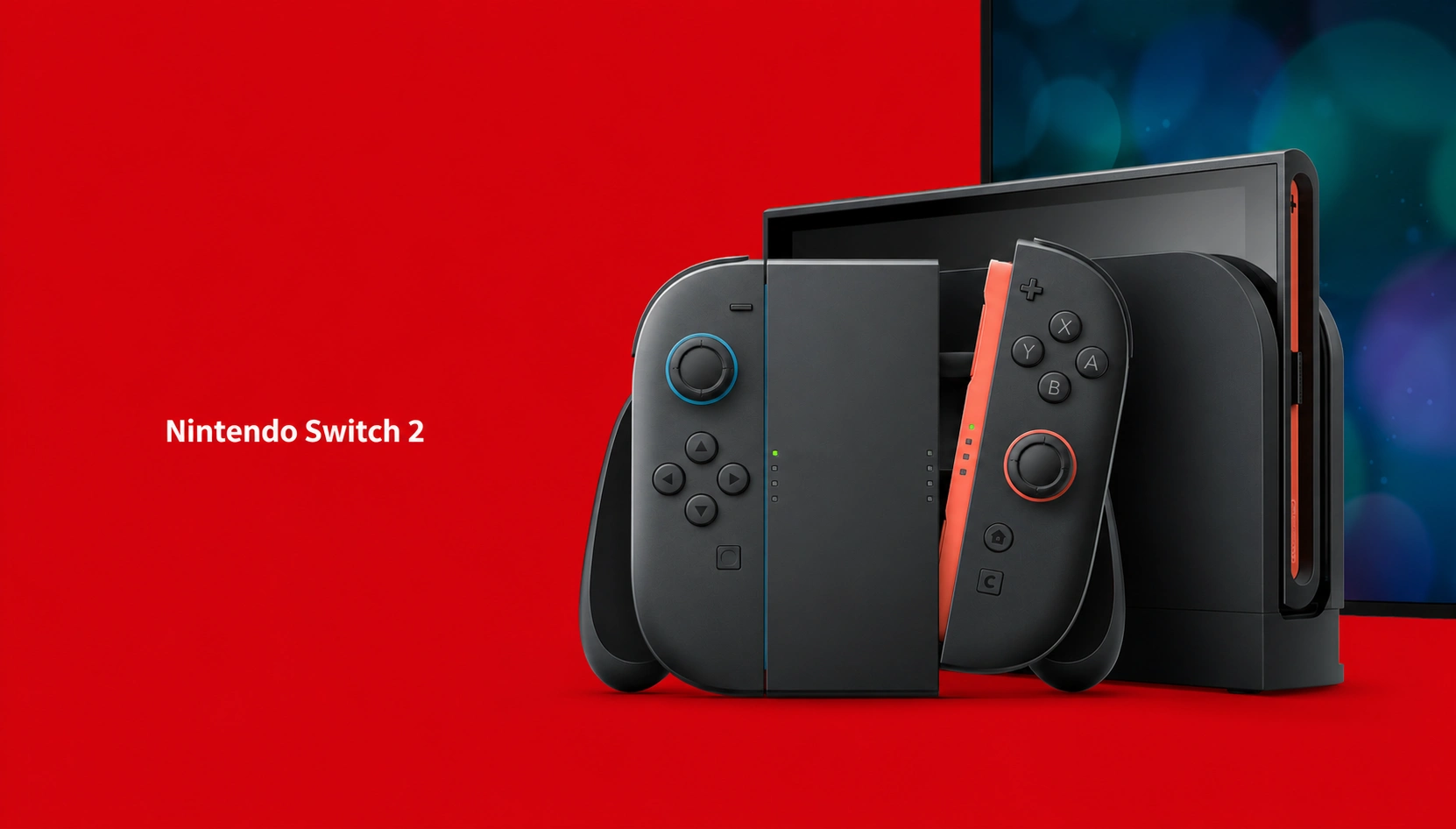
I charged my Nintendo Switch 2 the evening before Mario Kart World’s Knockout Tour dropped, sat down at 9 a.m. with a full battery, and by 11:15 I was hunting for an outlet. That’s the honest starting point for this Nintendo Switch 2 review: a console that feels genuinely next-generation the moment you pick it up, and a battery that reminds you it’s still a handheld first.
More than a year after launch, the Nintendo Switch 2 has settled into a strange but intriguing place, Nintendo’s fastest-selling console ever, but the criticisms of price, battery life, and launch lineup depth that remain today are still the things that buyers ask for today. This review examines performance, display quality, battery life, backward compatibility, and the games that actually make the hardware worth owning based on what’s held up and what hasn’t since June 2025.
Nintendo Switch 2 Price and What’s in the Box
The standard console launched at $449.99 in the US, with a Mario Kart World bundle at $499.99 that has become the default way most people actually bought it. That’s a $150 jump over the original Switch’s launch price in 2017, and accessories didn’t get more gentler treatment, the Pro Controller costs $84.99, a replacement Joy-Con 2 pair is $94.99 and the Dock Set alone is $119.99.
Here’s what most price roundups don’t mention: Nintendo’s own price announcement was preceded by a warning that “other adjustments to the price of any Nintendo product are also possible in the future depending on market conditions.” But that’s not boilerplate. It’s a hedge tied directly to the tariff turmoil that delayed preorders in the first place, and it’s something we need to know before budgeting for accessories a year or two down the line.
Out of the box you get the console, Joy-Con 2 controllers with grip and straps, the dock, a high-speed HDMI cable and AC adapter. No case, no screen protector, you do need to spend an extra $20–40 if you want either.
Performance: How Much Faster Is It, Really?
The Nintendo Switch 2 runs on a custom Nvidia chip built around the Nvidia Ampere architecture (the same generation as the RTX 30 series, scaled down for a handheld power envelope) and the jump over the original Switch’s aging Tegra X1 is not subtle. Load times in Nintendo Switch 2 Edition upgrades of Breath of the Wild and Tears of the Kingdom are dramatically shorter, frame drops in busy Hyrule areas mostly disappear, and third-party ports that were unthinkable on the original, Cyberpunk 2077, Hogwarts Legacy, actually run.
However, running and running well are not the same thing. Cyberpunk 2077 on Nintendo Switch 2 targets 30fps with dynamic resolution scaling that’s well below 1080p in dense scenes, and Hogwarts Legacy has visible texture pop-in as it runs fast. If you are coming from a PS5 or a gaming PC, temper your expectations: this is a portable chip, but not a home console competitor. For the most part, the only win is context: these games are on a handheld at all and the 4K/60fps output is legitimate for Nintendo’s own first-party games like Mario Kart World.
What all reviews do not mention: thermal throttling under sustained load is real but inconsistent. Back-to-back 45-minute Mario Kart World sessions in handheld mode for me had a slight but noticeable frame pacing dip after about 30 minutes, especially in warm rooms above 75°F. It’s not dramatic, but if you’re playing in a plane or in a hot car, don’t be surprised if things get a touch stuttery.
Display: 1080p, 120Hz, and What That Means in Practice
The screen is a 7.9-inch LCD panel with 1920×1080 resolution, with an HDR-enabled screen and a 120Hz refresh rate in addition to the original 6.2-inch, 720p and 60Hz display. It’s a clean leap in technology on paper. In fact, the increase in size is what you will notice first: text is more legible and games with a dense UI (strategy titles and RPGs) are also easier to read without squinting.
The 120Hz mode is only available at 1080p or 1440p output and only in games that support it, Mario Kart World and a handful of other games do, but most of the library only works at 60Hz. It’s not the OLED panel some fans wanted so the blacks aren’t as deep and contrast is much flatter than a Switch OLED sitting next to it in a dim room. If rich color and true blacks matter more to you than raw resolution and refresh rate, that’s a real trade-off, not a minor one.
Battery Life: The Nintendo Switch 2’s Biggest Weakness
This is where the console falls, and it’s not close. Nintendo’s own spec sheet rates battery life at 2 to 6.5 hours, which is actually worse than the current Switch OLED’s 4.5 to 9 hours. The Nintendo Switch 2 does have a bigger 5220 mAh battery (up from 4310 mAh), but the more powerful Nvidia chip eats through that extra capacity fast.
Real-world numbers back up the concern. High-end games like Mario Kart World and Cyberpunk 2077 are usually at the low end (about 2 to 2.5 hours of handheld play) and lighter 2D games (and indie games) may last 5 or 6 hours. Screen brightness matters more than most people realize: running at full brightness can cut over an hour off a session, and dropping to around 50% is the only thing you have to think about.
There are a few practical solutions that actually move the needle:
- Drop the screen brightness to 50% or less.
- Use Airplane Mode for single-player, offline sessions.
- Use wired headphones instead of Bluetooth (which keeps a radio active).
- Carry a USB-C power bank rated for at least 45W if you’re traveling.
Here’s what most guides miss: the battery percentage readout itself may not be in sync with the actual charge level over time, something Nintendo has acknowledged with support documentation and a recovery-mode reset process. If your Nintendo Switch 2 appears to die faster than the on-screen percentage suggests, that’s a well-known software quirk that could be a sign of a bad battery.
Joy-Con 2, Mouse Mode, and the New Dock
The Joy-Con 2 controllers now magnetically attach to the console rather than sliding into rails, making them faster to snap on and off, but not as satisfying as it was with the old click. The headline feature is mouse mode: each Joy-Con can be turned on its side and used like a computer mouse to track movement on any flat surface.
It sounds gimmicky until you play a strategy or shooting game with it. Titles based on mouse controls like precision aiming, RTS-style unit selection really benefit, and Nintendo clearly designed this with an eye toward genres the Switch never handled well. You can also plug a standard USB mouse in directly if you’d rather skip the Joy-Con version entirely.
A new dock with active cooling (a small but positive change, given that the original Switch dock has been passively cooled and sometimes overheated during docking sessions) is now available on the TV to show the 4K/60fps signal, up from the original 1080p docked.
GameChat: Nintendo’s First Real Social Feature
GameChat is the Nintendo Switch 2’s voice and video chat interface that can be accessed through a dedicated “C” button on the Joy-Con 2 or Pro Controller. It lets you communicate with your friends, share your screen and, if you buy the optional $49.99 Nintendo Switch 2 Camera, appear on video while you play.
It’s a genuine first for Nintendo, which has always struggled with a weak online infrastructure compared to Xbox and PlayStation. It works, and screen sharing during co-op sessions is a nice touch for families or groups having problems solving the puzzle together. But it needs a Nintendo Switch Online subscription to work and the camera is a separate buy, so budget accordingly if this feature is a selling point for you.
Backward Compatibility and the Nintendo Switch 2 Edition Upgrades
Nearly all physical and digital Switch games work on Nintendo Switch 2, and many run noticeably better, faster loads, more stable frame rates, etc – without developer intervention. Some games even go a step further with “Nintendo Switch 2 Edition” upgrades, which add higher resolutions, better textures and sometimes new content.
The Legend of Zelda: Tears of the Kingdom and Breath of the Wild both received free performance improvements and a paid upgrade path for versions that come with the Zelda Notes companion app, which offers in-game location support and developer commentary. Kirby and the Forgotten Land had the same level of detail.
It’s one thing to consider before you assume that every game you own has the free treatment: Nintendo never published a master list of which games are eligible for enhanced editions; you must go game by game. It is also worth noting that the Nintendo Switch 2 doesn’t simply transform the expansion pass DLC in the original into anything, ownership is still there, but it’s not a one-size fits all thing.
A nice surprise for longtime fans: Nintendo Switch Online’s Expansion Pack tier added a GameCube app exclusive to Switch 2, launching with The Legend of Zelda: The Wind Waker, F-Zero GX and SoulCalibur II and gaining momentum. There will be a dedicated GameCube controller for that app, but it is not available for others.
Nintendo Switch 2 vs Switch OLED: Should You Upgrade?
| Feature | Nintendo Switch 2 | Switch OLED |
| Price | $449.99 | $349.99 |
| Display | 7.9″ LCD, 1080p, up to 120Hz | 7″ OLED, 720p, 60Hz |
| Docked Output | 4K/60fps | 1080p |
| Battery Life | 2–6.5 hours | 4.5–9 hours |
| Storage | 256GB | 64GB |
| Backward Compatible | Yes (with original Switch library) | N/A |
| Mouse Mode / GameChat | Yes | No |
The honest read: if you already own a Switch OLED and mostly play first-party Nintendo games at a relaxed pace, the upgrade case is weaker than the marketing suggests— you’re trading deep OLED blacks and significantly better battery life for a sharper picture, faster chip and social features that you may not use. If you play newer, more demanding titles, want 4K docked output, or you’re buying your first Switch entirely, the Switch 2 is the clear pick.
Storage and the MicroSD Express Problem
256GB of built-in storage is generous compared with the original Switch’s 32-64GB, but it fills up fast with modern game sizes, some Nintendo Switch 2 titles run 40-60GB installs. The catch: the Nintendo Switch 2 doesn’t accept standard microSD cards for game storage anymore. It requires microSD Express cards, a newer and much more expensive standard that, over a year after launch, still has limited retail availability and a real price premium over the cards most Switch owners already have in a drawer.
If you are planning to buy a handful of larger titles, factor a microSD Express card into your budget from day one rather than discovering the incompatibility after your storage fills up.
Games: What’s Actually Worth Playing
By early 2026, Nintendo’s platform had grown to more than 300 titles for new releases, ports and enhanced editions, a rapid pace compared to Nintendo’s previously slower launch windows. Mario Kart World is the system seller, built on the console’s capabilities and Joy-Con mouse controls, and the open “Knockout Tour” mode transforms the way that the series plays. The Tears of the Kingdom and Breath of the Wild Nintendo Switch 2 Editions are the best way to play those games if you haven’t already burned through them.
In addition to the game as first-party, the third-party line-up is the console’s real proving ground: Cyberpunk 2077 and Hogwarts Legacy demonstrate that it’s possible, even with a few compromises, and a steady stream of indie and mid-size titles fills out a library that isn’t as thin a year in.
Nintendo’s own sales figures back up the appetite for this library. The company’s fiscal year 2026 report showed that Nintendo Switch 2 shipments were 19.86 million units through March 2026, on par with Nintendo’s own 19 million prediction and nearly 20 million in less than a year after the launch. VGChartz, an independent gaming tracking company, reported that the Nintendo Switch 2 was the best-selling console worldwide for June 2026, beating out PlayStation 5 and Xbox hardware. That’s a fast pace for a console with real, documented weaknesses, a sign that the games and brand are taking on a lot of heavy lifting.
Who Should Actually Buy This
Not everyone needs a Nintendo Switch 2 on day one of ownership, and it’s worth being blunt about who benefits most.
- First-time console buyers got the best available system (a modern, capable handheld with a growing library and no legacy hardware to compare it against).
- Families who are upgrading from an aging original Switch or Switch Lite will immediately feel the performance and screen-size difference between the two, especially in multiplayer games like Mario Kart World.
- Zelda and Kirby fans who never finished the originals have a lot more of a better opportunity to play the game today, thanks to the Switch 2 Edition upgrades.
- With the latest OLED owners who play casual, you would be sacrificing battery life and quality OLED picture for headroom you might not use at all.
- Travelers and commuters should be aware of the battery life numbers for the price at hand; 2 hours per charge in demanding games is a real problem on long road trips without a power bank.
Conclusion
A year and a change in, the Nintendo Switch 2 has become less a flawless successor to the original and more of a console with a trade-off: real performance and display gains in exchange for a battery that can’t keep up with the pace and a storage that’ll add up. If demanding games, 4K docked play, and Mario Kart World are the attractions, then the upgrade is worth it. If you have a Switch OLED and you enjoy playing at a relaxed pace, there’s less urgency than the hype says, and that’s a good, but not as exciting place to begin a year into a console’s life.
Next step: if you’re on the fence, try Mario Kart World or a Switch 2 Edition Zelda game on a friend’s console before you buy it, the performance difference sells itself much better than any spec sheet can.
Frequently Asked Questions (FAQs)
Q. Is the Nintendo Switch 2 worth buying in 2026?
A. The Nintendo Switch 2 in 2026 is worth buying if you want performance improvements and 4K docked output and more external games than the original Switch can run on it. A hard sell if you’ve already got a Switch OLED and mostly play around casually and you’re trading better battery life and OLED contrast for power you may not need.
Q. Why is the Switch 2’s battery life worse than the Switch OLED?
A. The Switch 2 has a much more powerful Nvidia Ampere-based chip and such performance uses more power than the original’s older, more efficient Tegra X1 chip even with a bigger battery cell. Games that are demanding can consume it in over two hours.
Q. Does Nintendo Switch 2 play original Switch games?
A. Yes. Nearly all the original Switch games, physical and digital, work on Switch 2, and many games load faster and run more smoothly thanks to the upgraded hardware, even without a dedicated “Switch 2 Edition”.
Q. Can I use a regular microSD card with the Switch 2?
A. No. The Switch 2 needs microSD Express cards, a newer and more expensive standard. So your old microSD cards for the original Switch won’t work for expanding Switch 2 game storage.
Q. What is GameChat on the Switch 2?
A. GameChat is Nintendo’s voice and video chat system that can take place through a dedicated button on the controller. It is also an app you can share screen sharing and with the optional Switch 2 Camera you can call through video chat while playing, but the software requires a Nintendo Switch Online subscription.