

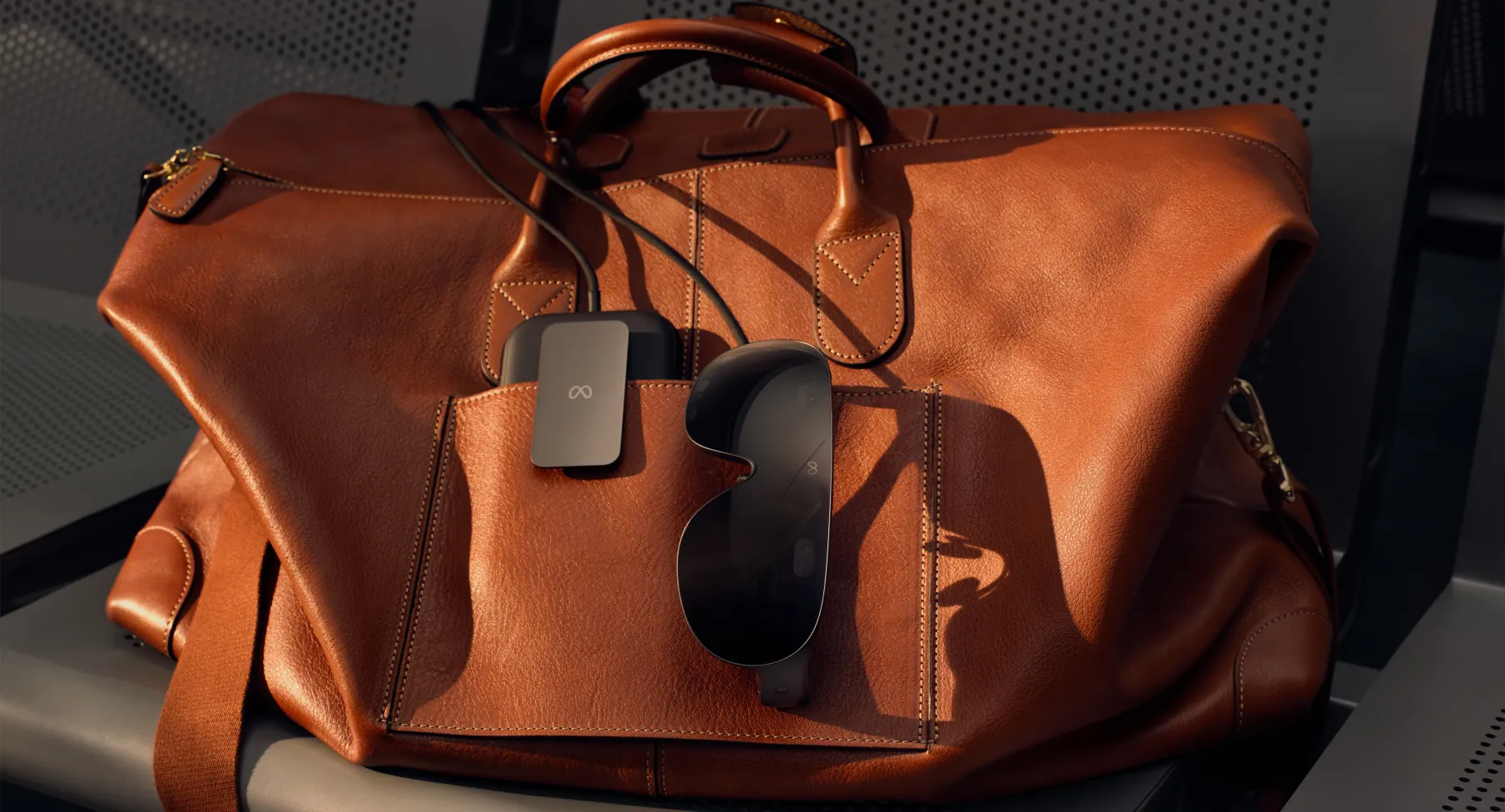
Meta VR Glasses are the most interesting headset Meta has shown in years and the hardest to recommend without caveats. Meta unveiled them at Connect 2026 on September 23. They cost $1,299.99, ship in spring 2027, and put a Quest-class computer in a pocket puck so the part on your face weighs about 100 grams.
Quick answer: If you want a private movie screen for flights, a multi-monitor workspace you can pack in a bag, or a lighter way into mixed reality, these are worth waiting for. If you play fast VR games and love the wraparound feel of a Quest 3, skip them. The 70-degree horizontal field of view is a big step down from Quest 3’s 110 degrees, and controllers cost extra.
A note on how we built this guide: nobody outside Meta can buy or test these yet. Meta ran short press demos at Connect, so what follows combines the official spec sheet with hands-on reports from Engadget, Road to VR, UploadVR, Gizmodo, Tom’s Guide, Android Central, and Axios. Where those reports disagree, we say so.
Meta VR Glasses specs and price at a glance
| Detail | Meta VR Glasses (Project Phoenix) |
| Price | $1,299.99 USD (128GB base model; no motion controllers included) |
| Release Date | Spring 2027 (Exact day TBD) |
| Pre-Orders | Not yet open; Meta site currently accepts email sign-ups |
| Display Specifications | Dual 2412 × 2288 Micro-OLED, 120Hz, HDR, Dolby Vision, IMAX Enhanced certified |
| Field of View (FOV) | 70° Horizontal × 66° Vertical (~87° Diagonal) |
| Processor / Architecture | Qualcomm Snapdragon Reality Elite housed in a tethered external puck |
| Memory & Storage | 12GB RAM, 128GB internal storage, expandable via microSD slot on puck |
| Weight Breakdown | ~100 grams (Glasses frame), ~300 grams (Compute puck) |
| Battery & Charging | Up to 3 hours of media playback; supports 45W fast charging via puck |
| Standout Feature | Sharpest display Meta has ever shipped (~37 pixels per degree / 5K total) |
| Main Drawback | Narrow field of view relative to dedicated VR headsets (e.g., Quest 3’s ~110° FOV) |
How the split design works
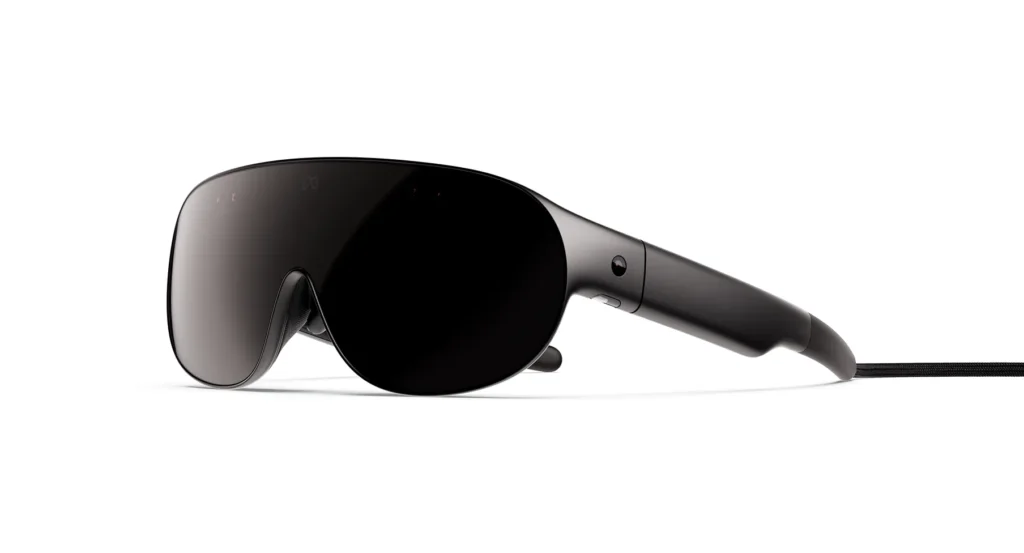
Every Quest crams the processor, battery, and displays into one box strapped to your head. Meta VR Glasses split that in two. The glasses carry the micro-OLED panels, pancake lenses, cameras, and sensors, with no onboard computing at all. A puck about the size of two phones stacked together holds the Snapdragon Reality Elite chip, the battery, and the storage. A thin hybrid fiber-optic cable runs between them for power and data.

The puck runs the same operating system as Quest 3, which means the existing Quest app and game library work on day one. The magnesium alloy frame has no fan and relies on passive cooling. The sides stay open, so you see the room around and below you without looking through cameras. Clip-on light blockers close those gaps when you want full immersion.
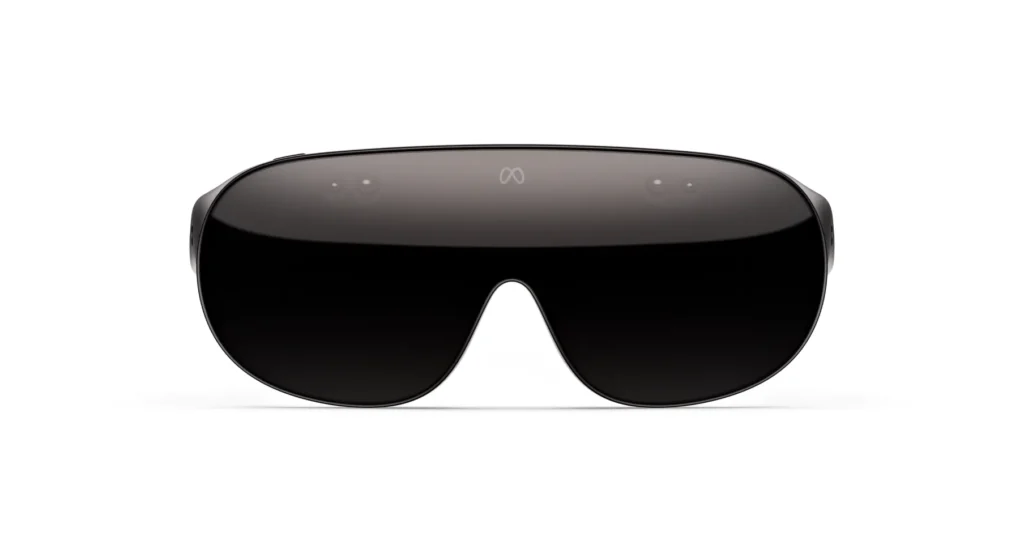
Meta pitches the device as a private cinema, a multi-monitor workspace, and a game console that fits in a bag. Meta’s product VP Angela Chang told Axios the company sees it as a general device with no single target use. That sounds vague, but it tells you something: Meta is betting on comfort first and letting people find their own reasons to wear it.
Meta VR Glasses features that stand out
The sharpest display Meta has made
Meta VR Glasses have the highest resolution of any Meta headset to date, and they mark Meta’s return to OLED after years of LCD panels. Each eye gets a 2412 x 2288 micro-OLED screen running at up to 120 Hz with HDR and Dolby Vision support. Meta also says it’s the first VR product to earn IMAX Enhanced certification.
The number that tells the real story is pixels per degree. Because Meta packs those pixels into a narrower view, you get about 37 PPD at the center, against roughly 25 on Quest 3. In practice, text looks crisper, and fine detail in movies holds up better. Road to VR described deep blacks with no visible OLED smearing, though its reporter expected more brightness. Engadget’s Karissa Bell called it the sharpest mixed reality display she could remember using.
If you’ve tried reading a spreadsheet or a long web page on a Quest 3, this is the upgrade you’ll notice first.
About 100 grams on your face
Meta says the glasses weigh about one-fifth of a Quest 3. That changes how long you can wear them and where. Several reviewers mentioned the relief of skipping a head strap, and Engadget pointed out you’re less likely to ruin your hair or look strange putting them on in an airplane seat.
The caveat is that 100 grams still sits on your nose and ears, and ordinary eyeglasses weigh a fraction of that. Most demos ran around 30 minutes. Nobody knows yet how the glasses feel after a two-hour movie, and a commenter in a large Hacker News thread doubted that frames this heavy can stay in place without tight arms. Treat comfort as promising but unproven.
Passthrough that looks close to the real room
Color passthrough runs at about 26 PPD, compared with 18 on Quest 3. Road to VR said it came close to looking like a true reproduction of the room and rated it well ahead of AR glasses that use birdbath optics. That matters because Meta expects you to spend most of your time in mixed reality, with windows floating over your desk or couch, instead of sealed inside a virtual world.
UploadVR made the same point: the narrow field of view hurts less when you can see your real surroundings in your peripheral vision than when everything outside the frame goes black.
Your Quest library, plus a plug-in screen for other devices
Because the puck runs Quest software, every Quest game and app is compatible. The catch is that many games need controllers, which don’t come in the box. To fill the gap, Meta announced more than 75 hand-tracked games for launch, including Flux, a new controller-free mode for Beat Saber.
The feature we think gets overlooked is the USB-C DisplayPort input. You can plug a laptop, a phone, or a gaming handheld into the puck and see it as a large virtual screen, with no capture card. Meta has never offered this on a standalone headset. If you own a Steam Deck or a Windows handheld, you get a giant private display on a plane. You can also connect a Windows PC or Mac for work and type on a virtual keyboard projected on a desk, or use a physical keyboard and mouse.
Look-and-pinch controls
Meta added four eye-tracking cameras and extra downward-facing sensors for hand tracking. You look at a menu item and pinch your thumb and finger to select it, or make a fist and use your thumb as a D-pad to scroll. Android Central said the virtual mouse and keyboard worked far better than expected. Engadget’s hands-on headline argued that hand and eye tracking beat a controller for this kind of device. You can also ask Meta AI to open apps or play something by voice.
A content push aimed at movie watchers
Meta lined up a lot of entertainment for launch. Disney+ subscribers in some countries get 3D films starting in November on current headsets, and VR glasses owners get a Disney Immersive Cinema app with enhanced versions of films like Star Wars: A New Hope. ESPN will stream 180-degree sports in 8K, and Meta promises more than 100 live sporting events a year through MLB, NBC Sports, TNT Sports, and UFC. Prime Video, YouTube, Peacock, HBO Max, and Paramount+ are on board as well.
Where they fall short
The field of view is a real step backward
This is the tradeoff that decides whether the product is for you. Meta VR glasses show 70 degrees horizontal by 66 degrees vertical. Quest 3 shows about 110 by 96. Road to VR expects some buyers to find that frustrating, and UploadVR said the glasses feel far less immersive than a Quest once you attach the light blockers.
Picture looking at the world through a large window instead of standing in the open. For a movie screen or a set of work monitors, that frame makes little difference. For a game where enemies come from the side, or for social VR where you want people around you, it matters a lot.
The real price is higher than $1,299.99
The sticker price covers the glasses, the puck, and a 45W charger. Depending on how you use them, you may need more:
| Item | Needed If… | Estimated Price |
| Meta VR Glasses | Always (Base headset system required) | $1,299.99 |
| Touch Plus Controllers (New Black) | You intend to play traditional controller-based Quest games and do not already own a Quest 3 or Quest 3S | Not yet announced |
| Prescription Lens Inserts (Zenni Optical) | You wear prescription glasses (standard frames cannot be worn underneath the glasses) | ~$100 (Reported; not officially confirmed by Meta) |
| microSD Card | The base 128GB internal storage fills up with high-resolution games and downloaded 3D movies | Varies by storage capacity (e.g., $15–$50) |
If you already own a Quest 3 or Quest 3S, your controllers pair with the new glasses, which saves you that cost. UploadVR reports that some retailers will sell a bundle with controllers included. For comparison, Quest 3 sells with 512GB of storage and controllers in the box.
The puck is heavier and warmer than it sounds
The 300-gram puck comes with a clip for your pocket or waistband. Engadget’s reporter doubted she’d want that weight hanging off her pants and noticed heat coming off the puck even while it sat on a table. It didn’t feel hot, but she thought it could get uncomfortable in a pocket over time.
Battery life is rated at up to three hours of high-resolution media playback, with Road to VR reporting three-plus hours of mixed use. That covers one long movie. It won’t cover a New York to Los Angeles flight unless you charge the puck from a seat outlet or a power bank. The puck does support charging while you use it.
Fit and glasses wearers
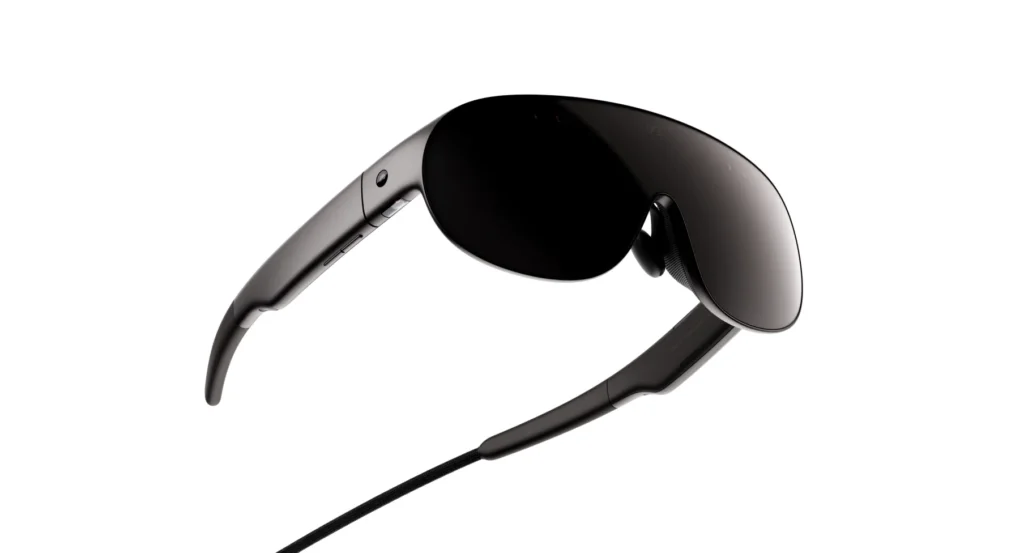
The pancake lenses are sharp, but Road to VR found the sweet spot smaller than on Quest 3. You need a good fit using the included nose pads, and Meta sells the glasses in Standard and Large sizes. You set IPD by hand, from 56 to 70 mm. If you wear prescription lenses, you’ll need inserts, since glasses don’t fit underneath. Buying online without trying both sizes looks risky, so watch for in-store demos before you commit.
Software that isn’t finished yet
Meta has six months to polish the software, and it needs them. Tom’s Guide found it hard to tell which item its eyes had selected because highlighted icons only get a little brighter. Hologram, Meta’s realistic avatar system for WhatsApp and Zoom calls, launches as a flat video stream. It appears at life size, but it stays facing you head-on even when you move around it. Meta says a full 3D version comes later.
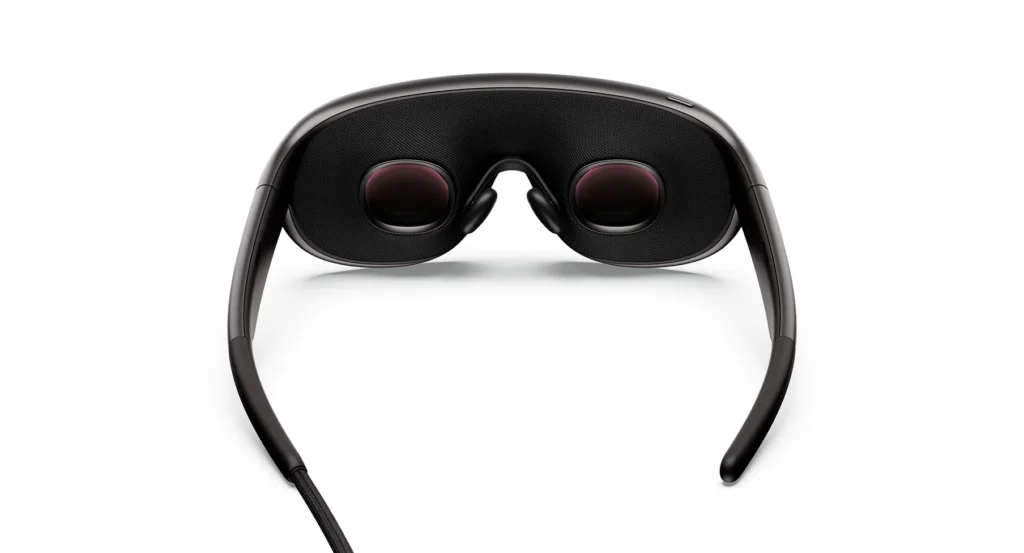
Gizmodo also noted that the light blockers let in more light than a Quest’s facial interface, and it was tested in a dim room. Bright sunlight on a train or near a plane window is still an open question.
Meta VR Glasses vs Meta Quest 3 and Other Rivals
| Feature / Spec | Meta VR Glasses | Meta Quest 3 | Steam Frame | Apple Vision Pro |
| Price | $1,299.99 (128GB) | $600 (512GB) | $1,059 (256GB) | $3,699 (256GB) |
| Display Type | Micro-OLED | LCD | LCD | Micro-OLED |
| Pixels Per Eye | 2412 × 2288 | 2064 × 2208 | 2160 × 2160 | 3660 × 3200 |
| Field of View (FOV) | 70° × 66° | 110° × 96° | 110° × 110° | 100° × 73° |
| Center Sharpness | ~37 PPD | ~25 PPD | ~25 PPD | ~44 PPD |
| Processor | Snapdragon Reality Elite | Snapdragon XR2 Gen 2 | Snapdragon 8 Gen 3 | Apple M5 |
| RAM | 12 GB | 8 GB | 16 GB | 16 GB |
| Eye Tracking | Yes | No | Yes | Yes |
| Controllers | Optional (Sold Separately) | Included | Included | Optional (Hand/Eye Primary) |
| microSD Expansion | Yes | No | Yes | No |
Against Quest 3, you trade immersion and controllers for a sharper image, better passthrough, eye tracking, and a form factor you can wear on a plane without feeling self-conscious. For roughly twice the money, you get a very different device, not a straight upgrade.
Against Apple Vision Pro, Meta offers most of the same experience, from giant movie screens to Mac multitasking to realistic avatars, at about a third of the price and a fraction of the weight on your face. Vision Pro still has more pixels and a wider view.
Against Steam Frame, the comparison comes down to what you play. Steam Frame targets PC VR gamers with a full field of view and included controllers. Meta VR glasses target media and productivity.
The closest direct rival is Xreal’s Project Aura, built with Google on the same Snapdragon Reality Elite chip and puck design. UploadVR notes Meta’s version offers a wider view (about 87 degrees diagonal against Aura’s 70), higher resolution, full opacity, and eye tracking. Xreal hasn’t announced Aura’s price, so the value comparison has to wait.
Release date, pre-orders, and availability
Meta has confirmed a spring 2027 release in the US for $1,299.99. It hasn’t named an exact date or opened pre-orders, and Meta’s official page only collects email sign-ups for now. Meta executives told Axios they held the launch until spring because they want the first impression to land well, which suggests the software problems reporters spotted are known.
Watch for three announcements between now and launch: the pre-order date, final pricing for Touch Plus controllers and prescription inserts, and details on which retailers carry the controller bundle.
Who are Meta VR glasses for
Wait for them if you:
- Fly or commute often and want a private big screen that fits in a bag
- Work on a laptop and want extra monitors without carrying hardware
- Found Quest headsets too heavy or sweaty to wear for more than half an hour
- Considered Apple Vision Pro but couldn’t justify $3,699
- Own a Quest 3 or 3S already, since your controllers carry over
Skip them if you:
- Play fast-action games or rhythm games that rely on peripheral vision
- Want the most immersion per dollar (Quest 3 still wins there)
- Need all-day battery without carrying a power bank
- Don’t want a Meta account tied to a camera-heavy face computer, a concern Engadget raised as one of the product’s biggest hurdles
The bottom line
Meta VR Glasses give up some immersion to become something you might wear for hours, on a couch or in seat 23C. The display, the passthrough, and the price against Vision Pro all look strong on paper and in early demos. The field of view, the three-hour puck, and the unfinished software are the open questions. Sign up for launch alerts if the travel and work pitch fits your life, and hold off on buying until full reviews confirm comfort over a whole movie.
Frequently asked questions
Q. How much do Meta VR Glasses cost?
A. Meta VR Glasses cost $1,299.99 in the US with 128GB of storage. Controllers and prescription inserts cost extra, and neither has confirmed pricing from Meta yet.
Q. When is the Meta VR Glasses release date?
A. Meta says spring 2027. It hasn’t given a specific day.
Q. Can I pre-order Meta VR Glasses?
A. Not yet. Meta’s website lets you sign up for launch updates by email. Pre-orders should open closer to the spring release.
Q. Are Meta VR Glasses better than Meta Quest 3?
A. They’re better for watching movies, reading text, and working with virtual monitors, thanks to the sharper micro-OLED display and lighter design. Quest 3 is better for immersive gaming because of its much wider field of view, bigger storage, and included controllers.
Q. Do Meta VR glasses work with Quest games?
A. Yes. The puck runs the same software as Quest 3, so the full library works. Controller-based games need Touch Plus controllers, sold separately, or the controllers from a Quest 3 or 3S. More than 75 hand-tracked games will be ready at launch.
Q. Can you wear Meta VR glasses with prescription glasses?
A. No. You’ll need prescription inserts from Zenni Optical that clip in behind the lenses.
Q. How long does the battery last?
A. Meta rates the puck at up to three hours of continuous high-resolution media playback. You can charge it with the included 45W charger while you use it.
Q. Are Meta VR glasses AR or VR?
A. Both. With the sides open, they work as mixed reality glasses using full-color camera passthrough. Attach the light blockers and they work as a VR headset, though with a narrower view than Quest 3.