

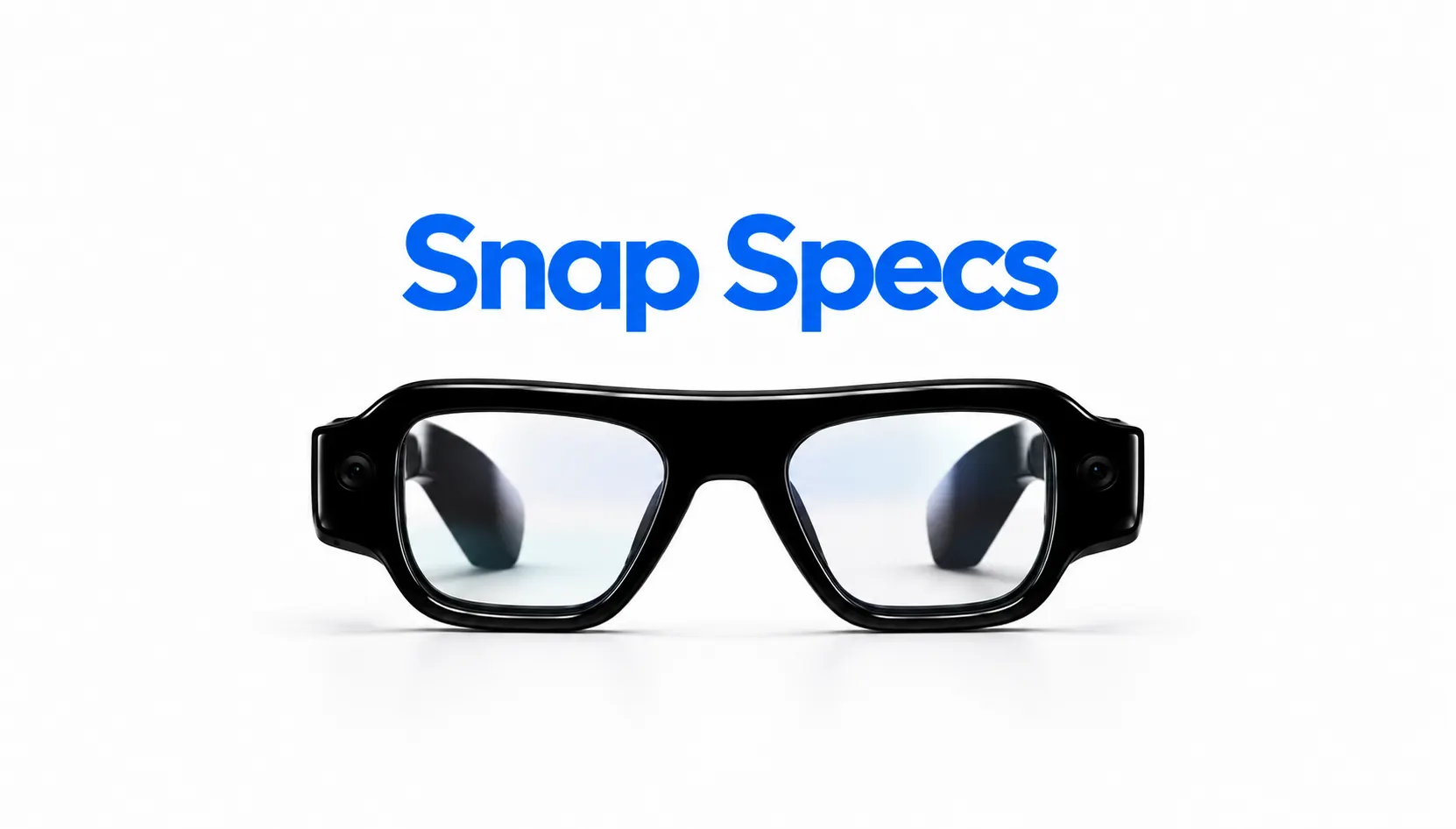
I’ve been watching Snap specs try to put a computer on your face for a decade. Three consumer camera glasses that mostly flopped. Two developer-only AR kits that almost nobody outside a Lens Studio Discord ever wore. A lot of promises about a future that kept staying a year away.
That future has a price now: $2,195. Snap Specs are real, pre-orders are open, and the first units ship this fall in the US, UK, and France. These are the first standalone AR glasses you can hand your credit card for without a monthly developer rental or a research lab badge. No puck in your pocket. No tethered cable to a phone. No controller. You put them on, and full-color digital objects sit in the room with you.
I’ll be straight about my vantage point before we go further, because it matters for a review like this. Snap ran short, tightly controlled demos for a small group of reviewers, and I’m pulling together what the people who wore them reported, alongside the confirmed hardware. So when I say Snap Specs are part of the future, I mean I’ve watched enough of this category to know a real inflection point when I see one. I also have enough scar tissue to spot the parts that aren’t ready.
Both things are true here. Let’s get into it.

The quick verdict
Snap Specs are the most convincing pair of true augmented reality glasses anyone has put a real price on, and also a device almost nobody should buy in 2026. Buy them if you build AR experiences for a living, run an enterprise pilot, or have $2,500-plus of disposable income and a deep itch to live on the frontier. Skip them if you want smart glasses you’ll wear to dinner, if you flinch at spending laptop money on a first-generation gadget, or if you expected these to replace your phone.
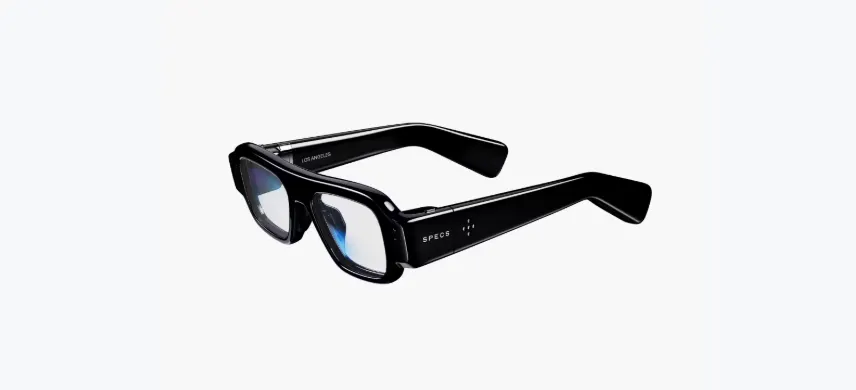
The standout feature is what nobody else ships: a binocular AR display that puts full-color content in front of both eyes without any wristband or extra hardware to control it. The main drawback is the price once you count the extras, followed closely by a field of view that still boxes the illusion in.
| Snap Specs at a glance | Detail |
| Price | $2,195 (plus a $200 refundable deposit to reserve) |
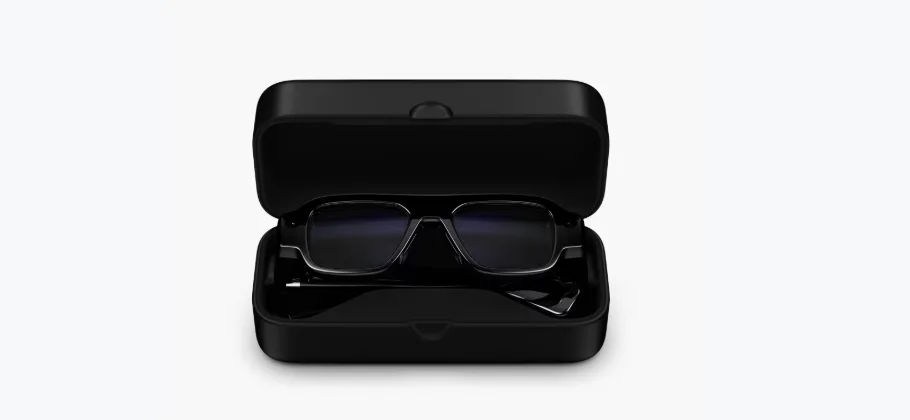
| Charging case | $200, holds four extra charges, optional cellular via Verizon (plan pricing TBD) |
| Display | Binocular LCoS, 51-degree field of view, 16 million colors |
| Weight | 132 to 136 grams, roughly 40% lighter than the last spectacles |
| Sizes | 47mm and 52mm frames (virtual fitting required before you order) |
| Chips | Two Qualcomm Snapdragon processors (one for vision, one for apps) |
| Input | Hand tracking and voice, no wristband or controller |
| Battery | Up to four hours of mixed use |
| Availability | Pre-order now; ships fall 2026 (US, UK, France) |
Prices and specs confirmed at Snap’s June 2026 reveal and September hands-on events. Data-plan pricing for the cellular case was not announced and should be verified before publishing.
What are Snap Specs?
Snap Specs are Snap’s first consumer AR glasses, the payoff of more than $3 billion and eleven years of work that produced five earlier generations of Spectacles. The early ones were social camera glasses. The last two, released in 2021 and 2024, were true AR hardware that Snap only rented to developers, at one point for $99 a month.
The word “true AR” does a lot of work, so here’s what it buys you. Most smart glasses you can name fall short of it. Ray-Ban Meta has no screen at all, only a camera, speakers, and an AI voice. The Meta Ray-Ban Display adds one small screen in the corner of one lens. Xreal and Viture glasses show you a big picture, but they darken your view and act like a monitor strapped to your face. Snap Specs put digital objects into the room in front of both of your eyes, anchored to the physical space, so a window can stay pinned above your desk while you walk around it. That’s the leap.
Snap runs its own software, Snap OS, and calls apps “Lenses.” The whole system leans on AI that can see what you see, with OpenAI and Google’s Gemini wired in behind the scenes. Two Snapdragon chips do the heavy lifting, one dedicated to computer vision and one running the lenses.
What it’s like to wear
Here is where I lean on the reviewers’ Snap let-in, because honesty beats a fabricated test.
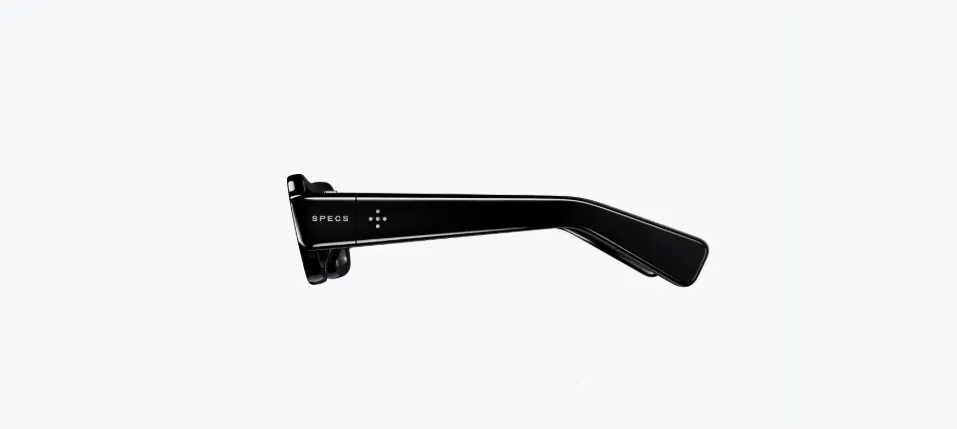
The first surprise, reported near-universally, is the size. Not that Specs are small; they’re chunkier than the bulkiest smart glasses on the market. The surprise is how much smaller they are than any headset that does comparable work. Set a pair of Specs next to a Quest or a Vision Pro, and the gap is almost funny. Snap has fit honest-to-goodness mixed reality into something that reads as glasses, if slightly cartoonish ones, rather than a ski mask.
Weight follows the same story. At 132 to 136 grams, these are nearly twice as heavy as Meta’s display glasses on paper, yet Engadget’s reviewer found the load spread evenly enough that the frames never slid down her nose, even when she shook her head. Twenty minutes in, no ache. The arms grew warm to the touch after about ten minutes, warm rather than hot, because that’s where the Snapdragon chips live.
You control everything with your hands. Point your index finger to move a cursor, pinch to select, and open your palm to pull up the menu. Testers described the tracking as quick and intuitive, with one funny failure mode: when a strand of hair drifted in front of a camera, the cursor started jumping around until it was pushed back. Compared with Meta’s approach, which needs a separate neural band on your wrist to register input, Snap doing all of this with cameras alone is a genuine flex. And with a 7-millisecond photon latency, faster than the Vision Pro’s 12, the response feels immediate.
Where Snap Specs impress
The display finally feels like AR, not a floating screen
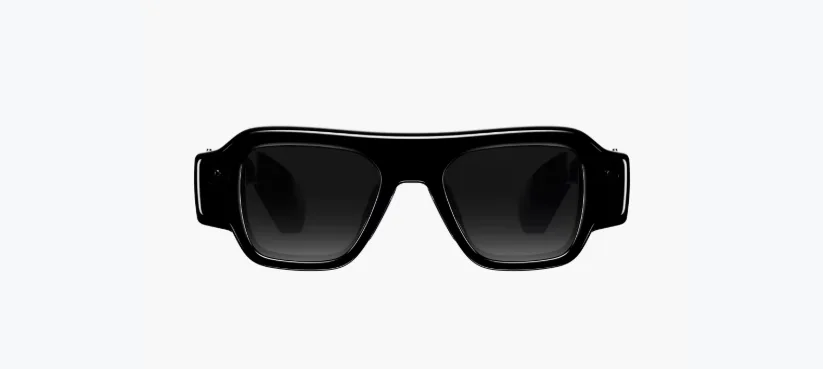
The 51-degree field of view is the number Snap wants you to remember, and it earns some of the hype. That’s roughly 30% more display area than last year’s developer Spectacles, and it’s binocular, so both eyes see the same content at once. The panel pushes 16 million colors and reads as bright, though testers noticed content sharpens in dimmer rooms and softens under harsh light. Electrochromic lenses tint themselves to keep contrast up outdoors, which handles the sunny-day problem that wrecks a lot of AR.
The upgrade that matters most isn’t a spec, though. It’s that content now stays put. Older Spectacles made you hunt for AR objects you knew were floating somewhere off to your side. Snap OS can now anchor a window in space so it holds position as you move your body, and that single change is the difference between a demo and something you’d want to use.
No wristband, no puck, no phone
The cleanest thing about Specs is what’s missing. There’s no compute puck in your pocket, no cable, no phone dependency for the core experience, and no wrist accessory. Meta’s most futuristic concept, Orion, still needs a wireless puck and a neural wristband, and it isn’t for sale. Snap shipped the untethered version first. For a category where every competitor asks you to carry a second box, standalone is a real advantage.
EyeConnect and the case for social AR
The moment that stuck with every reviewer was social. Two people wearing Specs can look at each other and launch a shared experience, a feature Snap calls EyeConnect. Engadget’s tester played a round of digital dominoes with a Snap rep sitting across from her, both of them seeing the same virtual tiles on the table between them. It’s a simple game. But playing it side by side, without a bulky headset walling each person off, hinted at something no other AR product has nailed: casual, in-the-room play with another human. If Snap builds out the Lens catalog, this is the pitch that could sell the category.
Apps that solve real problems
Past Spectacles demos leaned on gimmicks, dancing bananas, and 3D graffiti. This time Snap pointed testers at utilities. A Mapbox walking-navigation lens drew directions onto the sidewalk. A translation lens threw English captions under a person speaking Italian in real time. Reviewers opened Google Docs in a browser window and typed on a Bluetooth keyboard, which felt natural, and on the built-in AR keyboard, which felt fine for a few words and no more. There’s an AR measuring tool and a whiteboard for sketching. A “travel mode” locks a streaming window to a moving vehicle instead of your head, so you can watch a show in the back seat without the picture swimming.
Where Snap Specs fall short
This is the section that builds trust, so I won’t soften it. Snap Specs have real problems, and some of them are the kind you only feel after the demo high wears off.
The field of view still boxes you in
Fifty-one degrees is the widest anyone’s shipped to consumers, and it’s still not enough. The reviewer at The Verge kept losing digital elements off the edges of his vision, which broke the illusion that the objects were sitting in the real world. Playing dominoes, he had to keep turning his head to see his tiles and then the board and back. Watching HBO Max in a browser window in a moving car, he had to shrink the window to keep it in frame. You can rearrange windows to fit, but shrinking everything to stay inside the box works against the whole point of spatial computing.
The AI is slow, and it’s 2026
Specs have a “Hey Specs” assistant, and it should be a highlight given how much Snap talks about context-aware AI. In practice, one hands-on described it as slow and inconsistent. For a device whose pitch is AI that sees what you see and helps in the moment, a laggy assistant is more than a rough edge. It’s the feature that’s supposed to justify the whole thing, and it isn’t there yet.
The battery, the heat, and the connection
Snap rates specs for up to four hours of mixed use, and nobody got to test that claim under load. Watching video and running navigation, the demands that make AR glasses fun, are exactly the things that drain a battery fastest, and the warm arms are a reminder of how hard these chips are working. Several core lenses, streaming and navigation among them, need a live connection, so their usefulness drops the moment you’re somewhere without Wi-Fi and don’t feel like hotspotting off your phone.
The real price is higher than $2,195
That $2,195 sticker is the floor, not the ceiling. The charging case that solves the battery and connectivity worries costs another $200, and if you want its standalone cellular link, you’ll pay Verizon for a data plan Snap hasn’t priced yet. Add it up and you’re past $2,400 before the tax for a first-generation product. Ray-Ban Meta glasses cost about a sixth of that.
They look like a lot
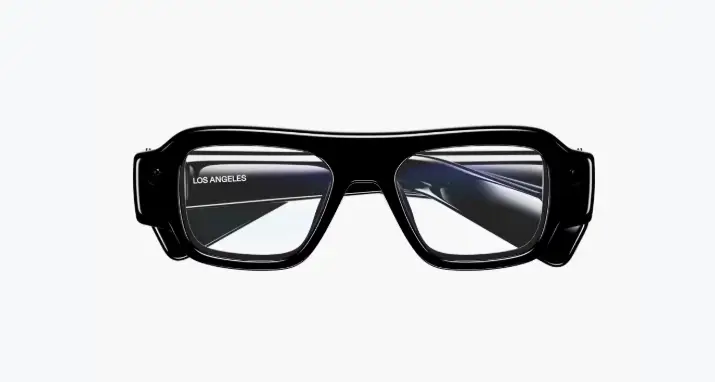
When Snap revealed Specs, a chunk of the internet skipped the technology and went straight for the design. “Absolutely zero style” was one of the kinder takes. The frames are thick, the arms are chunky, and the honest read from testers is that Specs don’t pass for normal glasses and aren’t trying to. If you’ve got long hair to cover the arms, you fare better. If you don’t, you’re wearing your enthusiasm on your face.
Snap Specs vs the competition
Snap isn’t competing with the other smart glasses on shelves, because none of them do the same job. That’s the point of this table.
| Feature | Snap Specs | Meta Ray-Ban Display | Ray-Ban Meta (Gen 2) | Meta Orion |
| Price | $2,195 | $799 | $299 to $329 | Not for sale |
| Display | Binocular AR, 51° FOV | Monocular HUD, 20° FOV, one eye | None | Binocular AR, 70° FOV |
| Input | Hand tracking, voice | Neural Band wristband | Touch, voice | Neural wristband |
| Standalone? | Yes, no puck or phone | Needs phone | Needs phone | Needs wireless puck |
| Weight | 132 to 136g | ~69g | ~50g | Prototype |
| Best at | Spatial AR, shared play | Glanceable info, notifications | Camera, AI audio, all-day wear | A glimpse of the future |
| Availability | Fall 2026 | On sale | On sale | Never (concept) |
Read it this way. If you want glasses you can wear all day that nobody notices are smart, Ray-Ban Meta Gen 2 is the pick, and it’s cheap. If you want a small heads-up display for notifications and directions without carrying your phone out, the Meta Ray-Ban Display does that for a third of the Specs price, though you’re strapping a wristband on to run it. Meta Orion is the dream both companies are chasing, with a 70-degree view and a neural band, and you can’t buy it and won’t be able to for years.
Snap Specs sit alone as the only true, standalone, buy-it-today AR glasses. You pay for that in dollars and in bulk.
Who should buy Snap Specs?
Four kinds of people should think hard about pre-ordering, and everyone else should wait.
Developers and creators come first. If you build lenses or want to prototype spatial apps, Specs is the best hardware you can own for it, and Snap’s whole strategy depends on you showing up early. Enterprise teams running training, design review, or field-service pilots are the second group, and Snap launched a dedicated business program aimed straight at them. Third, the deep-pocketed early adopter who bought a Vision Pro on day one and doesn’t regret it will find plenty here to justify the splurge. And fourth, anyone whose work is AR itself, the researchers and futurists who need to feel where the category is going with their own hands.
Who should skip Snap Specs?
Most people, and I mean that kindly.
Skip Specs if you want everyday smart glasses, because these are too big, too pricey and too battery-limited for that role, and Ray-Ban Meta covers it for a fraction of the cost. Skip them if $2,195-plus for a first-gen gadget makes your stomach turn, because the second and third generations will be smaller, cheaper, and longer-lasting, and that’s how this always goes. Skip them if you were hoping to ditch your phone, because between the four-hour battery and the connection some lenses need, your phone isn’t going anywhere yet.
The verdict
Snap Specs won’t be on many faces this fall, and Snap knows it. The price, the size, and the four-hour battery draw a hard line around who these are for. But strip away the “should you buy it” math and look at what Snap built, and it’s the clearest picture yet of where all of this is headed: computing that sits in the room with you instead of in your hand, controlled by nothing but your eyes and fingers, with no wires and no box in your pocket.
That’s the future. Snap got there first and got there rough. The version worth buying is still a couple of generations out. But I’ve seen enough now to stop calling it a year away.
Frequently asked questions
Q. Are Snap Specs available to buy right now?
A. Pre-orders are open with a $200 refundable deposit, and the glasses ship this fall in the US, UK, and France. Snap makes you complete a virtual fitting before you order so you land on the right frame size, either the 47 mm or the 52 mm.
Q. Do Snap Specs need a phone to work?
A. No, and that’s the headline. Specs run standalone with two onboard Snapdragon chips; no puck or tethered phone is required for the core experience. Some lenses, like streaming and navigation, still need an internet connection, which you can supply over Wi-Fi, a phone hotspot, or the optional cellular charging case.
Q. How is the battery life on Snap Specs?
A. Snap quotes up to four hours of mixed use. Heavy tasks like watching video or running live navigation will pull that number down, and the $200 case holds four extra charges to keep you going through a longer day.
Q. How do Snap Specs compare to the Meta Ray-Ban Display?
A. They’re built for different jobs. Snap Specs delivers full binocular AR across a 51-degree field of view, so digital objects live in the room with you. The Meta Ray-Ban Display shows a small heads-up panel in one eye across a 20-degree view and needs a Neural Band on your wrist to control it. Specs do far more, cost far more ($2,195 against $799), and are chunkier for it.
Q. What can you do with Snap Specs?
A. Walking navigation with directions drawn onto the street, live language translation with on-screen captions, a browser for the web and streaming, multiplayer AR games like the EyeConnect dominoes demo, an AR measuring tool, a sketching whiteboard, and productivity work in apps like Google Docs with a Bluetooth keyboard.
Q. Are Snap Specs worth $2,195?
A. For developers, enterprise pilots, and committed early adopters, the case holds, because nothing else offers standalone true AR at any price today. For everyone else, the honest answer is not yet. The technology is the most convincing in its class, and it’s still a first-generation product wearing first-generation compromises.