
Introduction
The Gemini vs ChatGPT question is one of the most common AI decisions people face in 2026. Google and OpenAI have both built AI systems capable enough to handle real work, and the Gemini vs ChatGPT comparison keeps coming up because the choice actually matters now, not just for curiosity.
When Gemini vs ChatGPT was a novelty question in 2023, picking wrong cost nothing. Now people build workflows, businesses, and jobs around one tool or the other. The Gemini vs ChatGPT decision has weight in 2026 in a way it simply didn’t a few years ago, especially as both companies push AI agents that can act on a person’s behalf instead of just answering questions.
Part of why the Gemini vs ChatGPT debate keeps resurfacing is that both tools update constantly. A comparison written six months ago may already be out of date on pricing or model capability, which is exactly why this Gemini vs ChatGPT guide focuses on patterns that tend to hold steady rather than specific benchmark scores that expire quickly.
This Gemini vs ChatGPT guide goes through the comparison the way you’d actually use either tool: coding, writing, research, pricing, and the everyday tasks that don’t show up in a press release. No universal winner gets crowned in this Gemini vs ChatGPT breakdown. Instead, you’ll get a clear read on where Gemini vs ChatGPT pulls ahead in each direction, and which one fits how you actually work.

What is Gemini vs ChatGPT?
Before getting into the full Gemini vs ChatGPT comparison, it helps to know what each tool actually is and why they approach AI differently.
What is Gemini?
Gemini is Google’s AI model family, built to handle text, images, audio, and video inside one system. In the Gemini vs ChatGPT comparison, Gemini’s biggest advantage isn’t raw model quality, it’s where Gemini lives.
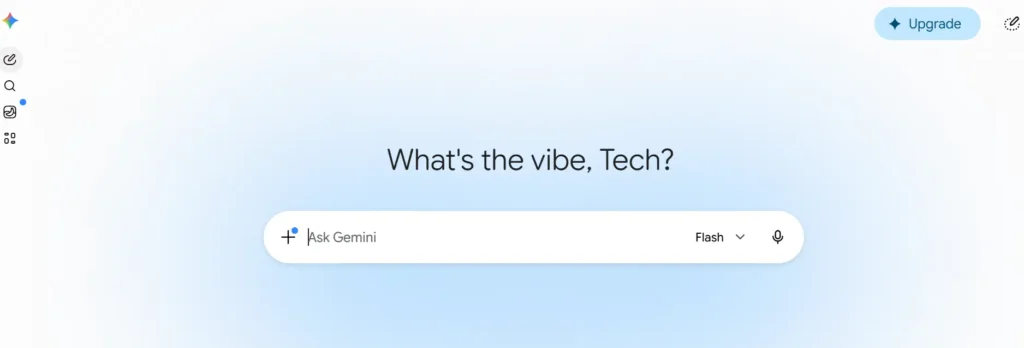
Gemini shows up in:
- Google Search, generating AI overviews
- Google Workspace, inside Docs, Gmail, Sheets, and Slides
- Android, as the default assistant on many phones
- Google AI Studio, for developers building on the Gemini API
Because Google owns the search engine, Gemini can pull current information more directly than most other AI tools. That single fact shapes a large part of the Gemini vs ChatGPT comparison later in this article. It also means Gemini benefits from Google’s existing infrastructure, including data centers and years of search-ranking experience, which gives it a different starting point than a chatbot built from scratch.
What is ChatGPT?
ChatGPT is OpenAI’s chatbot, built on the GPT model line. In any Gemini vs ChatGPT discussion, ChatGPT is usually the tool people already know, since it launched first and built the largest early user base.
ChatGPT earned its reputation on reasoning and writing quality. That reputation still holds up in most Gemini vs ChatGPT tests, though the gap has narrowed as Gemini has improved. OpenAI has also expanded ChatGPT well past its original chat interface, adding custom GPTs for specific tasks, tool calling for connecting to outside data and apps, voice and image features, and a developer API that thousands of other products now run on.
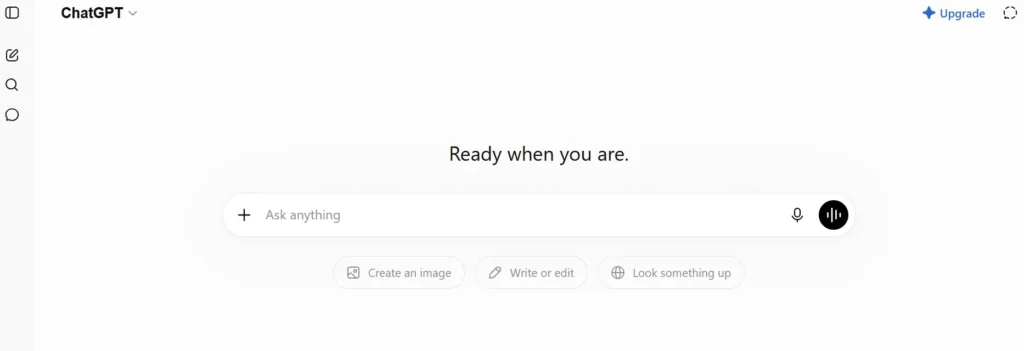
Both Gemini and ChatGPT are large language models at their core. The Gemini vs ChatGPT difference is less about raw intelligence and more about what each tool is built to be attached to, and that distinction runs through almost every section below.
Gemini vs ChatGPT Quick Comparison Table
| Feature | Gemini | ChatGPT |
| Owner | OpenAI | |
| Core strength | Google ecosystem, real-time info | Reasoning and creative writing |
| Coding | Good, improving fast | Excellent, long developer track record |
| Writing | Good, especially factual pieces | Excellent, strong tone control |
| Research | Strong, live search access | Strong, deep analytical reasoning |
| Speed | Fast for everyday queries | Balanced, depends on model tier |
| Multimodal | Strong across Google apps | Strong, mature voice and vision |
| Free plan | Yes, with a Google account | Yes, with usage limits |
| Best for | Google Workspace users | Developers, writers, heavy reasoning |
This Gemini vs ChatGPT table is a starting point. The real Gemini vs ChatGPT story shows up once you look at specific tasks, which is what the rest of this comparison covers in detail.
Gemini vs ChatGPT pricing & Free Plan Comparison
Gemini vs ChatGPT pricing changes often on both sides, so check the current official pages before subscribing to anything based on this or any other comparison article. Gemini vs ChatGPT pricing pages get updated more often than most comparison articles do, so treat any specific dollar figure as temporary.
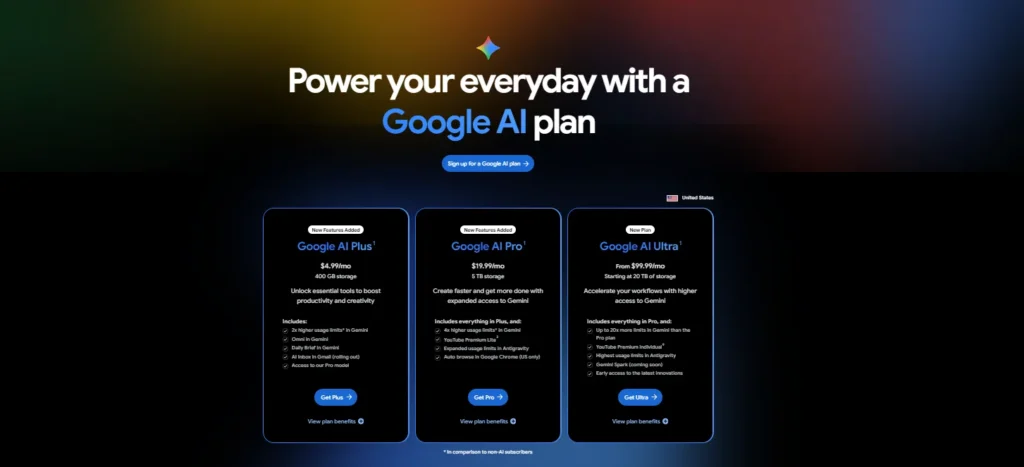
Gemini gives free access with a Google account, with limits on advanced features. Paid tiers, bundled through Google One AI plans, unlock higher usage limits and deeper Workspace integration. Enterprise pricing runs through Google Cloud for organizations that need admin controls and higher usage volume.
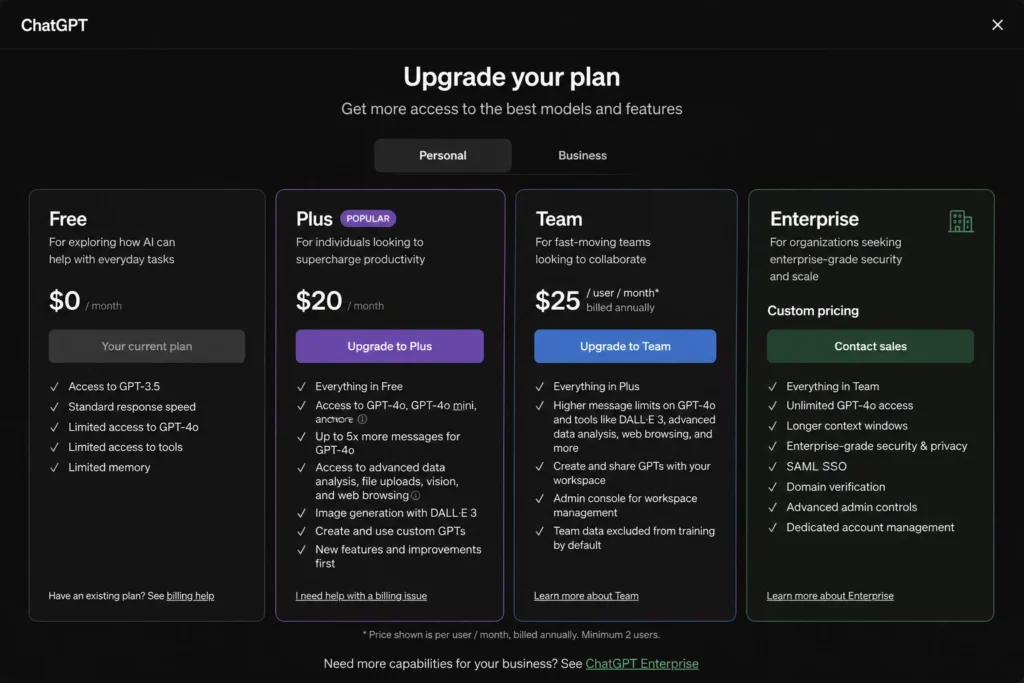
ChatGPT Free gives a genuinely capable base model with usage limits and occasional access to newer features. ChatGPT Plus is the mid-tier paid plan with higher limits and more advanced reasoning and multimodal access. ChatGPT Pro targets people who need the highest usage limits and top-tier model access. Enterprise and Team plans add admin controls and stronger data handling guarantees on top of that.
| Plan type | Gemini | ChatGPT |
| Free | Yes, Google account required | Yes, with usage limits |
| Mid-tier paid | Google One AI Premium | ChatGPT Plus |
| High-tier paid | Higher Google One tiers | ChatGPT Pro |
| Enterprise | Google Cloud / Workspace Enterprise | ChatGPT Enterprise/Team |
For Gemini vs ChatGPT free comparisons specifically, Gemini’s free tier benefits from being bundled with tools people already use daily, and ChatGPT’s free tier gets credit for offering a genuinely useful model without needing any other subscription attached to it.
Feature-by-Feature Comparison
Core AI Capabilities
In the Gemini vs ChatGPT feature comparison, Gemini was designed from the start to handle text, images, and audio inside the same model, rather than adding multimodal features on top of a text-only base. ChatGPT has caught up on multimodal features, but the Gemini vs ChatGPT gap on core identity still leans toward ChatGPT for conversation and text generation first.
This shows up in small ways during everyday use. Ask Gemini to look at a photo of a whiteboard and turn it into a task list, and it tends to handle that smoothly because vision was part of its design from day one. Ask ChatGPT the same thing, and it usually gets there too, just through a slightly different processing path under the hood.
Language Understanding
Both tools follow multi-part instructions well. In the Gemini vs ChatGPT comparison on tone and nuance, ChatGPT has usually had the edge, though Gemini has closed a lot of that distance on factual, structured writing. Where the difference still shows up most is in creative or persuasive prompts that depend on subtle tone shifts, like knowing when a request calls for dry humor instead of sincerity.
Context Memory Handling
Context window size matters for the Gemini vs ChatGPT comparison because it determines how much a model can hold onto within one conversation. That matters for:
- Reviewing long contracts or reports
- Summarizing lengthy research papers
- Keeping a long coding session coherent
- Following a multi-day project across several conversation threads
Both sides of the Gemini vs ChatGPT comparison now support large context windows on higher-tier plans, though exact limits shift with each release. If your work involves feeding in very large files, always check the current context window for the specific plan you’re on rather than assuming it matches what you read in an older comparison.
Tool Usage & Extensions
Gemini connects natively to Search, Gmail, Docs, Sheets, and YouTube. ChatGPT supports custom GPTs, plugins, file uploads, and browsing. This is one of the clearer Gemini vs ChatGPT differences: Gemini wins on native Google integration, ChatGPT wins on flexible custom tooling that can be built and shared by anyone, not just Google.
Accuracy, Reasoning & Reliability
Accuracy is where the Gemini vs ChatGPT comparison gets genuinely interesting, because neither tool is right all the time. Both can produce a confident, well-written answer that’s wrong. That’s hallucination, and it happens on both sides of the Gemini vs ChatGPT divide, sometimes in ways that are hard to catch without already knowing the correct answer.
Gemini’s live Search connection gives it an edge on anything time-sensitive. ChatGPT, without browsing switched on, leans on training data and reasoning, which works for logic problems but can lag on fast-moving topics. This is a recurring theme across the Gemini vs ChatGPT accuracy comparison, and it’s one of the more predictable patterns you’ll notice with regular use.
Real-world reliability also depends on how the question is framed. Vague, open-ended prompts tend to produce vaguer, less reliable answers on both platforms. Specific prompts with clear constraints, like asking for a summary limited to information from a named source, tend to produce more grounded results in most Gemini vs ChatGPT reliability tests, regardless of which tool you’re using.
A reasonable approach with either side of the Gemini vs ChatGPT pair:
- Ask for sources when accuracy matters
- Check dates, names, and numbers yourself
- Treat both as drafting help, not a reference book
- Re-ask the same question a different way if the first answer feels off
Speed & Performance Benchmark
Speed is hard to pin to one number in a Gemini vs ChatGPT benchmark, because it depends on the model tier and server load that day. Any Gemini vs ChatGPT speed claim you read should be treated as a snapshot, not a permanent ranking.
Gemini’s lighter tiers tend to feel snappy on search-style questions. ChatGPT’s speed swings more by model tier: faster models trade depth for speed, while reasoning-focused models take longer because they’re built to work through a problem before answering. Long, complex prompts slow both sides of the Gemini vs ChatGPT comparison down, and that has more to do with the specific model version than the company behind it.
Multi-step reasoning tasks are where wait time really shows up. Asking either tool to plan a multi-stage project, or work through a math problem with several dependent steps, will almost always take longer than a simple factual question, and that’s true on both sides of the Gemini vs ChatGPT comparison.
If speed is what matters most to you, test the lightweight tier on both Gemini and ChatGPT for your actual task, since Gemini vs ChatGPT benchmarks shift with every model release and generic speed claims age quickly.
Coding Comparison (Gemini vs ChatGPT for Developers)
Gemini vs ChatGPT for coding is one of the most searched parts of this comparison, and the right answer depends heavily on your specific stack. Developers weighing Gemini vs ChatGPT usually already know which cloud provider they’re building on, and that answer often decides the winner before any benchmark does.
Python & Debugging
ChatGPT has a long history with developers. It was one of the first AI tools widely used for writing and debugging Python and JavaScript, and it still explains errors clearly with multiple fix options. Gemini vs ChatGPT debugging tests generally show Gemini competitive on straightforward fixes, with ChatGPT still ahead on explaining errors clearly and walking through why a bug happened in the first place.
Algorithm Solving
Both handle standard algorithm problems well, things like sorting, searching, and dynamic programming. In Gemini vs ChatGPT algorithm tests, ChatGPT tends to edge ahead on harder problems needing real planning before code gets written, while Gemini performs reliably on problems with a clear, well-defined structure.
Code Explanation Quality
ChatGPT gives more thorough, teaching-style code explanations, which helps if you’re learning a language for the first time. Gemini’s explanations run shorter, which some developers actually prefer when they already understand the concept and just want the fix.
API Assistance
Both tools help scaffold API integrations and debug request or response issues. For Gemini vs ChatGPT API assistance, Gemini has a clear advantage on Google Cloud or Firebase projects, since it already has native context there, and ChatGPT benefits from years of shared community examples covering a much wider range of third-party APIs.
For Gemini vs ChatGPT for programming generally, teams inside Google Cloud get more value from Gemini. For coding across a wider set of languages and frameworks, ChatGPT remains the safer default for most developers working outside a single cloud ecosystem.
Writing & Content Creation Comparison
For Gemini vs ChatGPT for content writing, the gap comes down to tone, structure, and how much control you have over the output. Most Gemini vs ChatGPT writing tests come down to these same three factors regardless of the specific piece being written.
Blog Writing
Both tools turn an outline into a full post. In Gemini vs ChatGPT blog writing tests, ChatGPT’s prose usually reads more naturally with fewer repeated sentence patterns, while Gemini’s drafts lean more factual, especially for topics that benefit from current information pulled from search.
Copywriting
Short, persuasive writing, ads, headlines, product descriptions, is where ChatGPT has the stronger reputation in the Gemini vs ChatGPT comparison, mostly due to better tone flexibility and a wider creative range.
Tone Control
Ask either side of the Gemini vs ChatGPT pair to hold a specific brand voice across a long document, and ChatGPT typically holds that tone more consistently. Gemini has improved here, but on longer pieces it can drift back toward a neutral, informational register.
SEO Content Generation
Neither side of the Gemini vs ChatGPT comparison handles keyword strategy or search intent analysis entirely on its own; that still needs a person who understands the audience and has real search data. For Gemini vs ChatGPT for SEO content, most teams generate a first draft with either tool, then have a human editor add real insight, check facts, and run the piece through separate SEO tools for structure and keyword work.
SEO, Marketing & Business Use Cases
Content teams already inside Google Workspace get real convenience from Gemini’s Docs integration, since drafting, commenting, and editing happen in one place without switching tabs. In the Gemini vs ChatGPT marketing comparison, ChatGPT’s custom GPTs let teams build reusable prompt templates for repeatable content types like case studies or product descriptions instead, which is a common Gemini vs ChatGPT tradeoff for marketing teams.
Ad copy generation works on both, but ChatGPT’s tone flexibility gives it an edge in most Gemini vs ChatGPT ad copy tests, particularly for punchy, conversion-focused lines that need to sound less like a description and more like a pitch.
Email campaigns benefit from Gemini’s Gmail integration, since you can draft and refine right in the inbox without extra steps. ChatGPT needs a copy-paste step but often gives more varied subject line options, another small but real Gemini vs ChatGPT difference that shows up in day-to-day marketing work.
Keyword optimization isn’t something either side of the Gemini vs ChatGPT comparison should own on its own, but both are useful for brainstorming variations, grouping topics into clusters, and suggesting internal links once you give them the right context and existing site structure.
| Business task | Gemini advantage | ChatGPT advantage |
| Team collaboration | Native Docs/Sheets integration | Custom GPTs for repeatable work |
| Ad copy | Fast, factual variations | Stronger creative range |
| Email drafting | In-inbox Gmail integration | More varied tone options |
| Research-backed content | Live search grounding | Deeper analytical structure |
Research & Deep Learning Capability
Gemini vs ChatGPT for research usually comes down to real-time data versus analytical depth, and both strengths matter depending on the kind of research you’re doing.
Both platforms now offer deep research modes that browse several sources and compile a structured report, useful for literature reviews, market summaries, and competitive scans, though the output should still be treated as a draft that needs a human check. Gemini’s Search link gives it an edge on anything time-sensitive, a consistent pattern across Gemini vs ChatGPT research comparisons, while ChatGPT tends to do better synthesizing information into an actual argument or comparing conflicting viewpoints.
For academic or professional research, a lot of people end up using both sides of the Gemini vs ChatGPT pair together: Gemini for current facts and figures, ChatGPT for organizing those facts into something coherent and readable.
Image Generation & Multimodal AI
Both platforms include built-in image generation now. In the Gemini vs ChatGPT image comparison, Gemini’s tools sit inside the Google ecosystem, making them handy for quick visuals in Docs or Slides, while ChatGPT’s image generation is known for following prompts closely and offering a wider stylistic range. This is one of the more visible Gemini vs ChatGPT differences, since the output is easy to compare side by side.
Vision input, where you upload a photo or a chart and ask a question about it, works comparably well on both sides of the Gemini vs ChatGPT comparison, with occasional gaps depending on image complexity and which specific model version you’re using.
Gemini’s real advantage is convenience inside Google apps, snapping a photo and asking about it without switching apps. ChatGPT’s advantage is flexibility across more platforms and a longer conversation that can mix vision, voice, and text, rounding out this part of the Gemini vs ChatGPT multimodal comparison.
API & Integrations Comparison
OpenAI’s API has years of track record behind it, extensive documentation, and a large community of third-party SDKs and tutorials. In the Gemini vs ChatGPT API comparison, Google AI Studio gives Gemini a free tier for experimenting that connects naturally to Google Cloud infrastructure, which is a real advantage for teams already building on Firebase or Google Cloud.
On developer flexibility, OpenAI still has the broader third-party tooling ecosystem in most Gemini vs ChatGPT integration comparisons, built up over a longer stretch of time, while Gemini wins outright for teams tied into Google’s existing cloud services and data tools.
Privacy & Data Handling
Privacy policies shift over time on both sides of the Gemini vs ChatGPT comparison, so check current terms directly before making decisions with sensitive data, rather than relying on what a past comparison article said. Every Gemini vs ChatGPT privacy comparison is only accurate as of the date it was written.
Both companies let users control whether their conversations get used to improve future models, though the specific settings and defaults differ between free and paid tiers. Enterprise and business plans on both sides typically add stronger data isolation, admin controls, and contractual data commitments that aren’t available on free or basic paid tiers.
Both platforms let you view, export, and delete your conversation history, and both let you opt out of training use, though the process and defaults vary by plan. If you’re handling legal, healthcare, or financial data, read the current terms for the exact plan you’re considering rather than assuming either brand’s general reputation applies.
Pros and Cons Breakdown
Gemini pros: deep integration with Search, Docs, Gmail, and Android; strong real-time information access; a solid free tier tied to a Google account; good multimodal handling across Google’s own apps.
Gemini cons: tone and creative writing default to a more neutral register; the Gemini vs ChatGPT advantage shrinks outside the Google ecosystem; some advanced features require a Google One subscription.
ChatGPT pros: strong reasoning and creative writing; a mature, well-documented API and plugin ecosystem; flexible tone control; a large base of shared prompts and integrations built up over several years.
ChatGPT cons: less real-time integration with everyday productivity apps; the most advanced reasoning models sit behind higher usage tiers; live data access depends on which tools you’ve enabled for that session.
Which AI Should You Choose? (Decision Guide)
There’s no single winner in the Gemini vs ChatGPT comparison. The right pick depends on what you’re actually doing day to day, not on which company has the bigger headline. Most Gemini vs ChatGPT decisions boil down to whichever tool is already closer to your existing tools.
Students: Gemini fits if you already live in Google Docs, Gmail, and Classroom, since research and drafting happen in the same place. ChatGPT usually wins on essay structure, tone, and explaining complex topics in more depth.
Developers: Gemini integrates more smoothly on Google Cloud or Firebase, where it already has native context. ChatGPT remains the safer default across languages generally, backed by a much larger base of shared examples.
SEO and content creators: Gemini works well when content needs to reflect current facts or you’re already working inside Google Docs. ChatGPT works better when tone, creativity, and long-form structure matter more than fresh data.
Business teams: Gemini’s native integrations pay off for teams standardized on Google Workspace. ChatGPT tends to fit better for teams that need flexible automation, custom GPTs, or a mature third-party ecosystem.
Quick Gemini vs ChatGPT decision snapshot:
- Need real-time facts or Google app integration: Gemini
- Need strong creative writing or flexible tone: ChatGPT
- Building on Google Cloud or Firebase: Gemini
- Building across a wider set of frameworks and tools: ChatGPT
- Already inside Google Workspace daily: Gemini
- Want the most mature plugin and API ecosystem: ChatGPT
Alternatives to Gemini and ChatGPT
Gemini and ChatGPT aren’t the only serious options, even if the Gemini vs ChatGPT comparison gets most of the attention online.
Claude, built by Anthropic, has a strong reputation for careful reasoning and handling nuanced instructions well, a solid pick for writing, analysis, and coding tasks where structured, reliable answers matter more than picking a side in the Gemini vs ChatGPT debate.
Perplexity works primarily as an AI search and research assistant, built around cited sources and current information, useful when you want to see exactly where an answer came from rather than taking it on faith.
Microsoft Copilot sits inside Microsoft 365, Word, Excel, Outlook, and Teams, a natural fit for organizations already running on Microsoft’s suite instead of choosing between Gemini and ChatGPT at all.
Plenty of people end up using more than one of these tools depending on the task, rather than picking a single winner in the Gemini vs ChatGPT comparison and sticking with it forever.
Conclusion
The Gemini vs ChatGPT question doesn’t resolve into one winner, and that’s the useful part of the answer. Every Gemini vs ChatGPT comparison eventually lands on the same point: the tools are strong in different directions, not one stronger overall. Gemini’s strength is how deeply it sits inside Google’s tools and how directly it pulls current information. ChatGPT’s strength is reasoning depth, writing quality, and a developer ecosystem that’s had longer to mature.
For coding outside Google Cloud, ChatGPT usually holds the edge in the Gemini vs ChatGPT comparison. For research that depends on current events, Gemini often pulls ahead. For writing, it comes down to whether you need factual grounding or creative range, and for pricing, both are worth checking directly since plans change often.
The honest answer on Gemini vs ChatGPT in 2026 is that there’s no universal winner, only the tool that fits how you actually work. Try both Gemini and ChatGPT on the tasks you handle most, and let the results decide instead of the marketing around either one.
FAQs
Is Gemini better than ChatGPT?
Neither wins across the board in the Gemini vs ChatGPT comparison. Gemini tends to pull ahead on real-time information and Google integration; ChatGPT tends to pull ahead on creative writing and general reasoning.
Which AI is more accurate, Gemini or ChatGPT?
Both can get things wrong, especially on niche topics. Gemini often has an edge on current events because of its Search connection; ChatGPT is known for consistent step-by-step reasoning. This is a close call in most Gemini vs ChatGPT accuracy tests, and the Gemini vs ChatGPT gap here narrows with every model update.
Can Gemini replace ChatGPT?
For a lot of everyday tasks, yes, especially inside Google’s apps. For creative writing, longer reasoning chains, or ChatGPT’s plugin ecosystem, many people still reach for ChatGPT over Gemini.
Which is better for coding, Gemini or ChatGPT?
ChatGPT has a longer developer track record and handles complex, multi-step coding tasks well. Gemini is a strong pick for teams working inside Google Cloud or Firebase, which is the main split in Gemini vs ChatGPT for coding.
Which is better for students, Gemini or ChatGPT?
Gemini fits naturally with Google Docs and Classroom. ChatGPT usually has the edge for essay writing and explaining complex topics in detail.