
 Shikha Kumari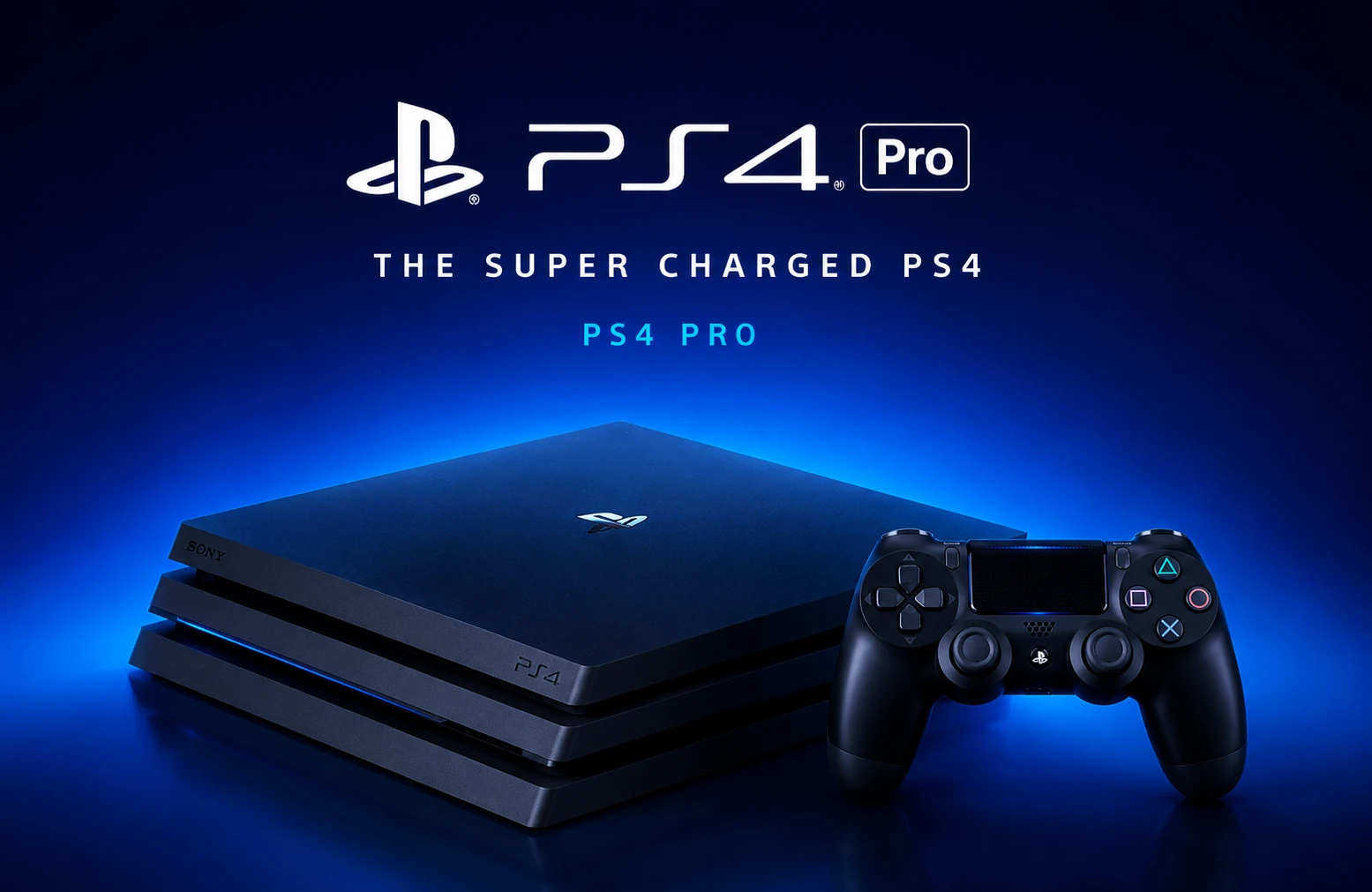
My PS4 Pro is sitting under the TV in my parents’ living room, and it won’t die. I bought it in 2018, hauled it through two house moves, and last month my younger cousin asked me if he should buy one secondhand instead of saving another six months for a PS5. That question is why this PS4 Pro review exists.
But here is the thing: on paper this console is ancient. Sony stopped making it in January 2021. And yet the used market for the Sony PS4 Pro console is still busy; prices have settled into genuinely affordable territory, and thousands of people every month are looking to see whether the PS4 Pro is worth buying in 2026.
As such, I did the responsible thing instead of my cousin by reciting her response from memory. I dusted the console off, plugged it back into my 4K TV, and then played it almost every night for two weeks. Some of what I found made me nostalgic. Some of it made me wince. All of it is in this review.
PS4 Pro Specifications at a Glance
| Component | PS4 Pro Specifications |
| CPU | 8-core AMD Jaguar, 2.1 GHz |
| GPU | 4.2 TFLOP AMD Radeon (Polaris features) |
| RAM | 8GB GDDR5 + 1GB DDR3 |
| Storage | 1TB HDD (User-replaceable) |
| Max Output | 2160p (Checkerboard or native, per game) |
| HDR Support | Yes, HDR10 |
| Optical Drive | Blu-ray (No 4K UHD Blu-ray support) |
| Connectivity | HDMI 2.0, USB 3.1, Gigabit Ethernet, Wi-Fi 5, Bluetooth 4.0 |
| Discontinued | January 2021 |
Two of these PS4 Pro specifications still surprise people. First, the hard drive is a slow mechanical one, and you feel it in every loading screen. Second, there’s no 4K Blu-ray drive, which was an absolutely shocking thing for 2016, as the cheaper Xbox One S had one. But in 2026, when physical 4K movies are a niche hobby and everyone is streaming, it hardly counts.
The Gigabit Ethernet port, on the other hand, was very durable and age-appropriate. Wired downloads on the Pro are faster than on the base PS4, and with modern game sizes you will want every bit of that.
What Is the PS4 Pro?
The PS4 Pro launched as Sony’s mid-generation upgrade in November 2016. The same game library as the standard PS4, the same controllers, and the same interface but with a GPU around 2.3 times more powerful and support for 4K output and HDR. Sony pitched it to people who had just bought a 4K TV and wanted their games to take advantage of it.
That framing matters because the PS4 Pro was never a new generation. Every PS4 Pro-compatible game is simply a PS4 game. There are no Pro exclusives, and there never were. Instead, developers shipped “Pro Enhanced” patches that unlocked increased resolution, better frame rates, or improved effects on the stronger hardware. By the end of the generation, that list was well over hundreds, covering nearly every major release from 2016 onward.
Think of it as we did later with the PS5 Pro: the same ecosystem, a nicer picture. The idea started here.
How I Tested It
A quick note on method. For this retest I ran the console on a 55-inch 4K HDR TV in the evening and on a 1080p monitor at my desk during the day. I replayed God of War, Ghost of Tsushima, Horizon Zero Dawn, Red Dead Redemption 2, Bloodborne, and Rocket League on the PS4 Pro and went through resolution and performance modes with games and timing of loading screens with my phone. This is not a lab test. It is the gaming experience of an actual PS4 Pro owner.
Design and Build
The Pro looks like a standard PS4 that ate a third layer. It’s chunky, matte, and, in fact, very boring. It disappears under a TV. My PS4 has buttons for power and eject rather than touch-sensitive buttons on the launch PS4, and after years of accidentally ejecting discs on the old model, I find that to be a nice feature.
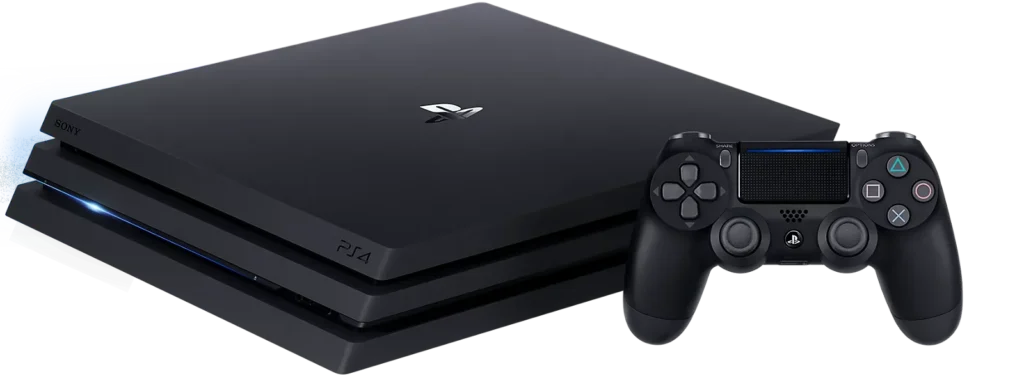
The fan is the one design decision that has aged badly. Under load, especially in late-generation games like God of War or Days Gone, my unit sounds like it is preparing for takeoff. Opening the console and cleaning out years of dust helps a lot, and it’s worth doing on any used unit. It never completely fixes it. If your living room is small and your TV speakers are quiet, you will hear this console.
4K Gaming and Graphics Quality
This is the headline feature, so let me be precise about what the PS4 Pro 4K gaming console actually delivers, because “4K” was always a slightly slippery claim.
Most games don’t render at native 3840×2160. Instead, the Pro uses checkerboard rendering, a clever technique that reconstructs a 4K image from roughly half the pixel data. Purists rolled their eyes at it in 2016. In practice, on my 55-inch TV from a normal sitting distance, I genuinely cannot tell the difference in motion. Horizon Zero Dawn in checkerboard 4K still looks stunning in 2026, full stop. I paused more than once just to stare at the grass.
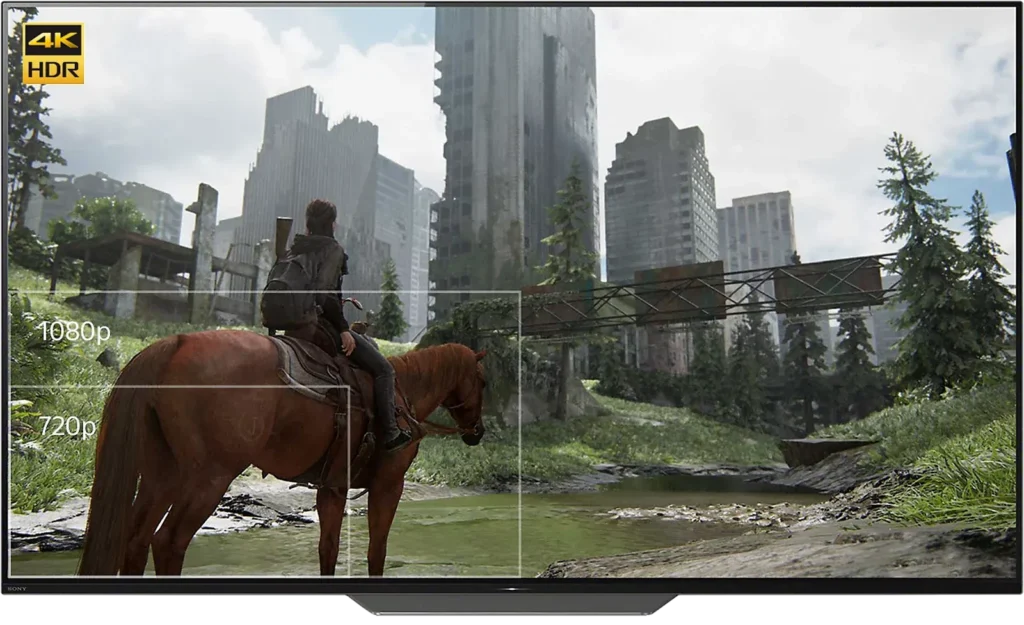
Some lighter games do hit native 4K, and older titles with Pro patches got the biggest glow-ups. The PS4 Pro graphics quality gap over a base PS4 is obvious the moment you switch between them on the same screen: sharper edges, far less shimmer on distant fences and foliage, and cleaner text in menus and subtitles.
One finding from real use that most spec sheets skip: if you’re on a 1080p display, you still benefit. Many pro-enhanced games use the extra GPU power for supersampling, rendering internally at a higher resolution and downscaling to your screen for a cleaner, more stable image. I ran the Pro on a 1080p monitor for a year before upgrading my TV, and even there it was a clear step up from the base console.
HDR: The Quiet Star of the Show
If I were to have one thing that I could only have in my game, it’s not resolution. It’s HDR. PS4 Pro HDR gaming on a decent TV changes games more than the pixel count does. Sunsets in Ghost of Tsushima actually glow. Neon signs in Spider-Man’s Times Square pop against wet, dark streets instead of blending into grey. Muzzle flashes in dark rooms have a punch that no resolution bump can fake.
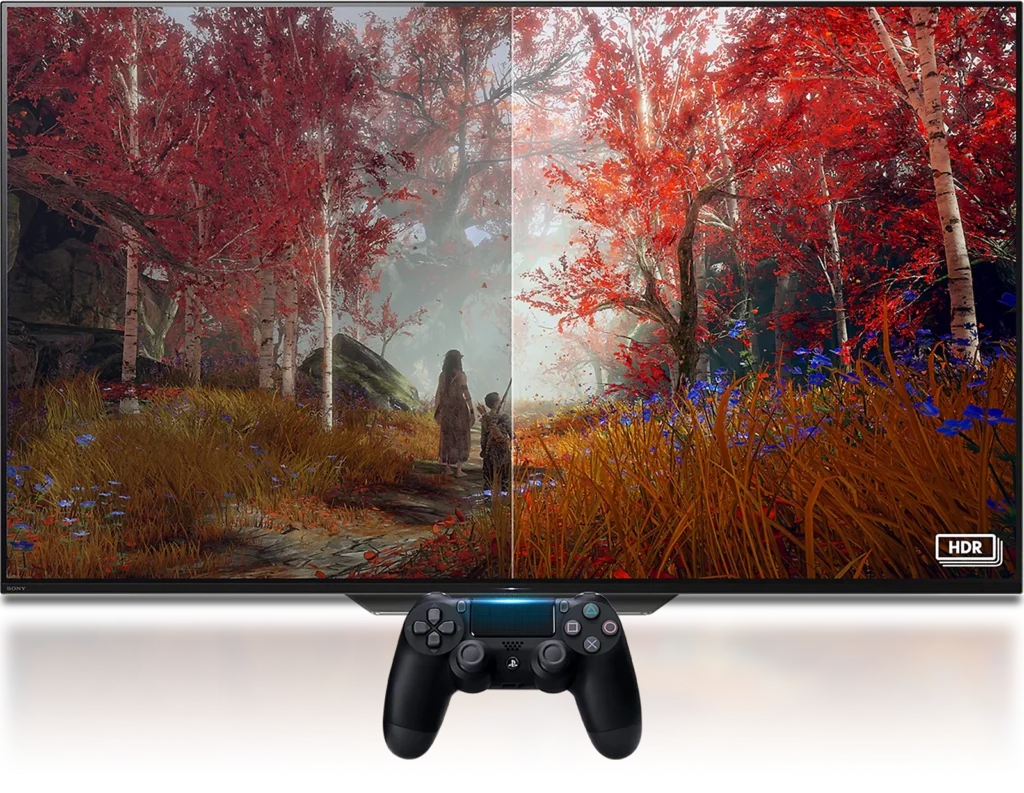
There are two catches. First, HDR is only as good as your TV. On a cheap panel with fake, dim HDR, games can look washed out and grey, and you’re better off disabling HDR in the console’s video settings. Second, run the console’s HDR calibration once and set your TV to game mode; ten minutes of setup makes a real difference.
Performance and FPS in Real Games
A PS4 Pro performance review is where honesty is required because that is where the console is showing its age.
PS4 Pro FPS performance depends entirely on the game and the mode you choose. Many Pro-enhanced titles offer a choice:
- Resolution mode: 4K-ish visuals, usually locked at 30fps.
- Performance mode: lower resolution, targeting 60fps.
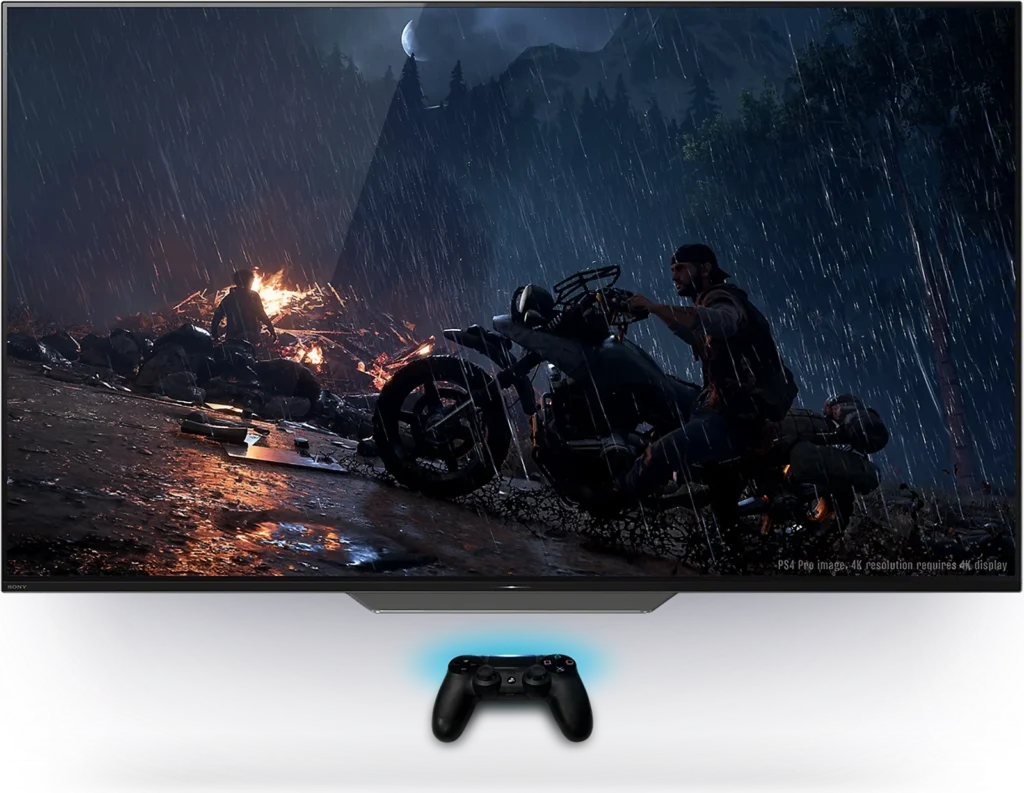
In my two weeks of retesting, the pattern held. God of War in performance mode hovers in the 40s and 50s, smooth enough for the combat but never locked. Days Gone mostly holds 30 with dips when hordes fill the screen. Lighter games like Rocket League run at a flat 60 without complaint. The weak Jaguar CPU is the bottleneck, the same laptop-class chip as the base PS4 with a mild clock bump, and no patch ever fixed that.
Then there are loading times. After years with an SSD-equipped PS5, going back to the Pro’s mechanical drive was the single hardest adjustment of this retest. Red Dead Redemption 2 made me wait long enough to make tea.
Actionable tip: swap the internal HDD for a cheap 2.5-inch SATA SSD, or plug an external SSD into a USB 3.0 port and install games there. The swap takes one screwdriver and fifteen minutes. It won’t work miracles, since the console’s SATA interface limits speeds, but it cut my measured loading times by roughly a third and made the whole system feel less tired.
Boost Mode and Older Games
Not every game got a Pro patch, and this is where Boost Mode gets its mention. Switch it on in settings, and the Pro uses its extra horsepower to smooth frame rates that used to dip on the base console. Bloodborne didn’t get a Pro patch at all, and it runs at 30fps, but its frame pacing feels steadier with Boost Mode on. It costs nothing to enable, and I can’t think of a reason to leave it off.
Storage: The 1TB Question
That standard PS4 Pro 1TB console is nice and big until you think of modern game sizes. Red Dead Redemption 2 alone would take more than 100GB. 1TB should only hold eight to twelve big games and some indies before you’re walking through the delete-and-redownload shuffle.
The saving grace is flexibility. The internal drive is user-replaceable; external USB drives up to 8TB can be used for game storage, and game management is easily done by moving games between drives in the system menu. Storage is an inconvenience you solve once and not something that lasts forever.
Beyond Games: Apps and Media
A living room box does more than play games, so the Pro is still a media machine. Netflix, YouTube, and Prime Video stream in 4K where the app supports it; the drive handles regular Blu-rays and DVDs, and Remote Play streams games to a phone or laptop around the house. The missing 4K Blu-ray support is the one hole. If your TV’s built-in apps are slow, the Pro quietly replaces a streaming stick, a small bonus for a console you bought for games.
PS4 Pro vs PS4 Slim
If you have to choose between the two on the used market, here’s the short version of PS4 Pro vs PS4 Slim:
| Factor | PS4 Slim | PS4 Pro |
| GPU Power | 1.84 TFLOPS | 4.2 TFLOPS |
| Max Resolution | 1080p | Upscaled 4K |
| HDR Support | Yes | Yes, with more power to utilize it |
| Frame-rate Stability | Struggles more in late-generation games | Noticeably better performance |
| Storage Options | 500GB / 1TB | 1TB standard |
| Size & Noise | Smaller and quieter | Bigger and louder |
| Used Price Gap (2026) | Baseline price | Roughly $50–70 more |
If you have a 1080p TV, don’t care too much about frame rates, and want the cheapest entry, the Slim is fine. For everyone else, the PS4 Pro is almost always worth the extra money in 2026, since used PS4 Pro units are usually only $50-70 more than the standard PS4 Slim. That gap buys you the difference between a console that only runs the library and one that flatters it.
PS4 Pro vs PS5: Honest comparison
I own both now, so I can settle this without tribalism.
The PS5 is better at everything. The SSD alone changes how games feel; loading screens basically stopped existing at my house in 2021. Ray tracing, 60fps as a norm rather than a treat, the DualSense haptics. If money is no object, buy a PS5 and don’t look back.
But money is usually an object, and the math in 2026 is lopsided. A used PS4 Pro costs $199-250, and a new PS5 starts at $599. That’s three PS4 Pros for one PS5, and the cheaper console plays a library of over 3,000 games, most of which now cost pocket change secondhand.
My honest framing: the PS5 is what you buy for the next five years of gaming. The PS4 Pro is what you buy for the last ten years of gaming, at a quarter of the cost. Both are rational purchases.
The Best Games to Play on a PS4 Pro
The list of PS4 Pro compatible games is, technically, every PS4 game ever made. But these are the ones where the Pro hardware really earns its keep, based on my own library:
- God of War (2018): the performance mode showcase. Marvel’s Spider-Man: HDR city lights, stable swinging.
- Horizon Zero Dawn and Forbidden West: the latter runs better on the Pro than the base PS4. The Last of Us Part II: still a graphical benchmark.
- Ghost of Tsushima: HDR sunsets that sell 4K TVs.
- Red Dead Redemption 2: near-native 4K ambition.
- Bloodborne: no Pro patch, sadly, but Boost Mode cuts load times.
- Uncharted 4: 1440p and gorgeous.
One quiet bonus in 2026: the platform isn’t dead. New titles from Sony PS4 in 2026 are still coming, including Call of Duty 2026 and Deltarune: Chapter 5. Nobody expected the generation to go this far.
What Should You Pay? PS4 Pro Price in 2026.
Since Sony no longer makes the hardware, everything is secondhand or refurbished. Current market reality:
- On Swappa, PS4 Pro prices bottom out around $236, and most used units across platforms fall in the $199-250 range.
- A fully tested PS4 Pro 1TB on peer-to-peer marketplaces can be down to $150-200, especially local listings where you can test before paying.
- Trade-in values are much lower than resale, so buying from an individual seller usually beats retail refurbs on price, at the cost of a warranty.
My buying checklist from personal experience: turn it on in front of the seller, listen to the fan at the dashboard (a jet-engine idle means clogged thermals or dying paste), check the HDMI port for bent pins, and confirm the disc drive accepts and ejects. Ten minutes of testing prevents 90% of used-console regret.
The Flaws Nobody Should Ignore
A good PS4 Pro review has to include the bad, so here’s mine:
- No 4K Blu-ray drive. Sony, the company that co-invented Blu-ray, shipped its 4K console without a 4K movie drive. The Xbox One S had one at half the price. Still baffling.
- Fan noise. Under load, it is the loudest console that I have ever owned. Repasting helps; dust cleaning helps more.
- That Jaguar CPU. In 2016, the GPU was doubled; the CPU barely got touched. It’s the ceiling for frame rates in CPU-heavy games.
- Slow HDD. Mechanical drive load times feel ancient after any SSD device. An SSD swap or external drive softens this but never fixes it.
- PS Plus wind-down. PlayStation Plus Essential stopped releasing new free monthly PS4 games in January 2026, which is a clear signal the platform is inching forward.
Who Should Buy a PS4 Pro in 2026?
Buy one if you are:
- A first-time PlayStation owner who wants the entire PS4 generation for the price of three new PS5 games.
- A parent buying a kid’s first console without spending $600.
- A lapsed gamer with a 4K HDR TV and a backlog of classics you never played.
- A second-TV or bedroom-console household.
Skip it if you:
- Care about playing new AAA releases from 2026 onward at their best.
- Already own a PS5 (backward compatibility covers you).
- Are frame-rate sensitive and consider 60 fps non-negotiable.
Final Verdict: An Old Console that Refuses to Feel Old
The PS4 Pro was an awkward product in 2016, a half-step console that was aimed at early 4K TV buyers. Time has been strange and kind to it. The 4K TVs everyone owns now are exactly what this hardware was made for; the games that pushed it are dirt cheap, and the used price has fallen to impulse-buy territory.
Mine has been on the shelf for nine years now. If it is your first PlayStation, you are about to play God of War, Bloodborne, Spider-Man, and The Last of Us for less than the cost of two new games. I’m a little jealous of that.
The PS4 Pro isn’t the future of gaming. It is the best of gaming’s recent past sold at a discount. Some weekends, that’s exactly what you want.
Have you picked up a used PS4 Pro recently, or are you holding out for a PS5 price drop? Tell us in the comments. And if this review helped, share it with the friend who still hasn’t played God of War.
Frequently Asked Questions (FAQs)
Q. Is the PS4 Pro worth buying in 2026?
A. Yes, for the right buyer. At $150-250 used, it plays a library of 3,000+ games, many of which are modern classics available for a few dollars each. It’s the best value-per-hour purchase in console gaming right now, as long as you accept it’s a legacy platform.
Q. Does the PS4 Pro play games in real 4K?
A. Some games render at or near native 4K (Red Dead Redemption 2, The Witcher 3’s Pro mode), but most use checkerboard rendering to reconstruct a 4K image. In normal living-room viewing, the difference from native 4K is very hard to spot.
Q. Can the PS4 Pro run games at 60fps?
A. Selected titles offer performance modes targeting 60fps (God of War, Days Gone patched, many fighting and sports games). Most open-world games target a stable 30fps instead. The 2016-era CPU is the limiting factor.
Q. PS4 Pro vs PS5: How big is the real difference?
A. Large. The PS5 loads games in seconds, targets 60fps broadly, and adds ray tracing and haptic feedback. The PS4 Pro’s counterargument is price: roughly a third of the cost, with the strongest single-console library of the last decade.
Q. Do PS4 Pro games still get updates and online support in 2026?
A. Yes. The PSN Store remains open for PS4 purchases, online multiplayer works with a PS Plus subscription, and firmware updates continue. The main change is that PS Plus stopped adding new free monthly PS4 games in January 2026.