
 Shikha Kumari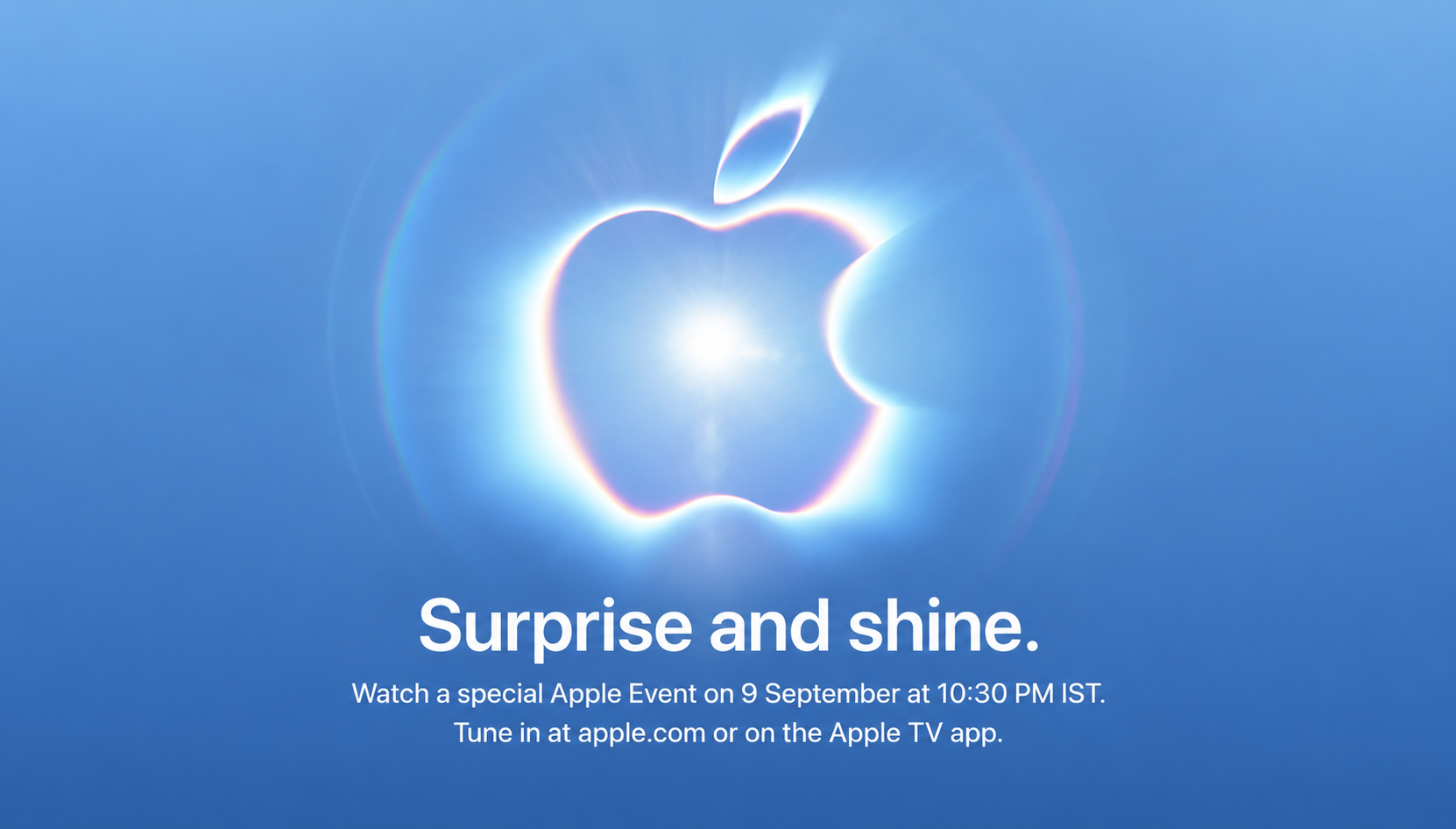
Apple hasn’t changed a phone’s shape in fourteen years. That’s about to end.
On September 9, 2026, Apple will step onto the stage at its Cupertino headquarters, for the first time since new CEO John Ternus replaced Tim Cook, and, if the leaks are right, show off the first folding iPhone in company history. The event is called “Surprise and Shine,” and for once the marketing tagline isn’t hollow: this is probably the biggest hardware change Apple has made since it dropped the home button.
If you are facing the decision (and you can’t really make it) to buy now, wait for the fold, or skip this generation entirely, you’re not alone in the debate happening on Reddit and YouTube right now. We go through what is confirmed, what is rumored, what real buyers are actually saying, and how to think about your own upgrade decision.
When and Where: The Apple September Event 2026 Details
Apple announced the date on August 26, 2026, just two weeks before the show (the same 14-day notice pattern it’s followed every year since 2022). The event will take place on Wednesday, September 9, beginning at 10:00 a.m. Pacific time at Apple Park campus in Cupertino, California, and will be open to journalists.
This keynote also marks a symbolic changeover: John Ternus takes over from Tim Cook as CEO on September 1, and will start his first major product presentation from the outset. Don’t expect a return to a live, in-person keynote format, though — Apple will stick with its slickly produced, pre-recorded video style.
You can stream it for free with no ticket or media pass required, through Apple’s own event page, YouTube and the Apple TV app.
What’s Actually Confirmed vs. What’s Still Rumor
It’s important to separate fact from speculation before diving further into the matter since so much of the leaked roundup content in the area is about what’s called “leak roundup”.
Confirmed by Apple:
- The date, time, and “Surprise and shine” branding.
- That this is Ternus’s first keynote as CEO
Widely reported by reliable analysts (Mark Gurman/Bloomberg, Ming-Chi Kuo) but not officially confirmed:
- iPhone 18 Pro and Pro Max launching alongside a foldable iPhone.
- Pricing that pushes past $2,000 for the fold.
- A20 Pro chip on 2nm process
That said, we remain speculative, from supply chain leakers in Weibo and dummy units as well:
- Exact camera specs, colorways like “dark cherry” and precise dimensions
The above-mentioned thing is to treat anything below the first tier as directional, not gospel, Apple has surprised leakers before.
iPhone 18 Pro and iPhone 18 Pro Max: The Safe, Predictable Upgrade
If the foldable is the headline, the iPhone 18 Pro is the reliable engine room of this event, and for most buyers, it’s still the phone that actually makes sense.
Apple is apparently splitting its September reveal so that the iPhone 18 Pro and iPhone Ultra arrive this fall, while the standard iPhone 18, a new Air 2 and an iPhone 18e wait until spring 2027. That’s a real departure from the usual “everything at once” September drop, and it means anyone shopping this month is choosing between premium options only.
What’s expected under the hood:
The iPhone 18 Pro is rumored to run on a new A20 Pro chip, which could be Apple’s first chip built on the very efficient 2nm process. Leaks also point to a new Wafer-Level Multi-Chip Module packaging approach that places the CPU, GPU, Neural Engine, and memory closer together for better performance and AI efficiency, plus a new in-house C2 modem that might run alongside Qualcomm hardware depending on region — likely leading to expanded satellite connectivity that unlocks 5G via satellite.
On the outside, there is no drama. After 2025’s redesign, 2026’s update looks like a spec-bump year: the same 2-nanometer A20 Pro chip that should run cooler for longer thanks to packaging changes, Apple’s new C2 modem, and only minor physical tweaks— a bigger camera bump and new colorways like dark cherry.
The camera is where this generation really gets interesting. For years, iPhone photographers have asked for one thing Android flagships already have: a lens that can open and close. A leaked internal diagnostic log, which came in after a ransomware incident at Apple supplier Tata Electronics, indicates a new Sony IMX905 primary sensor with mechanical variable aperture. For its part, instead of relying on computational photography, the lens would change the way light reaches the sensor in a physical way— more natural low-light images, less fuzzy background blur.
But here’s the catch: one reasonably trustworthy leaker says variable aperture will be available for the iPhone 18 Pro Max and not the smaller Pro model because the component needs the larger phone’s extra internal space. If that’s the case, it’s a good reason to size up this year if photography is your priority. A tipster has also posted a new telephoto camera with a wider aperture and even a teleconverter, which borrows from DSLR lenses to expand the effective zoom range at the expense of some light intake.
That extra hardware isn’t free. Reports suggest Apple could raise the price of the iPhone 18 Pro and Pro Max by as much as $200 to cover the new camera technology.
iPhone Ultra: Apple’s First Foldable, Fully Explained
This is the device everybody wants to talk about, and Apple knows it— which is probably why the tagline is “Surprise and shine.”
Design and build. Rather than a traditional book-style fold, Apple has apparently gone for a shorter, wider “passport-style” design based on a series of dummy units that have surfaced online. The frame is rumored to use titanium-aluminum for durability while keeping weight down, and the device measures an ultra-slim 4.5mm when unfolded to about 9–9.5mm when folded, dimensions of about 117mm tall by 83.5mm wide when open.
The crease question. Every foldable phone ever made has had some visible line down the middle of its screen where it bends. Samsung Display reportedly showed off creaseless OLED panel technology at CES in January 2026, and separate rumors from May 2026 claim Apple’s hinge design could become an industry standard that rival phone makers end up copying. But whether Apple actually pulls off a genuinely invisible crease at launch, or just a much improved one, is one of the biggest open questions heading into the ninth.
What you give up for the slim body. This is the detail most casual coverage buries, and it matters if you’re comparing this to your current Pro phone. Because the chassis is so thin, the foldable supposedly drops down to two rear cameras, a Wide and an Ultra Wide, with no Telephoto lens because there simply isn’t room for it. Apple also apparently couldn’t fit the TrueDepth camera system needed for Face ID, so the foldable is expected to go back to Touch ID, built into the power button like on Apple’s iPads, no Face ID and no facial unlocking at all.
Battery and charging. Leaks point to a dual-battery setup with a combined capacity of about 4,883mAh, and with the efficient A20 Pro chip and C2 modem that could offset the thin design’s usual battery penalty. Bloomberg’s Mark Gurman has also said the foldable will probably support MagSafe charging, though earlier dummy models lacked the telltale magnetic ring, so this one isn’t quite settled.
Price, and this is where it gets weird for an iPhone. Estimates have shifted around a lot over the past year but they’ve always been upwards. Bloomberg’s Mark Gurman has said that the iPhone Ultra will “cross the $2,000 threshold” in the US. TrendForce has forecast a starting price between $2,099 and $2,299, with the highest-end configurations potentially exceeding $3,000. A Chinese market leak also indicates that a fully specced-out configuration might cost as much as $2,900, much more than a comparably equipped Samsung Galaxy Z Fold7.
Supply will be tight. Suppliers will need three to five months to meet Apple’s initial production target of about 10 million units but other estimates put initial production closer to just 7–8 million units with a staggered US-first rollout. So if you want one on day one, go fast and plan for it to sell out.
iPhone 18 Pro vs. iPhone Ultra: Which Should You Actually Want?
| Feature / Aspect | iPhone 18 Pro / Pro Max | iPhone Ultra (Foldable) |
| Starting Price (rumored) | Current Pro pricing + up to ~$200 for camera upgrades | ~$1,999–$2,500, possibly higher fully specced |
| Unlock Method | Face ID | Touch ID (no Face ID) |
| Rear Cameras | Up to 3 lenses (Wide, Ultra Wide, Telephoto); variable aperture rumored, possibly Pro Max-only | 2 lenses only (Wide, Ultra Wide), no Telephoto |
| Chip | A20 Pro, 2nm process | A20 Pro (same generation, optimized for thinness) |
| Design Risk | Minimal; proven form factor | First-generation hinge, crease, and durability all unproven |
| Availability at Launch | Widely available | Limited initial production, likely US-first |
| Best For | Photography-focused buyers, anyone wanting Face ID and full camera system | Buyers who want maximum screen real estate and don’t mind paying a premium to be first |
What Real Buyers Are Saying: Reddit, YouTube, and Forum Reactions
Leak roundups do not care so much about specs as much as they care about how people who would actually spend the money are reacting. The sentiment isn’t always enthusiastic.
Price has been the reaction that has been blunt. One commonly used YouTube comment sums up a large part of the response: When people see a phone edging toward $2,000–$2,500, they immediately rule themselves out, full stop.
On first-generation risk, skepticism runs deep. A common theme across forums is a wait and see attitude, commenters have publicly told us that they’d rather sit out generation one of any Apple foldable and buy if the hinge, crease, and long-term durability are proven over a few product cycles. That’s a very Apple-literate audience that is following the same advice they’ve learned from the original Apple Watch or the first AirPods Max: wait for someone else to do the work and find the bugs.
On value, some Reddit users have pointed out a blunt alternative: a base iPad at a couple hundred dollars gets you a bigger screen for media consumption than a folded iPhone would, without the OLED-fold compromise or the four-figure price tag, a fair point if your interest in the Ultra is mainly “bigger screen,” not “phone that folds.”
The generational-skip strategy is starting to gain traction in the real world. Tech-enthusiast communities are now seeing the smart play as a strategy of deliberately skipping the iPhone Ultra’s first or even second generation, waiting for hinge durability, crease depth and real-world software support to mature, the same adoption curve that Samsung’s own foldables did, in fact.
None of this means the Ultra will flop. Apple’s brand loyalty and first-mover marketing muscle in the US foldable market are real advantages Samsung never had. But online chatter suggests the buyer base for this particular device, at this specific price, may be narrower and more cautious than Apple’s launch-day hype will imply.
Apple Watch Series 12, Ultra 4, and the Rest of the September Lineup
The iPhone will dominate headlines, but it will not be the only one.
In addition to the iPhone 18 Pro, iPhone 18 Pro Max and the foldable, Apple will introduce the Apple Watch Series 12, Apple Watch Ultra 4, and possibly AirPods. There could also be new smart home devices from Apple to launch, including the long-rumored home hub, the new Apple TV 4K, and an updated HomePod mini. Don’t expect the entry-level Apple Watch SE to be updated, though– it’s apparently sitting out this event for the Series 12 and Ultra 4.
Software will get its moment too. Apple will also announce launch dates for iOS 27, iPadOS 27, macOS Golden Gate, and other software updates. New iPhones will ship with stable iOS 27 builds and deeper integration with Apple Intelligence including a new Siri AI experience and new editing tools in Photos. If the foldable does come to fruition, expect Apple to spend real keynote time on how iOS adapts to a bigger unfolded canvas — split-screen multitasking and app layouts designed for the bigger display are the features most likely to actually differentiate the Ultra from “an expensive tablet-phone.”
The Expert Take: What Most Coverage Is Getting Wrong
Here is the thing that most roundups miss by treating this as one story: September 2026 is really two separate product launches wearing the same keynote.
The iPhone 18 Pro is an incremental Apple year, new chip, better camera hardware, minor design tweaks, priced roughly where you’d expect. And if you’re ready for a new phone and want a phone that will work reliably from day one, it’s the safest and sensible one, and the variable-aperture camera alone might be worth the wait if you shoot a lot of low-light or portrait photos.
The iPhone Ultra is not really competing with the iPhone 18 Pro at all, it’s competing with Samsung’s Galaxy Z Fold and with Apple’s own cautious, wait-a-generation instincts among its most loyal fans. Pricing it at $2,000–$2,500, stripping the telephoto lens and dropping Face ID for Touch ID are all trade-offs that make sense on a spec sheet but will be an uphill battle to anyone who isn’t already sold on the foldable form factor as a category. And the smart money, and the feelings that are prevalent across Reddit right now, says this is a device for early adopters and Apple completionists first and for the mainstream iPhone buyer second, if at all, in year one.
How to Watch the Apple Event
Like in recent years, the keynote is expected to be pre-recorded and be streamed on Apple’s website, YouTube and Apple TV app starting at 10:00 a.m. Pacific / 1:00 p.m. Eastern on September 9. No ticket, no Apple ID and no purchase required— just a browser or the Apple TV app.
Pre-orders will open at 12:00 a.m. Pacific on Saturday, September 12, a change from Apple’s normal Friday pre-order pattern, probably to avoid the September 11 anniversary. The new devices will go on sale the following week.
Should You Buy at Launch? A Practical Decision Framework
You want the best camera Apple has ever shipped and don’t mind paying more for it: Wait for official confirmation on which Pro model gets variable aperture, then buy that one.
You’re ready for an upgrade and just need a dependable and well-supported phone: The iPhone 18 Pro is the low-risk one, proven design, proven camera system, proven durability.
You’re loving the foldable but haven’t decided: watch the keynote and wait for the first hands-on reviews before you pre-order. First-generation hinge and crease performance can’t be measured from a spec sheet or a dummy unit.
You’re price-sensitive: Hold off entirely. The standard iPhone 18, iPhone Air 2 and a new budget iPhone 18e are expected in spring 2027, all of which will be much less expensive than what we learned on September 9.
We Conclude
The real decision on September 9 isn’t “which iPhone” but “which era of iPhone.” The 18 Pro is the safe, familiar upgrade for anyone who just wants a great phone that works. The Ultra is Apple making a very expensive bet that foldables are ready for the mainstream, and based on the price chatter and hesitation already appearing on Reddit and YouTube this week that bet is far from settled with buyers.
If you’re not desperate to upgrade right now, the smartest move is also the simplest one: watch the keynote, wait a week to get real hands-on reviews of both the camera system and the fold’s hinge, and then decide. Apple’s marketing will do everything it can to make September 9 feel urgent, your wallet doesn’t have to agree.
Frequently Asked Questions (FAQs)
Q. When is the Apple September 2026 event?
A. Apple’s “Surprise and shine” event takes place on Wednesday, September 9, 2026 at 10:00 a.m. Pacific / 1:00 p.m. Eastern and is streaming live from Apple Park in Cupertino.
Q. Will the iPhone 18 be available at the September event?
A. No, reportedly not this time. The regular iPhone 18, iPhone Air 2, and iPhone 18e will launch separately in spring 2027, while the iPhone 18 Pro, iPhone 18 Pro Max and the foldable Ultra will launch in September.
Q. How much will the iPhone Ultra (foldable iPhone) cost?
A. Estimates vary by source, but Bloomberg’s Mark Gurman has said it will cross the $2,000 threshold in the US, with TrendForce forecasting a $2,099–$2,299 starting price and top configurations possibly well above $3,000. Any number under $2,000 is outdated.
Q. Does the foldable iPhone have Face ID?
A. It’s not expected to. Rumors point to Apple using a Touch ID power button similar to its iPads, since there wasn’t room for the TrueDepth camera system needed for Face ID.
Q. Who will be doing Apple’s keynote this year?
A. That will be the first major keynote led by John Ternus, who will take over as CEO on September 1, 2026, replacing Tim Cook officially.