

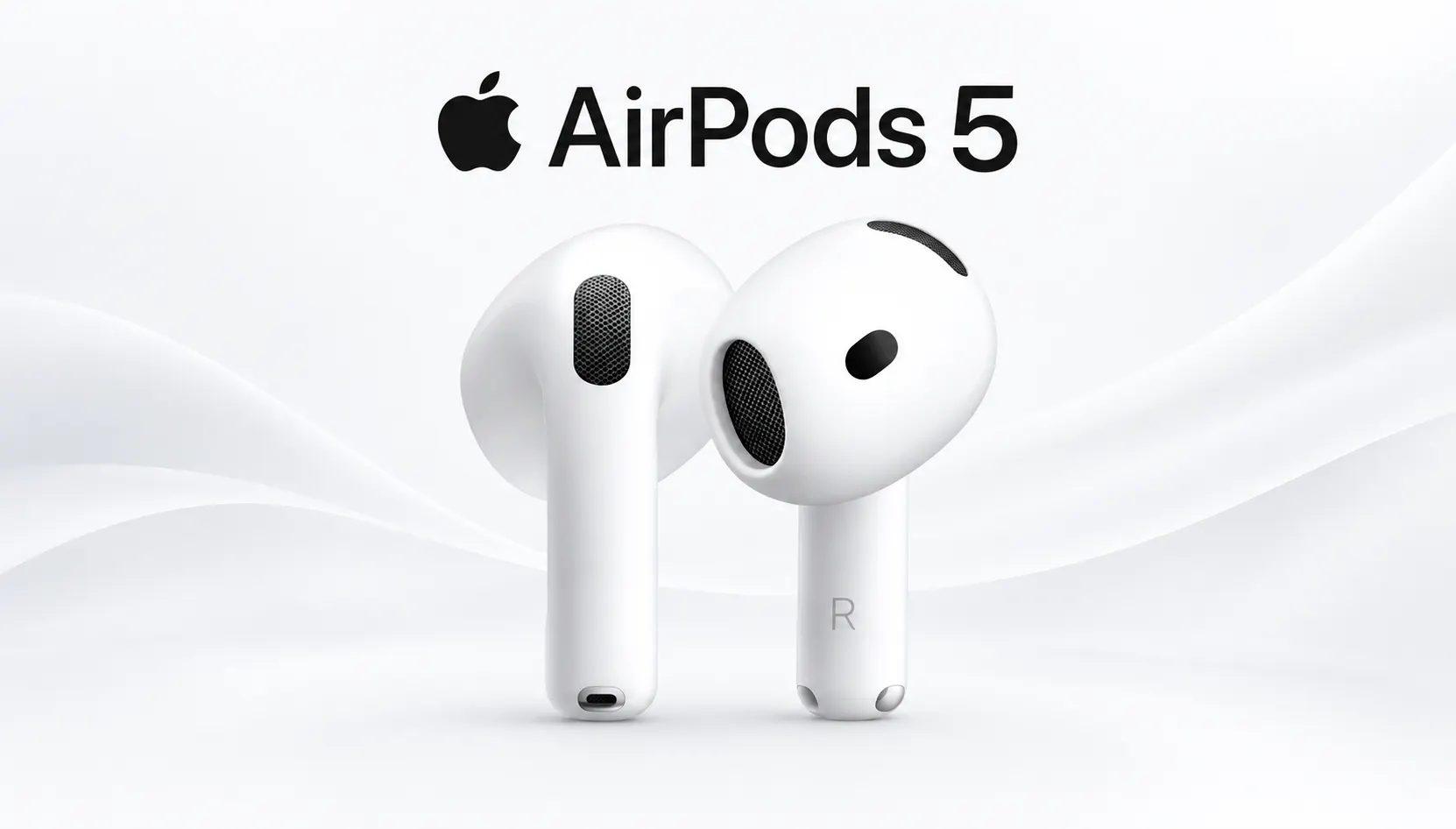
Quick answer: Apple launched Apple AirPods 5 on September 18, 2026 at $129 and finally brought ANC to the entry level lineup. They cut noise by roughly half as much (and more efficiently) than the ANC version of AirPods 4. They’re a great value, but they’re also clearly a “good enough for now” refresh rather than a leap forward. Next generation needs H-series chip with real on-device AI, longer ANC runtime, better in-ear seal without losing open fit people like, at least one meaningful health feature. If you have AirPods 4 with ANC there’s no reason to upgrade. If you’re coming from AirPods 3 or older then AirPods 5 are worth buying now rather than waiting.
Apple AirPods 5 Key info at a glance
| Feature | Apple AirPods 5 (USB-C Case) | Apple AirPods 5 (Wireless Charging Case) |
| Price | $129 | $149 |
| Active Noise Cancellation | Yes, standard | Yes, standard |
| Listening time with ANC on | Up to 4 hours | Up to 5 hours |
| Charging case | USB-C, wired only | USB-C plus Qi/MagSafe wireless charging |
| Stem controls | Squeeze | Squeeze, plus volume swipe |
| Live Translation, Siri AI | Yes | Yes |
| Fit | Open-ear, no ear tips | Open-ear, no ear tips |
| Release date | September 18, 2026 | September 18, 2026 |
Prices are US before tax pulled from Apple’s own AirPods 5 product page at launch. Availability and exact regional pricing can change so check Apple’s site first if you want one.
What Apple actually got right this time
It’s easy to be cynical about incremental earbud updates but the AirPods 5 fill a gap that’s been there since the AirPods 4 launched in 2024 Apple split the lineup up in a way that pissed a lot of shoppers off: pay $129 for the standard AirPods 4 and you get no noise cancellation at all or $179 for ANC model; that $50 gap for a feature which had become table stakes on far cheaper earbuds from Anker, JBL and Nothing always felt like a tax on people who just wanted quiet on their commute.
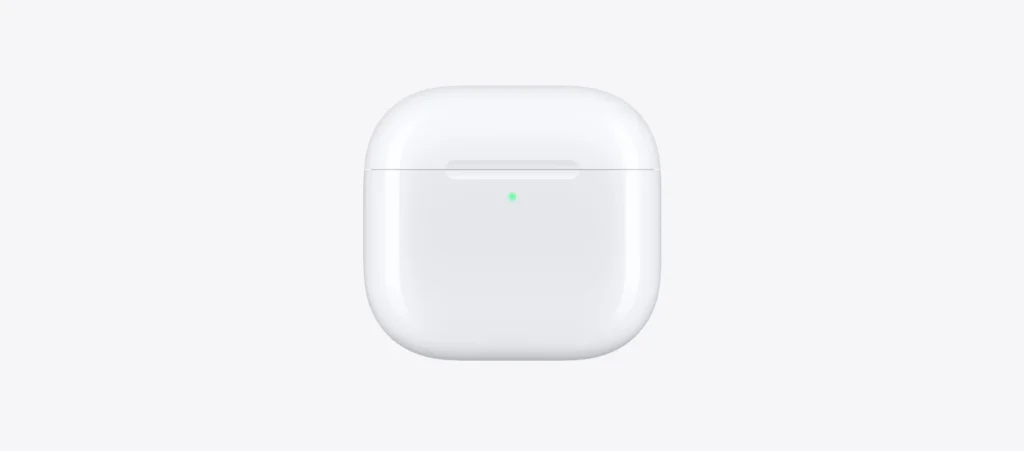
The AirPods 5 do that outright. The $129 USB-C version and the $149 wireless charging version both come with ANC as standard equipment. That’s not a price increase, it’s an admission that noise cancellation shouldn’t be a premium option anymore, even on an open-ear design that wasn’t built to seal out sound like in-ear tips can.

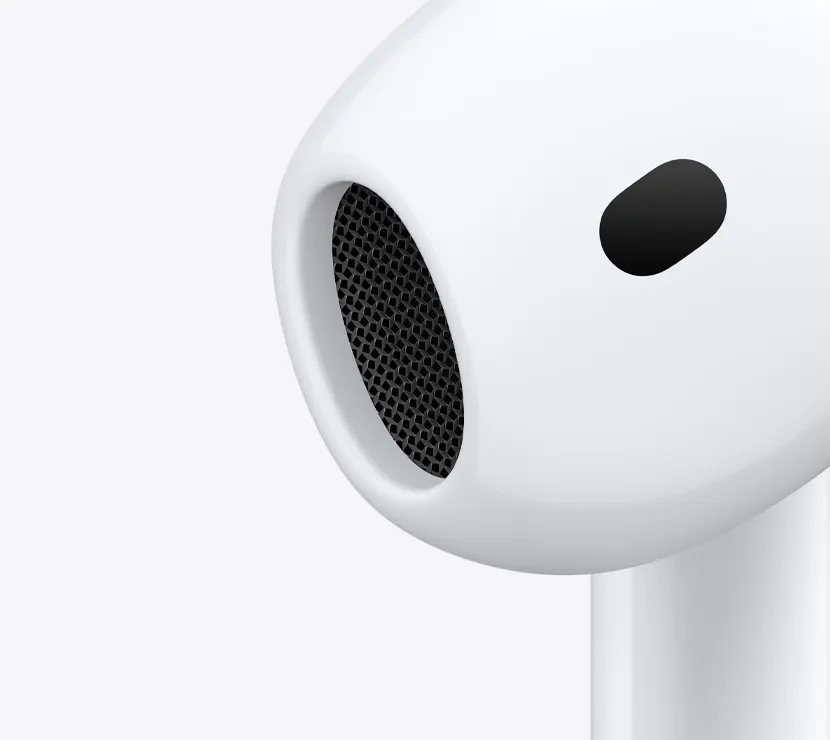
The noise cancellation is also better, not just new. Apple says the AirPods 5 cancel about half as much ambient noise as the ANC-equipped AirPods 4 (which is a bigger improvement than most year-over-year audio updates). On an open bud without silicone tip forming a physical seal that’s software and microphone-array work (tight beamforming, faster adaptive filtering and Adaptive EQ tuning that adjusts sound output based on how the earbud sits in your ear) but in practice engine noise, HVAC hum and other steady low frequency sounds get noticeably quieter, though sharp transient sounds (dog bark, door slam) still get through more than they would on a sealed pair like the AirPods Pro 3.

Adaptive Audio also lives on and remains one of the more underappreciated features in the lineup. Instead of manually switching between Noise Cancellation and Transparency mode, the earbuds blend the two based on your environment (turn up isolation when things get loud; let ambient sound back in when there’s a lull like someone starts talking to you). It’s small but it takes away a decision that you’d otherwise have to make dozens of times a day.
The battery story is where Apple made a useful choice instead of a purely cosmetic one: instead of one battery figure for the whole line, two AirPods 5 models now have different ANC runtimes (about 4 hours on $129 case, about 5 hours on $149 wireless charging case). That’s not just “wireless charging is nice to have” it’s the first time Apple has tied a battery upgrade directly to the pricier case (not bundling identical batteries across the lineup and charging for convenience only).
Then there’s Live Translation and hands free Siri access, both of which debuted with the AirPods Pro 3 lineup but have now trickled down to the standard AirPods. Live Translation converts spoken conversation in near real time through the earbuds and your iPhone (and while it’s more useful for travel and casual cross language conversations than anything requiring precision I think having it on a $129 product not behind a $249 one is a big change in how Apple treats its cheapest earbuds).
Where the AirPods 5 still fall short
None of this says the AirPods 5 aren’t limited in real, specific ways, and most of them go back to one root cause: Apple stuck with the same open-ear, tipless design it’s used since the AirPods 3.
The seal problem. Without a silicone tip forming some kind of physical barrier in your ear canal there’s no ceiling on how much noise any earbud can cancel, no matter how good the microphones and processing are. The AirPods 5’s “50% more noise reduction” is against the AirPods 4, not sealed in-ear designs like the AirPods Pro 3 or competitors like the Bose QuietComfort Ultra Earbuds. On a loud subway platform or flight that difference is still very obvious, the AirPods 5 quiet things down; the Pro models make them mostly disappear.
Battery life is still behind the category. Four to five hours of ANC listening on a charge is fine but not class leading in 2026 when several $100–$150 competitors are pushing past 6–8 hours with ANC on. Apple relies on the charging case to make up for this (up to roughly 24–30 total hours across charges) which is fine for most daily use but is a real limitation if you’re on a long haul flight without easy access to the case.

No IP rating upgrade worth talking about. AirPods 5 have the same modest sweat and water resistance as their predecessor but not a meaningful jump toward something that a serious runner or gym goer would trust in heavy rain or downpour run.
Fit is still one-size-fits-most. There’s no ear tip sizing to fine tune here (which is exactly why the open design is comfortable for long runs), but also why the same complaint that every open-ear AirPods model has followed is there: for some ear shapes it’s loose enough that vigorous exercise can work them free.
The price gap is now convenience vs capability. That’s a good problem to have but it also means that the $20 jump to wireless charging case is the only real decision point left in the lineup and Apple could have made that case standard at $129 instead of treating wireless charging as a 2026 luxury.
What we actually want to see in the next generation
If the AirPods 5 were about plugging an obvious hole (no ANC below $179) then the next generation has a much harder job, convincing people to upgrade from a lineup that’s now genuinely competent. Here’s what I would do.
A real H3 chip, not just a spec bump.
Bloomberg’s Mark Gurman has been reporting that Apple is working on an H3 chip for its audio lineup to run faster, have lower latency and more on-device intelligence: Live Translation relies on your iPhone for the heavy lifting so there’s a small delay but you know it’s happening and the earbuds are only as smart as the phone they’re connected to; an H3 class chip that can do more of that processing locally (translation, adaptive noise modeling maybe even an Apple Intelligence version tuned for audio) would be the single biggest functional leap the standard AirPods could make, more meaningful in daily use than another few percent of noise reduction.
ANC runtime that actually matters.
Five hours of ANC listening was OK in 2024. By the time a real next gen ship comes out it needs to be closer to 7–8 hours or else it’s going to be the asterisk next to an otherwise strong feature set. This doesn’t require redesign (better battery chemistry and more efficient chip would go a long way on its own) but it’s the most requested, least glamorous fix Apple could make.
A hybrid fit option, not a redesign.
Apple doesn’t need to give up the open-ear design that makes standard AirPods comfortable for hours and easy to pop in and out, that’s what sets it apart from the AirPods Pro; not something to apologize for. But a version with an optional ultra-thin silicone wing or shallower semi-seal (between current open fit and full ear-tip seal) could make noise isolation and workout security meaningfully better without turning the standard AirPods into a Pro clone. Several third party earbuds already do a version of this well; Apple hasn’t tried.
At least one real health feature.
Apple has been working on body-temperature sensing through the ear canal, posture and motion tracking and more accurate hearing health data for several product cycles now, most of that work is expected to land on the Pro line first. Apple has pushed the Apple Watch so hard as a health platform and how much time people actually have AirPods in their ears rather than on their wrists, it’s a shame the standard AirPods haven’t gotten a single meaningful health feature beyond hearing protection alerts yet. Even something as simple as resting heart rate during a workout from an optical sensor already proven on the Watch would make next gen stand out in a way software alone can’t.
Case charging parity across the board. Dividing battery life between two AirPods 5 models was a smart, tangible way to justify the price gap, but wireless charging itself still feels like it should be standard at this point too (MagSafe is in most of Apple’s own accessory ecosystem now). Next gen that makes wireless charging baseline and finds a new differentiator for the tier above it (longer battery, better materials or actual sensor upgrade) would feel less like withholding a basic convenience and more like tiering.
Better transparency mode fidelity.
Adaptive Audio is good but voices heard through Transparency mode on the AirPods 5 still have a faint processed quality compared to listening with open ears. Apple has filled most of this gap on the AirPods Pro line with better acoustic modelling; bringing that same fidelity downstream would make Transparency mode less like a feature you tolerate and more like one you forget is even active.
The longer-term ambition: cameras and ambient AI.
Gurman’s reporting has also pushed a much more far-fetched direction for AirPods generally, embedded cameras and a push to treat earbuds as standalone AI devices rather than iPhone accessories. That’s not going to be in the next standard AirPods generation (there are obvious privacy and design hurdles first), but it tells you where Apple’s audio roadmap is headed: earbuds that can see, translate and respond to the world around them in real time, not just play audio into it. Even a scaled-down first step (better on-device scene and voice recognition for translation accuracy) would be a meaningful preview of that future.
AirPods 5 vs. AirPods 4: is the upgrade worth it?
| Feature | AirPods 4 (ANC model) | AirPods 5 ($149 model) |
| Launch price | $179 | $149 |
| ANC | Yes | Yes, ~50% stronger |
| Listening time with ANC | Up to 4 hours | Up to 5 hours |
| Case | Wireless charging | Wireless charging + volume swipe |
| Live Translation | No | Yes |
| Siri AI features | Limited | Expanded, hands-free |
| Weight per earbud | 4.3g | Roughly the same |
The short version: if you bought an AirPods 4 with ANC in the last year or two, don’t upgrade, the noise cancellation is real but incremental in daily use and the core experience (fit, controls, general sound signature) is close enough that most people won’t feel like they’re missing much by staying put. Where the AirPods 5 clearly win is against anything older: standard AirPods 3, any pair without ANC at all or a first-gen set on its second or third battery cycle. Apple itself has said that AirPods batteries degrade noticeably between two and four years of regular use so that’s a good trigger point for replacement no matter which new model is out.
How the AirPods 5 stack up against the rest of the market
For one thing it’s worth stepping outside Apple for a moment because the AirPods 5 price and ANC combination didn’t happen in a vacuum. Open-ear and semi-open earbuds with ANC have become a real category over the last two years and several non Apple options were already doing ANC below $179 before the AirPods 5 came out, that competitive pressure is almost certainly why Apple made ANC standard across the whole line instead of holding it back as another $50 upsell.
What still sets Apple apart isn’t raw noise cancellation (several rivals claim comparable or better isolation on paper), it’s the software layer wrapped around hardware. Instant pairing across an Apple ID; automatic switching between iPhone, iPad and Mac without touching a settings menu; Find My if one bud goes missing; spatial audio that actually adjusts to head movement in supported apps, all things that a non-Apple earbud can’t do no matter how good its ANC chipset is. That ecosystem lock-in is one reason to stick with AirPods even when a competitor wins a spec comparison.
The flip side is that the same software advantage lets Apple coast on hardware: Because switching away from AirPods means giving up all of those integration perks there’s less competitive pressure on Apple to push battery life or fit innovation as hard as it might if competing purely on specs. Which is why the wishlist above matters: Apple has more wiggle room than most manufacturers to make an incremental update and still sell well so true improvement in next gen will come not because Apple is forced but because they choose to push harder.
Who the AirPods 5 are actually for
They’re for anyone who wants Apple’s ecosystem conveniences (instant pairing, device switching without pause or lag, Find My integration, spatial audio with supported content) without Pro-tier price tags and doesn’t need a sealed, isolating fit for air travel or loud commutes; they’re a good choice for gym use, walking commutes and all day wear where an in-ear seal gets uncomfortable after hours. They’re a weaker pick if noise isolation on planes or in genuinely loud environments is your main priority (that’s still the job of AirPods Pro 3).
FAQs
Q. Are the AirPods 5 worth buying right now or should I wait for the next generation?
A. If you need new earbuds today buy the AirPods 5. Apple’s refresh cycle on standard line AirPods has been two to three years so waiting for a true next gen model might mean a long gap with aging earbuds or no earbuds at all.
Q. Do both AirPods 5 models have the same noise cancellation?
A. Yes. The Active Noise Cancellation is the same on both the $129 and $149 versions; the differences are battery life, charging case type and volume swipe control on stem.
Q. Will the next AirPods have ear tips like AirPods Pro?
A. Nothing is confirmed. The open-ear design is what separates the standard AirPods from the Pro line and Apple has not shown public signs of merging them together. Hybrid partial-seal design seems more likely than full redesign.
Q. What’s the biggest drawback of the AirPods 5 compared to the AirPods Pro 3?
A. Noise isolation in loud environments and no true custom fit. The same design that makes the AirPods 5 comfortable all day long is also the one that caps how much outside noise they can physically block.
Is Live Translation actually useful on the AirPods 5?
A. Yes for travel conversations and simple exchanges but not fast, technical or nuanced conversation. Use it as a help and not a replacement for a translation app in high stakes situations.
Q. Which AirPods 5 should I buy: $129 or $149?
A. Buy the wireless charging model if you already have MagSafe or Qi chargers around your home, car or desk (or if the extra hour of ANC listening time and volume swipe control matter to your routine); buy the USB-C model if you don’t mind plugging the case in with a USB-C cable ($20 saved without noise cancellation loss since both versions use the same hardware & tuning for ANC).
Q. Will Apple put health tracking in standard AirPods before the Pro line gets it?
A. Not likely. They have always put new sensors and health features on the Pro line first and let them trickle down to the standard line a generation or two later (spatial audio and Adaptive Audio both did that). If body-temperature sensing or hearing health tracking comes along expect it on an AirPods Pro in the future before it hits a standard AirPods model.