

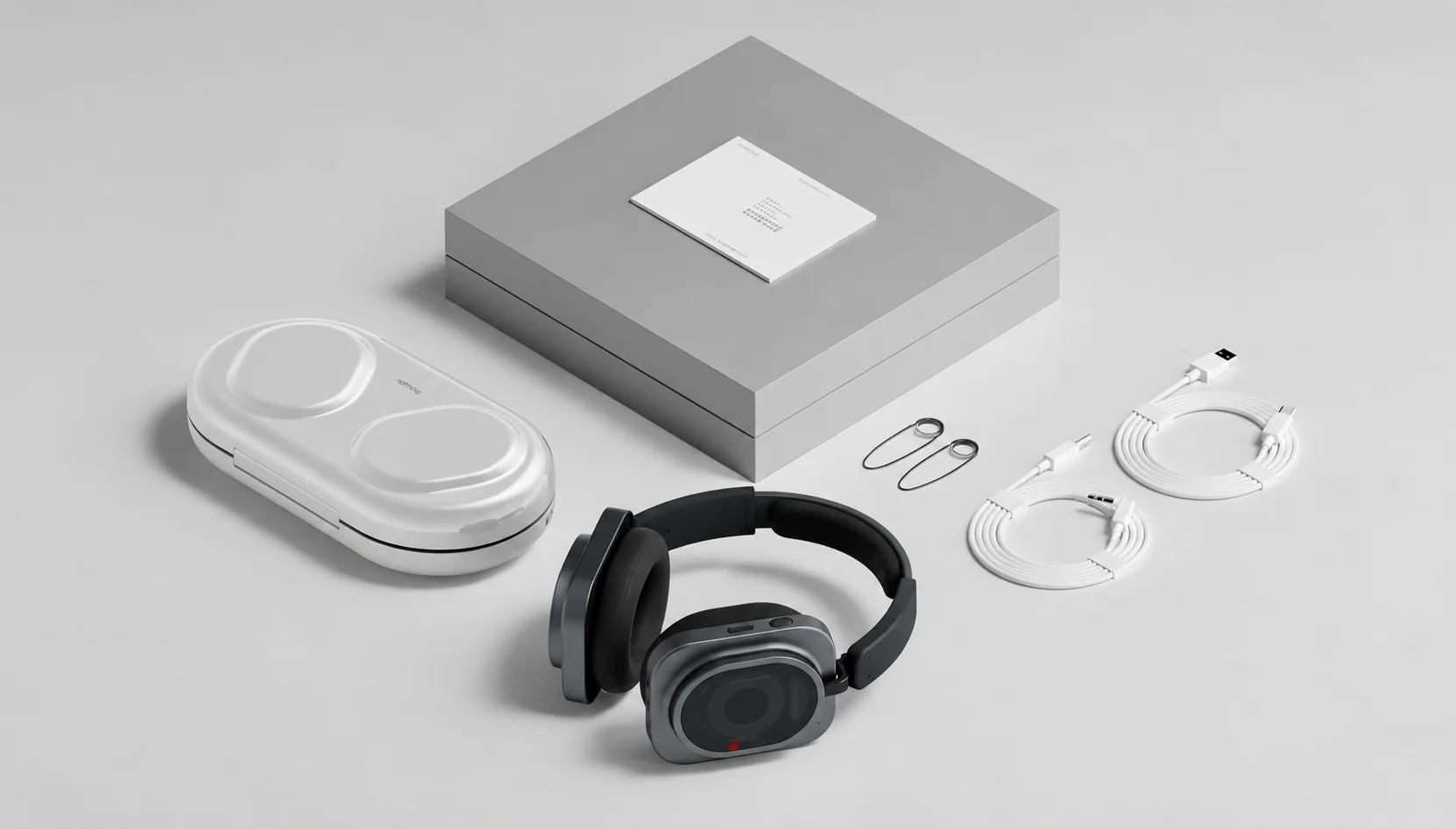
Quick answer: The Nothing Headphone 1 Pro costs $399 and earns that price on sound and features. Nothing put three drivers in each ear cup, added a physical Flat EQ switch, and raised noise cancellation to a rated 46 dB. Buy it if you want detailed sound, tactile controls, and wired hi-res playback in one pair. Skip it if you fly often and pack light: the headphones don’t fold, and the hard case weighs more than the headphones themselves. If you want most of the Nothing experience for half the money, the $199 Headphone (a) remains the smarter buy.
Nothing styles the product as “Headphone (1) Pro.” It went on sale in the US on September 29, 2026, and sits above the $299 Headphone (1) and the $199 Headphone (a) as the company’s flagship over-ear model.
Nothing Headphone 1 Pro at a Glance
| Detail | Nothing Headphone 1 Pro |
| US price | $399 (UK £349) |
| Release date | September 29, 2026 (US) |
| Where to buy | Nothing.tech, Amazon, Best Buy |
| Colors | Black, White |
| Drivers per ear cup | 40 mm dynamic (bass), 13 x 8 mm dynamic (mids), xMEMS solid-state (treble) |
| Frequency response | 20 Hz to 40 kHz |
| ANC | Adaptive, rated up to 46 dB, 10 microphones |
| Battery (AAC) | Up to 30 hours ANC on, 68 hours ANC off |
| Battery (LDAC) | Up to 28 hours ANC on, 53 hours ANC off |
| Fast charge | 5 minutes for up to 2 hours (ANC on) or 4 hours (ANC off) |
| Bluetooth and codecs | Bluetooth 6.1; SBC, AAC, LDAC, LC3 |
| Wired audio | USB-C up to 24-bit/192 kHz; 3.5 mm up to 24-bit/96 kHz |
| Weight | 327g (case: 383.5g) |
| Durability | IP52 dust and water resistance |
| Standout feature | Triple-driver setup with a physical Flat EQ switch |
| Main drawback | Heavy hard case, no folding hinges |
How We Built This Review
Tech Zeeno has not tested a retail Nothing Headphone 1 Pro unit. We won’t pretend otherwise. This review combines Nothing’s published specifications with a close reading of hands-on reviews from SlashGear, TechRadar, Trusted Reviews, Gizmodo, and others, plus early owner posts on the Nothing Community forum. Where reviewers disagree, we say so. Where Nothing’s numbers come from its own lab, we flag them as company claims. You get the consensus and the friction points sorted so you can decide in a few minutes.
What Stands Out
Three drivers in each ear cup
Most flagship noise-cancelling headphones, including the Sony WH-1000XM6 and Bose QuietComfort Ultra Headphones (2nd Gen), use one full-range driver per side. Nothing’s flagship splits the work three ways.

A 40mm dynamic driver with a PET dome and dual-magnet motor handles bass. A 13 x 8 mm driver with a PEN diaphragm covers vocals and the midrange. A tiny xMEMS solid-state tweeter, about 3.2 x 6.0 mm, handles treble using a silicon diaphragm. Until now, xMEMS drivers appeared in in-ear monitors, not full-size cans. Nothing claims 15% more bass impact and 26% higher sensitivity than the original headphone (1), though those figures come from the company’s own testing.
More drivers don’t guarantee better sound, and reviewers agree the integration matters more than the count. On that front, the early verdicts are good. TechRadar rated the triple-driver array as well handled, and Trusted Reviews praised its clarity and detail. A Nothing Community owner who listens to a lot of Bollywood music described the sound as immersive for both instruments and vocals, while admitting they are no audiophile.
The Flat EQ switch and who it serves
Nothing dropped the KEF tuning partnership from the original headphone (1) and worked with London’s Metropolis Studios instead. The result shows up as several EQ profiles in the Nothing X app, plus a physical switch on the inside of the left ear cup. Flip it and the headphones jump to a flat, studio-style response with every EQ adjustment zeroed.
Reviewers split on this one. Trusted Reviews sees it as a reason to treat the Pro as a semi-pro monitor for editing podcasts or checking a mix on the go. TechRadar called Flat EQ a miss, and SlashGear’s reviewer couldn’t pin down a use case. One practical reading: if you produce audio or video on a laptop and also commute, the switch gives you a reference sound without opening an app. If you stream playlists and nothing else, you can ignore it.
The switch itself sits flush and small. Geek News Central described it as a little fiddly to find by touch.
Physical controls that beat touch panels
Nothing kept the control scheme that made the first model popular, and SlashGear called it the best set of controls the reviewer had used on any headphone. The right cup carries a roller for volume and play/pause (long-press toggles noise modes), a paddle for skipping tracks, a programmable button, a Bluetooth pairing button, and a physical power switch. The USB-C port and 3.5mm jack sit on the bottom edge.
You get no touch gestures at all, which means no accidental pauses when you adjust the cups or pull up a hood. The trade-off: almost every control lives on the right side. Left-handed users may find that awkward.
Wired hi-res playback over USB-C and 3.5mm
Plenty of wireless headphones now support USB-C audio, but the Pro rates its USB-C input for lossless playback up to 24-bit/192kHz and its analog input up to 24-bit/96kHz. TechRadar noted the sound gets more detailed when you go wired, which matches what you would expect from bypassing Bluetooth compression.
In practice, this helps two groups. Laptop users get lossless sound from one cable without a separate DAC. Android owners with LDAC-capable phones get high-bitrate wireless streaming too, rated up to 24-bit/96 kHz.
Noise cancellation and transparency mode
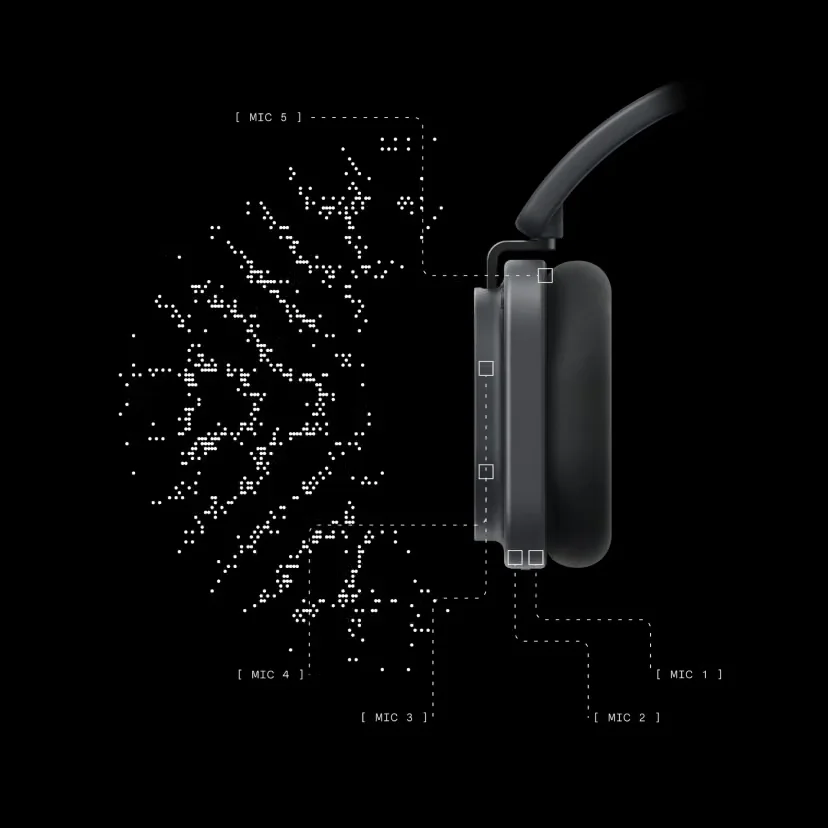
Nothing rates the ANC at up to 46 dB, up from 42 dB on the headphone (1). Ten microphones do the work, three feed-forward and two feedback per side, and a new 8 mm silicone baffle wall plus dual-layer cushions improve the passive seal before the electronics kick in.
SlashGear described the ANC as very good but a step behind Sony and Bose flagships. TechRadar rated it very good, and Tyler Hayes, writing on Yahoo Creators, ranked it as a highlight of the package. Two findings stand out from the reviews. First, the ANC handles wind noise better than most, with SlashGear’s reviewer noting it erased wind at scooter speeds (don’t ride with ANC on; you need to hear traffic). Second, SlashGear and TechRadar both praised transparency mode, which adds very little of the “hollow voice” sidetone effect that plagues rivals when you talk with it on.
Comfort upgrades you can feel
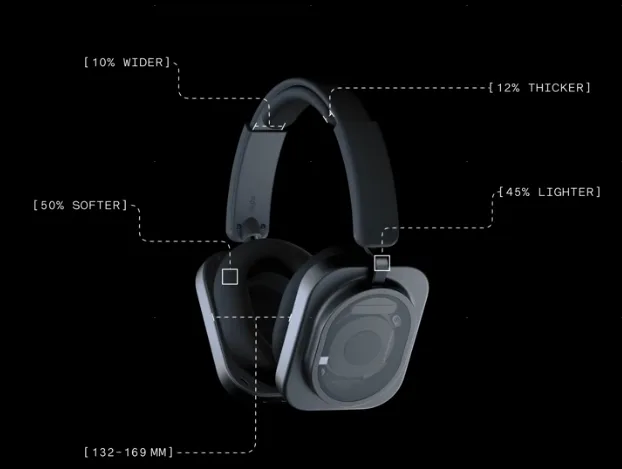
The Pro weighs 327 g, two grams lighter than the Headphone (1). Nothing offset that heft with titanium-alloy arms, it says, which are 45% lighter than before; ear cushions, which it describes as 50% softer; and a headband that runs 10% wider with 12% thicker padding. The cups tilt up to 20 degrees.
Glasses wearers should take note. Nothing designed the softer cushions with frames in mind, and a forum owner confirmed they sit without pressure points over both glasses and sunglasses. TechRadar found the clamp a little firmer than before, which helps the ANC seal, and reported no soreness on top of the head over long sessions.
Where the Nothing Headphone 1 Pro Falls Short
The case weighs more than the headphones.
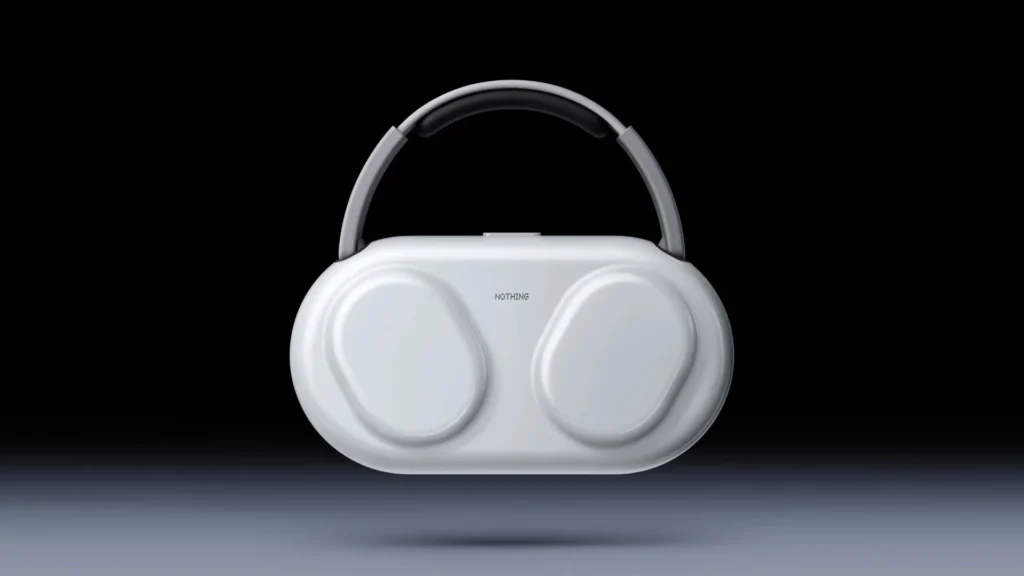
This is the complaint you will hear most. The hard plastic case holds the ear cups while the headband sticks out of the top, similar in idea to Apple’s AirPods Max case. It weighs 383.5g, which brings the total carry weight to 710.5g, or about 1.57 pounds. Gizmodo compared it with the AirPods Max 2 case at 134.5 g.
The design also wastes space. The case has no slot for the included USB-C and 3.5mm cables, and nothing added two tether points for a shoulder strap but left the strap out of the box. SlashGear’s reviewer solved both problems with a third-party lanyard cable. You will need a similar workaround or a separate pouch.
To be fair, the rigid shell protects the 9H Panda Glass cups from getting crushed in a bag, and Gizmodo’s reviewer found the weight a non-issue for daily commuting. For frequent flyers with strict carry-on limits, it’s a real cost.
No folding hinges
The ear cups swivel, but the headphones don’t fold inward. Sony’s WH-1000XM6 and Bose’s QuietComfort Ultra (2nd Gen) both fold. If you pack a backpack tight, this matters more than any spec on the sheet.
Battery life went down, not up
Battery life is still good at 30 hours with ANC on over AAC. But the original headphone (1) offered 35 hours with ANC on and 80 hours with it off, and the cheaper headphone (a) claims 75 hours with ANC on. Switch to LDAC, and the Pro drops to 28 hours with ANC on. TechRadar called battery life middling for the class.
Fast charging softens the blow. Five minutes on a cable gives you up to two hours with ANC on, and a full charge takes about two hours.
No aptX, and limited control remapping
The headphones support SBC, AAC, LDAC, and LC3 but skip aptX Adaptive and aptX Lossless. If you use a Qualcomm Snapdragon phone and care about aptX, look at Bose or Sennheiser instead. iPhone users will connect over AAC either way, so LDAC’s advantage won’t apply to them.
SlashGear also flagged that the Nothing X app won’t let you reassign most of the physical controls. The single programmable button handles assistant or camera-shutter duty, but the roller and paddle stay fixed.
The bass may feel light for some ears
SlashGear’s reviewer found the midrange emphasized over bass with Flat EQ engaged. If you grew up on Beats or Sony’s default tuning, expect to spend time in the EQ. The app gives you a three-band simple mode and a full parametric mode, but nothing in between, such as a 10-band graphic EQ. Beginners may find the parametric screen intimidating.
Nothing Headphone 1 Pro vs Sony Headphones, Bose and Nothing’s Own Range
| Detail | Nothing Headphone 1 Pro | Sony WH-1000XM6 | Bose QC Ultra (2nd Gen) | Nothing Headphone (a) |
| US list price | $399 | $458 | $449 | $199 |
| Drivers per side | 3 (dynamic, dynamic, xMEMS) | 1 (30 mm dynamic) | 1 (dynamic) | 1 (40 mm dynamic) |
| Battery (ANC on) | Up to 30 hrs | Up to 30 hrs | Up to 30 hrs | Up to 75 hrs |
| Weight | 327g | 250 g | ~250g (Lighter) | 310g |
| Folds | No | Yes (folds flat/hinges) | Yes (folds flat/hinges) | No |
| aptX | No | No | Yes (Snapdragon Sound) | No |
| LDAC | Yes | Yes | No | Yes |
| Physical Flat EQ switch | Yes | No | No | No |
| Included carry | Hard half-case | Hard zip case | Hard zip case | Drawstring bag |
Versus Sony WH-1000XM6
Sony has the ANC track record and the lighter, foldable frame. eCoustics, which reviewed the XM6, rated its noise cancellation among the best it has tested against mid and high-frequency noise. The Nothing Headphone 1 Pro answers with more interesting hardware: the triple drivers, USB-C lossless input, and better physical controls. Pick Sony for travel and maximum quiet. Pick Nothing if you value tactile controls and a more detailed wired experience, and you’ll save about $59 at list prices.
Versus Bose QuietComfort Ultra (2nd Gen)
Bose leads on comfort and noise cancellation in most reviews, and it supports aptX through Snapdragon Sound. Nothing undercuts it by $50 and adds LDAC, Auracast reception, and far longer ANC-off battery life. Bose remains the safer pick for long-haul flights; nothing makes the more adventurous listening device.
Versus Nothing Headphone (a)
This comparison causes the most hesitation. The Headphone (a) costs half as much, weighs less, ships with a soft bag instead of the heavy case, and claims more than double the ANC-on battery life. SlashGear’s reviewer, who tested both, called the (a) the better overall value. You give up the triple drivers, the glass and titanium build, wear detection, the Flat EQ switch and about 6dB of rated ANC. If sound detail and premium materials matter to you, the Pro justifies the gap. If you want strong ANC and long battery on a budget, buy the (a).
[INTERNAL LINK: Nothing Headphone (a) review | anchor: “our full take on the Headphone (a)”]
Nothing Headphone 1 Pro Feature Worth Knowing Before You Buy
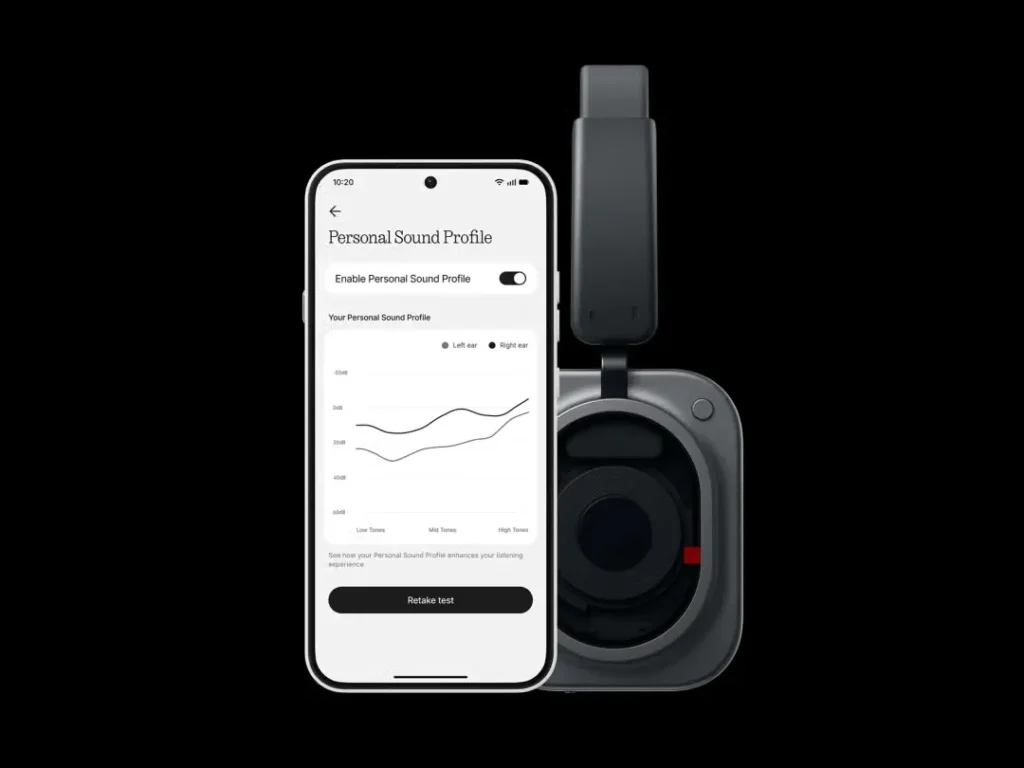
A few extras round out the package. Dynamic spatial audio with head tracking sits alongside a Metropolis-tuned spatial mode modeled on the studio’s Studio B room; TechRadar described the spatial modes as light-touch. Personal Sound runs a hearing test and builds a profile for your ears, and both TechRadar and early owners singled it out as a highlight. You also get multipoint pairing, Google Fast Pair and Microsoft Swift Pair, in-ear detection, a low-lag mode for gaming and video, and an IP52 rating that covers sweat and light rain.
Who the Nothing Headphone 1 Pro Is For
Buy it if you:
- Listen at a desk or on a commute and want detailed sound with the option to plug in for lossless playback.
- Edit podcasts, videos, or music and want a quick flat reference without opening an app.
- Prefer physical buttons and a roller over touch gestures.
- Use an Android phone with LDAC support and want high-bitrate wireless audio.
- Wear glasses and have struggled with tight cushions on other headphones.
Skip it if you:
- Fly often and need foldable headphones with a light case.
- Rely on aptX with a Snapdragon phone.
- Want the longest battery life Nothing sells (that’s the headphone (a)).
- Need the strongest noise cancellation money can buy, in which case Sony or Bose still lead.
Final Verdict
The Nothing Headphone 1 Pro fixes the main complaint people had about the original: the sound. The triple-driver design, Metropolis tuning, and wired hi-res options make this the most capable listening device. Nothing has built, and the physical controls remain the best in the category. The weak points come down to portability. A heavy half-case, no folding hinges, and shorter battery life than its siblings make it a harder sell for travelers. If you listen at home, at work, or on a daily commute, the $399 price buys you more interesting hardware than Sony or Bose offer. If you fly more than you commute, buy the Sony, or save $200 and grab the headphone (a).
Frequently Asked Questions
Q. What is the Nothing Headphone 1 Pro price?
A. The Nothing Headphone 1 Pro costs $399 in the US and £349 in the UK.
Q. When was the Nothing Headphone 1 Pro release date?
A. Nothing launched the headphones at a New York press event, and US sales opened on September 29, 2026, through Nothing’s website, Amazon and Best Buy.
Q. How good is the Nothing Headphone 1 Pro ANC compared with Sony?
A. Nothing rates the ANC at up to 46dB using 10 microphones. Reviewers call it very strong, with excellent wind handling and transparency mode, but most still place Sony’s WH-1000XM6 and Bose’s QC Ultra (2nd Gen) a notch ahead for blocking out noise.
Q. How long does the Nothing Headphone 1 Pro battery life last?
A. Nothing rates up to 30 hours with ANC on and 68 hours with ANC off over AAC. With LDAC, expect up to 28 and 53 hours. A five-minute charge adds up to two hours with ANC on.
Q. Do the Nothing Headphone 1 Pro work with iPhone?
A. Yes. iPhones connect over AAC, and the Nothing X app runs on iOS. You won’t get LDAC, since iPhones don’t support it. The 3.5mm cable in the box also works with a Lightning or USB-C adapter.
Q. Does the Nothing Headphone 1 Pro fold?
A. No. The ear cups swivel flat, but the frame does not fold inward, and the included hard case leaves the headband exposed.
Q. What are the full Nothing Headphone 1 Pro specs?
A. Each cup holds a 40mm bass driver, a 13 x 8mm mid driver and an xMEMS tweeter, with a 20Hz to 40kHz response. The headphones run on a 1,060mAh battery, use Bluetooth 6.1, weigh 327g and carry an IP52 rating.