

Quick answer: is the Sony WF-1000XM6 worth buying?
Yes, if you want the best sound and noise cancellation, you can fit in your ears, and you can use an Android phone or switch between devices a lot. The Sony WF-1000XM6 costs $329.99, and most reviewers who tested them rank them at or near the top of the premium earbud class for ANC and audio.
Skip them if you own an iPhone and care about health tracking, if you have small ears, or if you already own the WF-1000XM5. The XM6 is a careful upgrade, and XM5 owners get less out of it than anyone else.
A note on how we wrote this: Techzeeno has not run its own long-term test of the XM6 yet. This review pulls together Sony’s published specs and the findings of independent testers such as GSMArena, SoundGuys, RTINGS, and What Hi-Fi, and we point out where they disagree. We would rather tell you that than pretend we wore them on the Delhi Metro for a month.

Sony WF-1000XM6 at a glance
| Detail | What you get |
| Price | $329.99 (on sale since 7 August 2026) |
| Global launch | 12 February 2026 |
| Colours | Black, Platinum Silver |
| Chips | HD Noise Cancelling Processor QN3e, Integrated Processor V2 (32-bit audio) |
| Drivers | 8.4mm |
| Microphones | 4 per earbud (8 total) |
| Codecs | SBC, AAC, LDAC, LC3 (no aptX) |
| Battery (ANC on) | Up to 8 hours per charge, 24 hours with the case |
| Charging | USB-C, Qi wireless, 5 minutes gives about 50 minutes of play |
| Water resistance | IPX4 |
| Weight | About 6.4g per earbud |
| Standout feature | Noise cancellation that most testers rate best in class |
| Main drawback | Bigger buds and case than the XM5, plus foam tips that some people find uncomfortable |
What stands out on the Sony WF-1000XM6
Noise cancellation that handles city noise
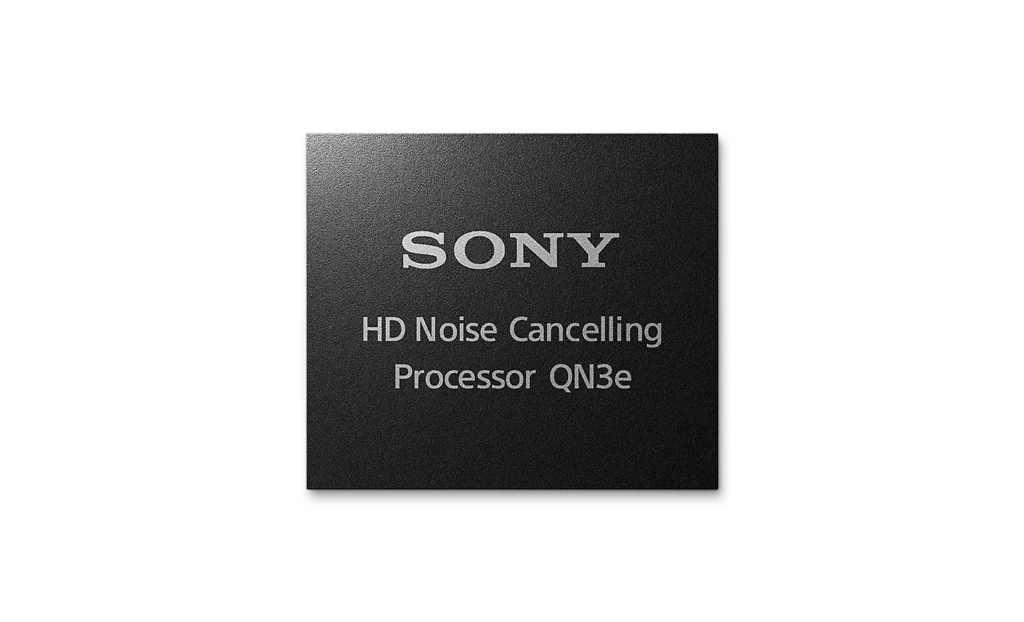
Sony claims the XM6 cuts 25% more noise than the XM5. The hardware behind that claim is real: the QN3e chip comes from Sony’s WH-1000XM6 over-ear headphones, and each bud now has four microphones instead of three. An adaptive optimizer adjusts the cancellation in real time based on the noise around you and how the buds sit in your ears.
Testers mostly back Sony up. GSMArena called them the best noise-cancelling earbuds it has tested and said the gain over the XM5 shows most in mid and high frequencies such as voices, traffic, and cabin noise. SoundGuys measured an average 88% drop in loudness across frequencies, with more than 40dB of cut around 100Hz.
One honest caveat: a minority of reviewers disagree. The PC Enthusiast found the ANC weaker than it expected next to the Technics AZ100 and Bowers & Wilkins Pi8. What Hi-Fi rates Bose slightly ahead for sheer blocking power. So think of the XM6 as top tier rather than a clear winner.
Sound quality with more balance than older Sony buds
Older Sony earbuds leaned warm and bass-forward. The XM6 still has healthy bass, but several reviewers were surprised by how balanced it sounds. Recording Now described the tuning as the most accurate Sony wireless earbud yet, and ecoustics heard a mild W-shaped curve with a gentle lift in the bass and upper mids and no harsh treble peaks.
You can shape it further through a new 10-band equalizer in the Sony Sound Connect app, up from five bands on the XM5. If sliders put you off, the Find Your Equalizer tool builds a profile from a quick listening test.

Android users get the most from these buds because of LDAC, which carries more audio data over Bluetooth than AAC. Pair them with a high-resolution service like Tidal or Apple Music on a phone that supports LDAC and you will hear the difference on busy tracks. iPhone users are stuck on AAC, though TechRadar still found the XM6 more detailed than AirPods Pro 3 over that codec.
Call quality that suits work calls
If you take calls from a cab or a noisy office, this is a real reason to buy. The extra microphones and AI beamforming help the XM6 separate your voice from the background. SoundGuys ranked the mics among the best for everyday calls and video meetings, and GSMArena found voice pickup strong even at a busy street corner.
TechGearLab was less impressed and scored call quality as middling for noisy transit. Our read of the evidence: excellent indoors, good outdoors, and not a guaranteed win on a loud metro platform.
Ambient mode that sounds like the room around you
The same microphones improve ambient sound, the mode that lets outside noise in. GSMArena found voices sounded lifelike rather than tinny, and there is a filter that lets voices through while muting other sounds. Speak-to-Chat pauses your music when you start talking, which helps when you order chai without pulling a bud out. GSMArena did manage to trigger it by coughing.
Battery life that beats the rated number
Sony rates the buds at 8 hours with ANC on and 24 hours with the case. Independent tests landed above that: GSMArena measured 8 hours. 15 minutes on AAC, and SoundGuys measured 9 hours 41 minutes. That is enough for a Delhi to Bengaluru flight plus the airport wait on a single charge.
A five-minute top-up gives about 50 minutes of listening. A full charge of buds and case takes about 80 minutes over cable and roughly double that on a wireless pad. A battery care setting caps charging at 80% if you plan to keep the buds for years.
Features that fill the gaps
The XM6 keeps multipoint, so you can stay connected to a laptop and phone together. It also has wear detection that pauses music when you remove a bud, 360 Reality Audio with head tracking, and, for the first time on this line, touch controls you can remap. Head gestures let you nod to take a call. Sony also made the internal antennas 1.5 times larger, and GSMArena reported no dropouts beyond 10 meters.
Where the Sony WF-1000XM6 falls short
They got bigger, and the case did too
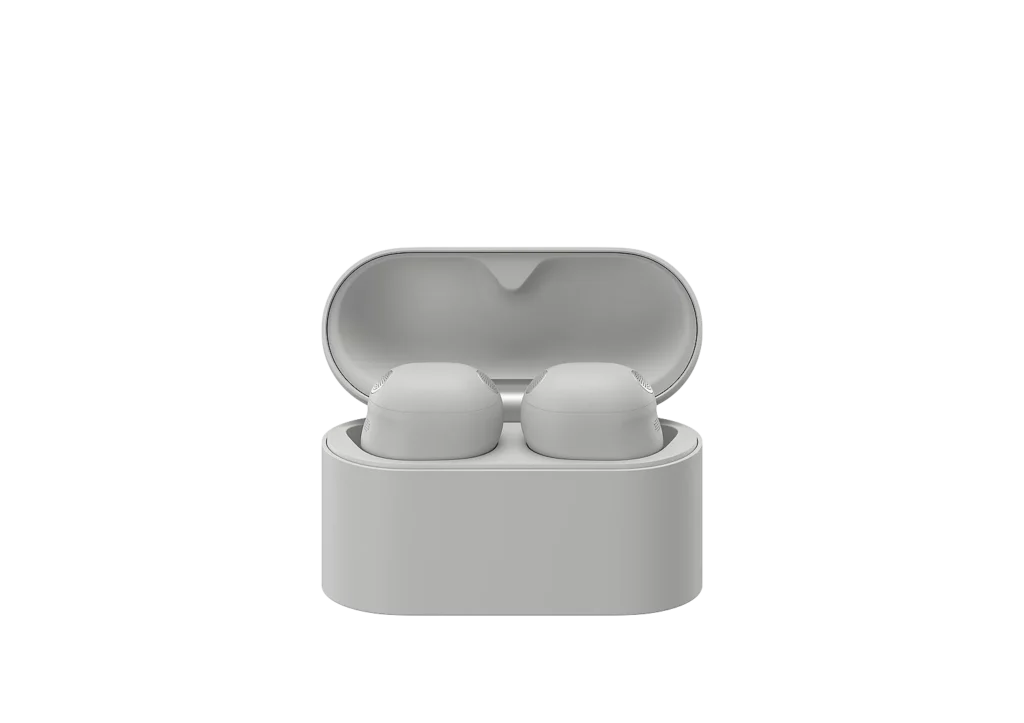
The XM4 and XM5 each shrank. The XM6 goes the other way. GSMArena found the buds longer and heavier than the XM5, and they still stick out of your ears. The matte plastic case measures 62 x 26 x 41mm, larger than the XM5’s, and its sharper corners make it harder to slip into a jeans pocket. If you liked the pebble-shaped XM5 case, you will probably miss it.
SoundGuys noted that the redesigned shape is more forgiving for most ears but may not suit smaller ones. RTINGS reached a similar view: comfort and stability depend on your ear shape and on picking the right tip size.
Foam tips will not suit everyone
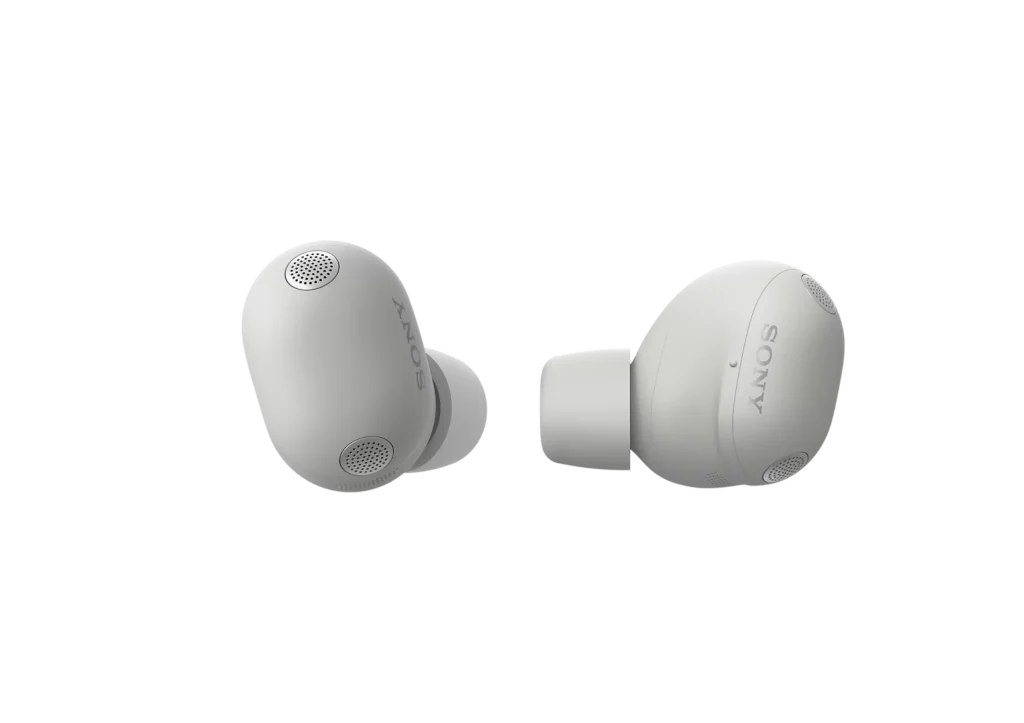
Sony ships the XM6 with foam tips, as it did with the XM5. Foam seals well, which helps the ANC. The downside is pressure. GSMArena’s reviewer felt the foam kept expanding in the ear canal and became uncomfortable after 20 to 30 minutes, even on the smaller sizes, and fixed it only by switching to third-party silicone tips. Budget a few hundred rupees for silicone tips if your ears are sensitive.
IPX4 in an IP57 world
IPX4 covers sweat and a light shower. AirPods Pro 3 carry IP57, which adds dust protection and survives a brief dunk. For summers and gym sessions, the XM6 will cope, but if you run outdoors during the monsoon, the Apple buds are the tougher pair.
No health tracking and no real AI extras
Apple and Samsung are adding heart rate sensors and live translation to their earbuds. Sony skipped both. The XM6 bets on sound and silence alone. GSMArena did not mind that trade, and neither do we, but it is worth knowing if you hoped your earbuds would replace a fitness band.
The features Sony did add are uneven. Voice control through “Hey Headphones” missed simple commands in GSMArena’s test, though it used a pre-production unit. Adaptive Sound Control switches modes based on your activity, and in practice a tap on the bud does the same job faster.
Gaming lag and no aptX
Latency is fine for YouTube and Netflix, but GSMArena noticed lag during games. Sony also still leaves out aptX, which matters little to most buyers but will bother owners of Qualcomm-based phones who wanted Snapdragon Sound.
How the Sony WF-1000XM6 compares with AirPods Pro 3 and Bose QC Ultra Earbuds
The XM6 wins on sound and battery. AirPods Pro 3 wins for iPhone owners and fitness. Bose wins on fit security and comes close on ANC.
| Spec | Sony WF-1000XM6 | Apple AirPods Pro 3 | Bose QC Ultra Earbuds (2nd Gen) |
| Rated battery, ANC on | 8 hrs (24 with case) | 8 hrs (24 with case) | 6 hrs (24 with case) |
| Hi-res codec | LDAC | None (AAC only) | aptX Adaptive |
| Water resistance | IPX4 | IP57 | IPX4 |
| EQ | 10-band | Adaptive EQ, no manual bands | 3-band |
| Health tracking | No | Heart rate sensor | No |
| Best for | Android users, audio quality | iPhone users, workouts | Secure fit, strong ANC |
Sony WF-1000XM6 vs AirPods Pro 3
This is the comparison most buyers will weigh. TechRadar tested both on an iPhone and still found the XM6 ahead on detail and bass, with a wider and more precise soundstage. On Android the gap grows, because AirPods lose most of their smart features and the XM6 gains LDAC.
AirPods Pro 3 fight back on everything around the music. You get heart rate tracking for workouts, Live Translation, IP57 protection, a smaller 5.55g bud and the easy pairing and Find My tracking that come with an iPhone. Apple claims its ANC is twice as strong as the AirPods Pro 2, and What Hi-Fi found it much improved on flights.
If you use an iPhone and exercise often, buy the AirPods. If you care most about how your music sounds, or you use Android or Windows, the XM6 is the better buy.
Sony WF-1000XM6 vs Bose QuietComfort Ultra Earbuds (2nd Gen)
These are the two ANC heavyweights. SoundGuys gave the XM6 a narrow edge on noise cancellation, while What Hi-Fi gave it to Bose. Treat that as a draw. The real differences lie elsewhere.
Sony lasts longer. SoundGuys measured 9 hours 41 minutes on the XM6 against 5 hours 34 minutes on the Bose. Sony also sounds more balanced, while Bose leans into a V-shaped tuning with heavy bass that can bury vocals. Bose counters with a more secure fit thanks to stability bands, and it supports aptX Adaptive if your phone has a Snapdragon chip.
Who the Sony WF-1000XM6 for
Buy the XM6 if one of these sounds like you:
- You commute by metro, bus, or cab for an hour or more a day and want the outside world turned down. The ANC is the main reason to pay this much.
- You use an Android phone with LDAC, such as the most recent Samsung, OnePlus, Xiaomi, or Pixel models, and you stream in high quality. You will hear more of what you pay for.
- You take work calls on the move and switch between a laptop and a phone. Multipoint and the upgraded mics suit that routine.
- You fly often. Nine-plus hours of real-world battery covers most domestic and many international legs.
- You own an XM4 or older Sony pair and want a clear step up.
Look elsewhere if:
- You have small ears or dislike foam tips. Try the XM6 in a store first, or look at Bose for a more secure fit.
- You need earbuds for serious outdoor running in the rain. IPX4 handles sweat, but IP57 gives you more margin.
- You play competitive mobile games. The latency will bother you.
- Your XM5 still works well. The upgrade is real but small.
Frequently Asked Questions (FAQs)
Q. How long does the Sony WF-1000XM6 battery last?
A. Sony rates it at 8 hours per charge with ANC on and 24 hours including the case. Independent tests measured between 8 hours 15 minutes and 9 hours 41 minutes on a single charge.
Q. Is the Sony WF-1000XM6 noise cancellation better than AirPods Pro 3?
A. Most reviewers put the XM6 slightly ahead or level. Apple has closed the gap with AirPods Pro 3, so the deciding factor is usually your phone rather than ANC strength.
Q. Does the Sony WF-1000XM6 work well with iPhone?
A. Yes, but you lose LDAC and fall back to AAC. Sound quality stays excellent, and TechRadar still preferred it to AirPods Pro 3 on an iPhone. You miss iPhone-only extras like automatic device switching across Apple products and Find My tracking.
Q. Is the Sony WF-1000XM6 waterproof?
A. No. It carries an IPX4 rating, which protects against sweat and splashes. Do not swim or shower with it.
Q. Does the WF-1000XM6 support wireless charging?
A. Yes. The case charges on any Qi pad, though it takes about twice as long as the 80-minute wired charge.
Q. What is the difference between the WF-1000XM6 and WF-1000XM5?
A. The XM6 adds the QN3e chip, one more microphone per bud, 32-bit processing, a 10-band EQ, and remappable touch controls. Sony claims 25% better ANC. The buds and case are larger, and the rated battery life is unchanged at 8 hours.