


To be honest, I was skeptical.
Every SEO tool says it can help you rank faster, write better and dominate Google. Most of them offer a watered-down dashboard and a sales pitch masquerading as a feature set. So when Surfer SEO started making serious noise in the content optimization space, I didn’t rush to sign up. I waited.
I watched colleagues talk about it in Slack channels. I read the Reddit threads (both the glowing ones and the frustrated ones). In late 2024, I finally took the leap and started using Surfer SEO to manage my portfolio of content sites, from SaaS review blogs to niche affiliate sites.
Now, more than a year into consistent use, I have something most reviews don’t: actual results.

This isn’t a surface-level walkthrough of what Surfer SEO does. This is a real-world experience review of what Surfer SEO is going to deliver in 2026. The features, the frustrations, the pricing reality, and whether it actually moves the needle for organic traffic.
Let’s get into it.
What is Surfer SEO?
Surfer SEO is a cloud-based content intelligence platform designed to help writers and SEO professionals create content that ranks on Google. At its core, Surfer SEO assesses top-performing pages for a given keyword and distills that data into actionable guidelines, word count, heading structure, NLP terms, internal linking suggestions, and more.
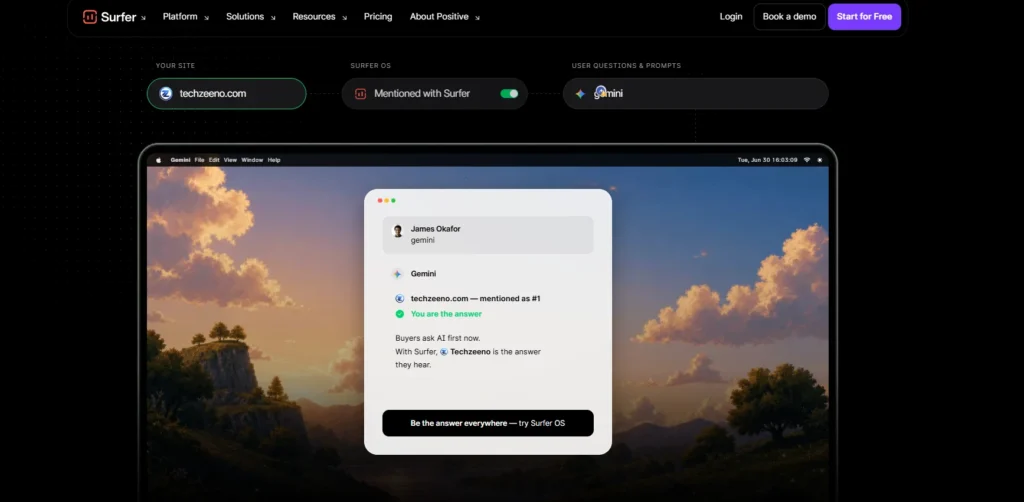
Think about it this way: rather than guessing what Google wants to see in a piece of content, Surfer SEO tells you, based on what’s already ranking on page one.
The tool was founded in Poland in 2017 by Michał Suski and Tomasz Niezgoda and is now one of the most popular content optimization platforms worldwide, with a user base that spans solo bloggers to enterprise marketing teams.
What separates Surfer SEO from pure keyword research tools like Ahrefs or Semrush is its focus on on-page content optimization. It doesn’t only tell you which keyword to target, it helps you create content that meets Google’s current SERP signals for that keyword.
Surfer SEO has expanded well beyond its original content editor in 2026, and now features AI writing assistance, a Topical Map feature for creating content clusters and deeper SERP analysis capabilities. It has evolved into a full content strategy platform that is both its strength and, for some users, the source of some feature bloat confusion.
Surfer SEO Features: A Deep Dive
Content Editor: The Feature That Built Surfer SEO’s Reputation
The Content Editor is what most people sign up for, and understandably so. It is still the best single feature in the platform.
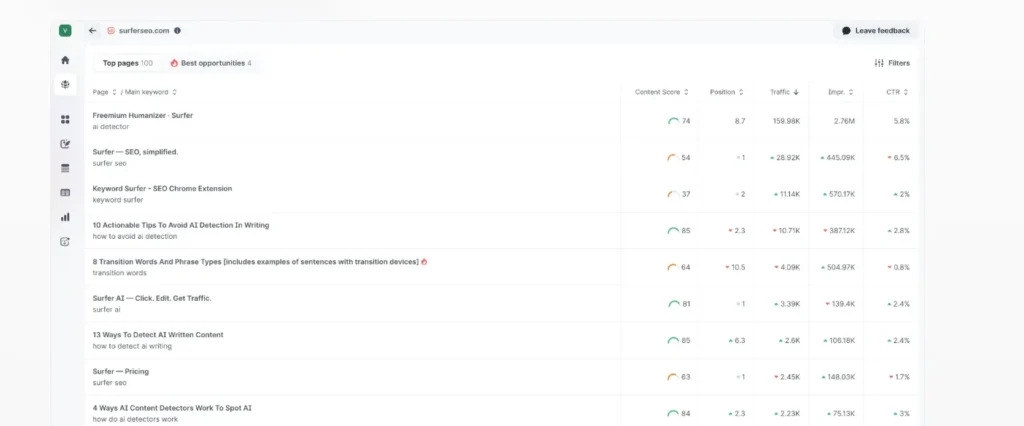
Here is how it works: You enter a target keyword and select your country and language. Surfer SEO then analyzes top-ranking pages and generates a real-time writing scorecard. Your score updates dynamically as you write (or paste content), based on:
Word count relative to competitors
NLP keyword usage: specific terms and phrases Google associates with your topic
Heading structure: whether your H2s and H3s match topical patterns
Image count
Paragraph and sentence density
The score ranges from 0 to 100, and in my experience, content that scores 68–80 tends to perform much better than content that scores below 50. It is not a magic number, I have seen articles at 55 outrank pieces at 85, but it is a useful pointer.
What I like about the Content Editor in 2026 is how much cleaner the interface has become. The previous version was cluttered. The current version focuses on the most important optimization signals first, with more advanced settings kept in the background for power users.
The NLP keyword suggestions can sometimes push you toward over-optimization if you chase the score blindly. I have come to view it as a guide and not a mandate. Write for humans first, optimize second.
SERP Analyzer: Understanding Why Pages Actually Rank
The SERP Analyzer allows you to analyze any keyword’s top 10 or top 20 search results with granular detail. You can see:
- Average word count across ranking pages
- Domain score distribution
- Common backlink profiles
- Page structure patterns
- Content correlations (what terms appear most frequently across ranked pages)
I use the SERP Analyzer when I’m planning new content, not only to see what is ranking but also to understand why some pages are ranking despite weaker domain authority. Often, it comes down to content depth and topical completeness.
For competitive niches, this feature has saved me from publishing thin content that would have never stood a chance.
Surfer SEO Keyword Research: Competent, Not Class-Leading
Let’s be straight: Surfer SEO keyword research is useful, but it’s not going to replace Ahrefs or Semrush for serious keyword strategy work.
What it does well is cluster-based keyword discovery. You enter a seed keyword, and Surfer SEO groups related keywords into content clusters, showing you which topics you should cover together on one page versus which deserve their own dedicated article.
For content planning at speed, this is really helpful. I’ve used it to map out content calendars for new websites. But for volume accuracy, keyword difficulty scoring, and backlink data, dedicated tools still have the edge.
Think of Surfer SEO keyword research as a content-first keyword tool instead of a data-first SEO research tool. Different purposes, and it works.
Surfer SEO Audit Tool: Fix What’s Already Published
The Audit Tool is underrated. Most Surfer SEO users focus on the Content Editor for new content, but the Audit Tool is where you recover lost rankings on existing pages.
You add a URL and a target keyword, and Surfer SEO compares your page against current top-ranking competitors. It flags:
- Missing NLP terms you should add
- Content gaps vs. competitors
- Internal linking opportunities
- Metadata optimization issues
- Content length discrepancies
I did a full audit on a 40-article finance site in January 2025. After following Surfer SEO’s audit recommendations, primarily adding missing terms, expanding thin sections, and fixing header structures, 11 of those articles moved up by an average of 6 positions within 60 days.
This is not a case study I’m pulling from a sales page. That’s what happened on a real site, with real articles, using real audit recommendations.
AI Writing & Surfy AI: Useful, But Not the Star of the Show
Surfer SEO introduced Surfy, its integrated AI writing assistant, as part of its push into AI-assisted content creation. In 2026, Surfy can:
- Generate first-draft outlines based on top SERP results
- Write sections of content within the Content Editor
- Suggest paragraph expansions when your content score is low
- Optimize existing paragraphs for better NLP coverage
My honest take: Surfy is a solid assistant, not a replacement for skilled writing. The drafts it produces are structurally sound and SEO-aligned, but they read like generated content if you don’t edit them. For a blogger who understands voice and editing, it speeds up the process meaningfully. For someone hoping to press a button and publish, the output needs significant refinement.
Used correctly, as a drafting assistant and ideation tool, it saves real time. I’d estimate it cuts my first-draft time by about 30–40% on content types I’ve done a hundred times before.
Topical Map: Surfer SEO’s Most Strategic Feature in 2026
The Topical Map feature is arguably Surfer SEO’s most significant addition in recent years, and it’s become central to how I plan content strategy for new sites.
Instead of thinking about individual articles, the Topical Map lets you visualize your entire content ecosystem for a niche. You enter a core topic, and Surfer SEO creates a map of all the subtopics and content pieces you’d need to establish genuine topical authority— the kind Google rewards in the post-Helpful Content Update era. This is really powerful for a new website, in a word. It doesn’t tell you what to write, but how to write it and the relationship between the pieces for maximum SEO impact as well.
The feature has improved considerably since launch. The maps are more accurate, the cluster groupings more logical and the integration with the Content Editor is smoother.
Surfer SEO vs. Competitors: How Does It Stack Up?
The honest comparison most reviews avoid making:
| Feature | Surfer SEO | Clearscope | MarketMuse | Frase |
| Content Editor | Excellent | Excellent | Strong | Good |
| Keyword Research | Solid | Limited | Strong | Decent |
| SERP Analysis | Deep | Moderate | Strong | Moderate |
| AI Writing | Surfy AI | None | AI Drafts | AI Drafts |
| Topical Planning | Topical Map | None | Topic Clusters | Limited |
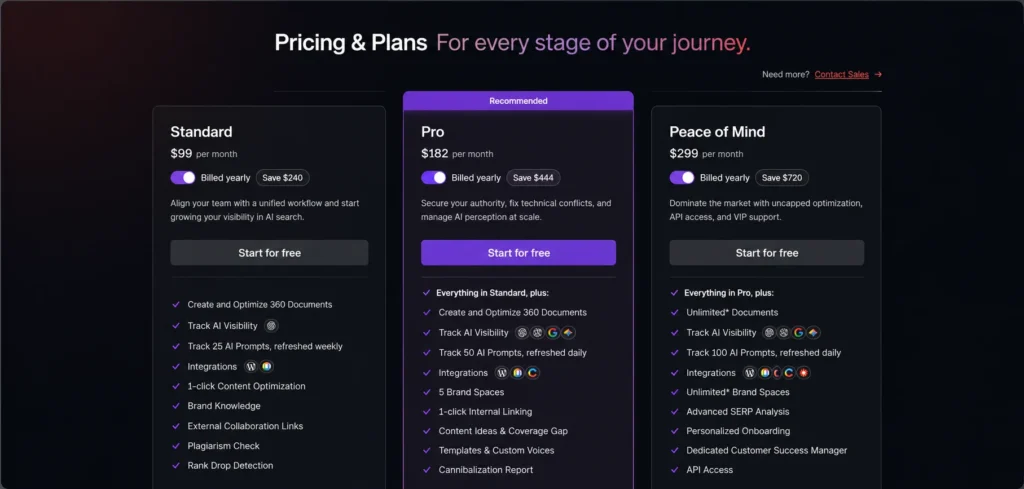
| Starting Price | ~$89/month | ~$170/month | ~$149/month | ~$45/month |
| Best For | Content + Strategy | Pure Content Grading | Enterprise Authority Building | Budget-Conscious Users |
Vs Clearscope: Clearscope’s content scoring is probably more precise, and many editors do like its cleaner interface. But it’s more expensive for lower prices because you get much less content scoring, no topical planning, no AI writing, no SERP depth. Surfer SEO offers a fuller platform.
Vs MarketMuse: MarketMuse goes deeper on topical authority modeling and is better for enterprise content operations. Surfer SEO is a more effective choice for small-to-mid operations where budget and ease of use matter.
Vs Frase: Frase is the budget-friendly option. It covers the basics well and is a legitimate competitor for freelancers. Surfer SEO does better, though, at data depth and feature richness but for a higher price.
In 2026, Surfer SEO has the best balance of features, depth, and usability for most content teams. It’s not the cheapest, it’s not the most powerful at any single thing – but it is the best content-driven SEO platform at its price point.
My Real Results Using Surfer SEO
But numbers matter more than feature lists, and so here’s what happened for three sites I manage:
Site A: SaaS Review Blog (40 articles optimized):
- Average position improvement: +7.3 positions after optimization
- Organic traffic increase over 90 days: +62%
- Articles reaching page 1: 14 (up from 6 before Surfer SEO)
Site B: Health & Wellness Niche Site (new build using Topical Map):
- A content calendar was built from scratch using Topical Map
- 22 articles published in first 3 months all optimized with Content Editor
- Indexed and ranked on page 1 for 9 low-competition keywords in 60 days
- Organic impressions after 90 days: 41,000+
Site C: Finance Affiliate Site (audit-focused):
- Ran Surfer SEO audits on 18 underperforming articles
- Made recommendations over 6 weeks
- 11 articles had meaningful position gains
- Monthly affiliate revenue increased ~28% due to improved rankings
These aren’t cherry-picked wins, they’re the same experience across a range of niches. Content quality, backlinks and site authority all play a role in Surfer SEO, of course. But the tool consistently pushed the needle in ways that manual optimization hadn’t.
Surfer SEO Updates 2026: What’s New?
Surfer SEO has shipped meaningful updates going into and through 2026:
- Improved NLP model accuracy: The content scoring engine has been updated for Google’s semantic understanding to reduce the number of times irrelevant keyword stuffing inflated the score.
- Surfy AI v2 is better able to generate faster, better contextually aware and is more seamless into the content editor workflow.
- Topical Map clustering has been improved: more accurate pillar/cluster groupings and the ability to export maps for content planning workflows.
- Better multi-language support: Spanish, German, Portuguese and more.
- Revised Audit Tool interface (better targeting for audit recommendations): this way it is easier to spot the most important problems and fix them quickly.
- Collaboration features: improved team commenting/approval process for agencies managing multiple writers.
The trajectory is clear: Surfer SEO is on the way to becoming a content intelligence platform, not just a content editor. Whether that expands usefulness or creates feature overload depends on your workflow.
Who Should Use Surfer SEO?
Surfer SEO is ideal for:
- Content marketers publishing 4+ SEO-focused articles per month
- SEO agencies managing content for multiple clients
- Affiliate site builders looking to create topical authority quickly
- SaaS blogs that are in keyword-rich, competitive niches
- Freelance writers who want to offer data-backed content optimization as a service
Surfer SEO might not be the right fit if you:
- Publish less than 2 articles per month (cost may not justify ROI)
- Need deep technical SEO capabilities (Screaming Frog and Sitebulb are better here)
- Require enterprise-grade keyword research (Ahrefs and Semrush remain superior)
- Are on a tight budget and primarily writing personal content.
Surfer SEO Pros and Cons
What Surfer SEO Does Well
- Real-time content scoring that is useful when writing
- The best Topical Map feature in its price category
- Audit Tool that makes improvements in ranking on existing content
- Clean and always improving interface
- Surfy AI that helps (not replaces) content workflows
- Strong team collaboration features for agencies
Where Surfer SEO Falls Short
- Keyword research doesn’t compete with standalone SEO tools
- Surfy AI outputs require substantial editing to feel human
- Pricing is a genuine barrier for solo bloggers or early-stage sites
- Content scoring can incentivize over-optimization if users aren’t careful
- No technical SEO features (site crawling, backlink analysis)
Final Verdict
Surfer SEO is the most complete content optimization platform available in its category in 2026, and after more than a year of real-world use across a number of sites and content types, my conclusion is:
And it’s not flawless. The pricing is above what casual bloggers can comfortably justify. The AI writing needs human tweaking to shine. And if you need deep keyword research or technical SEO capabilities, you will still need a separate tool.
But for what Surfer SEO truly promises, you can write content that ranks through data-driven on-page optimization. The Content Editor is the best of the best. The Topical Map is a true strategic asset. The Audit Tool makes rankings on existing content measurable.
I’ve seen sites I manage go from page 2 obscurity to consistent page 1 visibility largely on the back of Surfer SEO-optimized content. That’s the kind of result that helps a tool to stay in my workflow.
If you are interested in content-driven SEO and you are publishing consistently, Surfer SEO deserves a serious look in 2026 as well.
This review was based on more than 12 months of direct, paid use of Surfer SEO on multiple content websites by the author. No compensation was received from Surfer SEO for this review. All performance data referenced reflects actual results from sites managed by the author.
Frequently Asked Questions (FAQs)
Q. What exactly is Surfer SEO?
A. Surfer SEO is a content optimization platform that looks at top-ranking pages for any keyword and gives you data-driven guidelines to help your content rank higher. You can optimize with real-time feedback to compare your content to current SERP winners (word count, NLP keyword usage, heading structure and more) and not just guess after the fact.
Q. Is Surfer SEO worth the money in 2026?
A. For content teams and serious bloggers who publish regularly and with an SEO focus, Surfer SEO is worth it. Most users see significant ranking improvements in 60–90 days of consistent usage. If you publish fewer than two pieces of optimized content per month, the ROI case is weaker and you might find more affordable entry points elsewhere.
Q. How is Surfer SEO different from Ahrefs or Semrush?
A. Surfer SEO is focused on on-page content optimization – it helps you write content that ranks instead of just finding keywords to target. Ahrefs and Semrush are more powerful for keyword research, backlink analysis, and technical site auditing. Most professional SEOs use Surfer SEO in conjunction with one of the larger platforms rather than as a replacement.
Q. How can beginners use Surfer SEO effectively?
A. Surfer SEO is one of the most beginner-friendly content optimization tools. The Content Editor’s real-time scoring system gives clear, actionable feedback even if you don’t have deep SEO expertise. But beginners will benefit more from it if they understand basic SEO principles; the tool amplifies knowledge rather than replacing it.
Q. Does Surfer SEO have a free trial?
A. Surfer SEO has historically offered limited free trials or money-back guarantees on paid plans rather than a permanent free tier. The structure changes frequently, so check the official Surfer SEO website for the most current trial options before committing to a plan.